
Commercial Pressure Washers
Commercial pressure washers are built for frequent, demanding cleaning where durability, output and serviceability matter as much as peak PSI. PowerWash.com carries commercial equipment for contractors, fleet operators, facilities, agriculture and industrial cleaning—from portable cold-water units to hot-water machines and installed systems.
Start by matching the machine to the work. PSI provides the force that loosens stubborn buildup, while GPM supplies the water volume that rinses debris away and determines how quickly you can cover larger areas. Then choose the power source, water temperature and drive system that fit your jobsite and expected weekly use.
Use the categories below to compare gas, electric, hot-water and cold-water commercial pressure washers. Looking for a complete mobile or fixed system instead? Explore our truck skids, trailer-mounted pressure washers, portable pressure washers and stationary systems.
Featured Categories
Brand
Price
- (2)
- (10)
- (11)
- (7)
- (5)
- (5)
- (4)
- (5)
- (5)
Drive
- (7)
- (5)
Max Flow
Mobility Type
- (11)
- (5)
Motor Make
Motor Power Rating
Product Grade
- (22)
Washer Type
Washer Power
- (5)
- (14)
Showing 1–20 of 72 resultsSorted by popularity
-
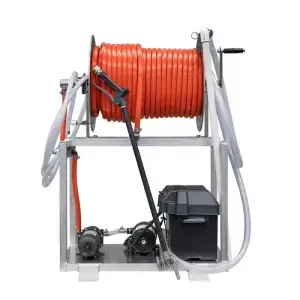
Maverick 12V Soft Wash System with Stainless Steel Hose Reel: Professional-Grade Cleaning Power
$2,285.00
As low as $57.13/mo -
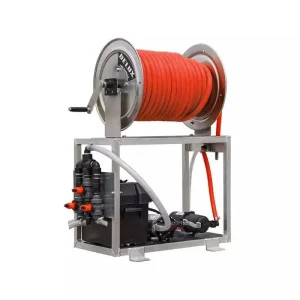
12V Soft Wash System with Sidewinder Pro Slim Mixing Station – Maverick | Professional Grade Cleaning Solution
$3,496.47
As low as $87.41/mo -
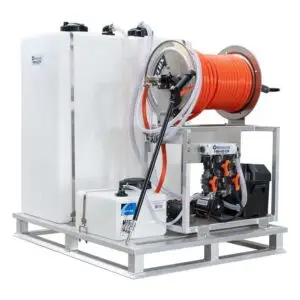
Maverick Stampede Complete Professional Soft Wash System with 3 tanks and a Proprtioner
$5,499.97
As low as $137.50/mo -

-
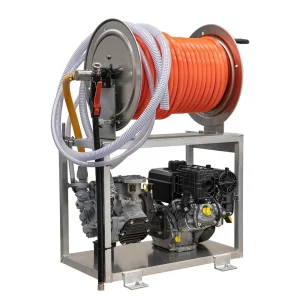
Delux® Stallion Gas Powered Soft Wash System
$3,992.97
As low as $99.82/mo -
Sale!
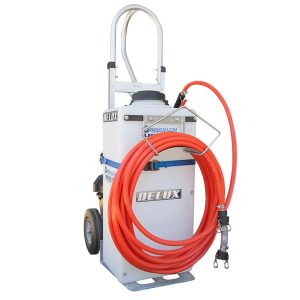
The Wrangler™ Chemical Sprayer
$1,299.42Original price was: $1,299.42.$1,105.00Current price is: $1,105.00.
As low as $27.63/mo -
Sale!
Delux Bronco Soft Wash System-7.0 GPM,12 volt
$1,227.00Original price was: $1,227.00.$1,121.54Current price is: $1,121.54.
As low as $28.04/mo -
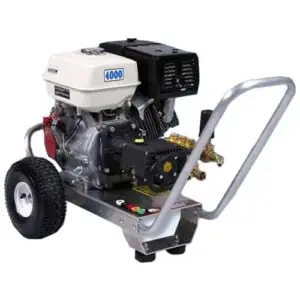
Honda Powered Eagle Series EZ 4000 PSI Gas-Powered Pressure Washer
$1,861.97
As low as $46.55/mo -

Genie Basic Pressure & Soft Wash Kit for Contractors: Professional Cleaning Solutions
$4,229.03
As low as $105.73/mo -
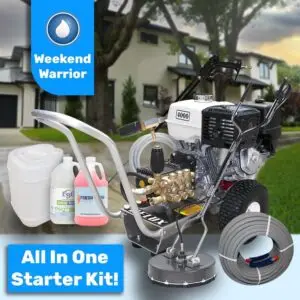
Weekend Warrior- Residential Cleaning House Washing Business Starting Pack
From $2,971.47
As low as $74.29/mo -
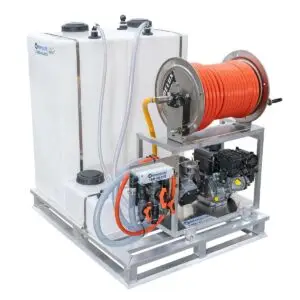
Complete Gas Powered Soft Wash System – Stallion Stampede
From $7,664.97
As low as $191.62/mo -
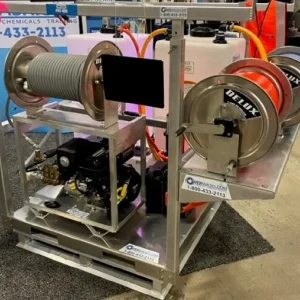
Delux Mustang Pro Mini Complete Skid 4′ – Approved for Drone Use (Surface BOT)
$15,543.88
As low as $388.60/mo -
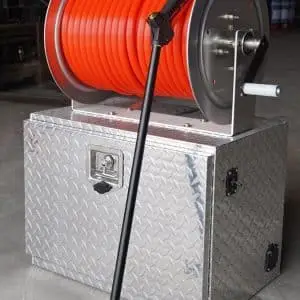
Anaconda 7 GPM Soft Wash in a box
$1,838.00
As low as $45.95/mo -
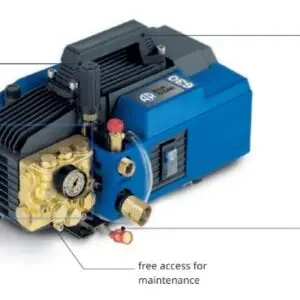
2.1 GPM 1900 PSI AR BLUE CLEAN with HOT WATER INDUCTION
$1,459.47
As low as $36.49/mo -
-
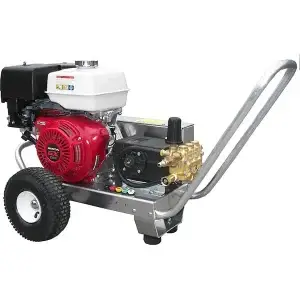
EB4040HG Gas Pressure Washer (4 GPM @ 4,000 PSI)
$2,401.47
As low as $60.04/mo -
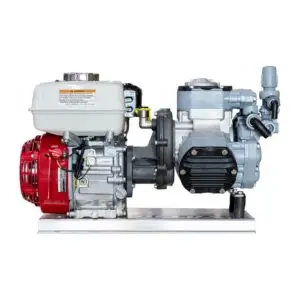
Deluxe Stallion Base Model-P40
$2,310.47
As low as $57.76/mo -
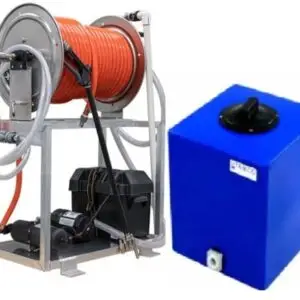
Maverick Soft Wash System Complete with 60 Gallon Batch Tank
$3,494.00
As low as $87.35/mo -
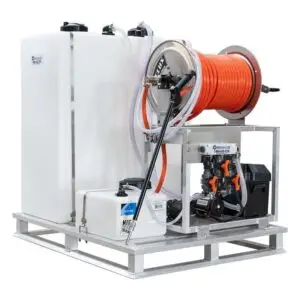
Professional Soft Wash System: Maverick Stampede 3 Tanks + Proportioner
$4,620.00
As low as $115.50/mo -
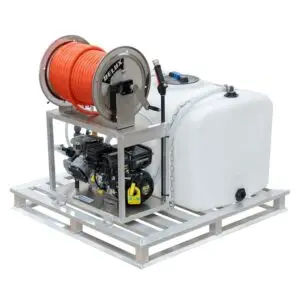
100 Gallon Tank Soft Wash Skid – Vanguard Engine, 11 gpm Pump, Aluminum Skid – Stallion Small Truck Batch
From $6,299.97
As low as $157.50/mo
Commercial Pressure Washer Buying Guide
Not every commercial cleaning job requires the same pressure washer. A contractor cleaning concrete every day has different needs than a facility manager washing equipment indoors or a fleet operator removing grease from trucks. Choosing the right commercial pressure washer starts with understanding your work—not simply comparing PSI ratings.
The best machine balances pressure, water flow, temperature, duty cycle and configuration so the work gets done efficiently without buying more equipment than the application requires. Use this guide to narrow the options, then browse the related categories for more detailed product comparisons.
What Makes a Pressure Washer Commercial Grade?
Commercial-grade equipment is designed around frequent use, serviceability and durable components. Depending on the model, that may include a heavy-duty engine or motor, a serviceable pump, a stronger frame, commercial hoses and fittings, larger fuel capacity, belt-drive construction, hot-water capability or a skid, trailer or stationary configuration.
PSI alone does not determine whether a machine is commercial. A high-PSI consumer washer may still be intended for occasional use, while a lower-PSI commercial or industrial pressure washer may be engineered for longer duty cycles, specialized cleaning or fixed-site operation. Compare the complete machine, not just the largest number in the specifications.
How to Choose the Right Commercial Pressure Washer
Start with the work the machine must perform:
- What surfaces will you clean most often?
- Are you removing ordinary dirt and mud, or oil, grease and food residue?
- How many hours per week will the machine run?
- Will it be used indoors, outdoors or at remote jobsites?
- Does it need to be portable, truck-mounted, trailer-mounted or permanently installed?
- What electrical service, water supply and ventilation are available?
Equipment selection tip: Every commercial operation is different. Selecting equipment around the cleaning application, available utilities and required production speed is usually more important than choosing the machine with the highest published PSI.
Quick Commercial Pressure Washer Selection Guide
| If you need to… | Consider… |
|---|---|
| Work at remote outdoor jobsites | Gas commercial pressure washers |
| Clean indoors or avoid engine exhaust | Electric commercial pressure washers |
| Remove oil, grease or food residue regularly | Hot-water commercial pressure washers |
| Handle concrete, siding and general exterior cleaning | Cold-water commercial pressure washers |
| Move one machine between jobs | Portable pressure washers |
| Run a daily mobile service route | Truck skids or trailer-mounted systems |
| Equip a permanent wash bay | Stationary pressure washers |
| Apply chemicals at low pressure to roofs or delicate surfaces | Soft wash systems |
PSI vs. GPM: Pressure and Production Speed
PSI measures water pressure—the force used to loosen stubborn dirt, coatings and buildup. GPM measures water flow—the volume that carries loosened material away and determines how quickly you can rinse a large area.
Many buyers focus first on PSI. In practice, more GPM often improves production speed more than simply adding pressure, especially on commercial flatwork, fleet washing and other large-area jobs. Higher PSI can be valuable for stubborn buildup, but excessive pressure can damage sensitive surfaces when paired with the wrong nozzle or technique.
Cleaning Units are calculated by multiplying PSI by GPM. A 4,000 PSI machine delivering 4 GPM produces 16,000 cleaning units. This is useful for comparing overall output, but it is not a complete buying formula. Water temperature, nozzle selection, surface type, pump design and expected duty cycle still matter.
Gas or Electric Commercial Pressure Washer?
Gas commercial pressure washers are usually the first choice for mobile outdoor work. They can operate where suitable electrical service is unavailable and are commonly offered in higher-flow configurations for concrete, construction sites, agricultural equipment, fleet work and contractor routes.
Need maximum mobility and outdoor production? Compare gas commercial pressure washers.
Electric commercial pressure washers are well suited to indoor facilities, wash bays and locations where engine exhaust, fuel storage or noise are concerns. Commercial electric machines should not be confused with small consumer units; industrial models can deliver substantial pressure and flow when the site has the required voltage and amperage.
Need indoor operation or a fixed-site solution? Compare electric commercial pressure washers.
Hot Water or Cold Water?
Cold-water commercial pressure washers handle most general exterior cleaning, including dirt, mud, mildew, concrete, siding and equipment rinsing. They generally involve lower purchase cost and less operating complexity than hot-water systems, making them the practical starting point for many contractors and property-maintenance crews.
Cleaning concrete, siding or general exterior surfaces? Compare cold-water commercial pressure washers.
Hot-water pressure washers are designed for jobs where oil, grease, fats and heavy degreasing are common. Heat helps loosen oily soils and can reduce the time, detergent and labor required for difficult cleaning. Common applications include restaurant exhaust areas, truck fleets, manufacturing floors, heavy equipment and farm machinery.
Removing grease and oil regularly? Compare hot-water commercial pressure washers.
Direct Drive or Belt Drive?
Direct-drive systems connect the pump closely to the engine or motor. They are compact and generally more economical, which can make them a good fit for intermittent use and applications where size and upfront cost matter.
Belt-drive systems use belts and pulleys to operate the pump at a lower speed. This can reduce pump heat and vibration, which is one reason belt-drive machines are widely used for heavier commercial workloads. Mi-T-M uses more than 20 hours per week as a practical point for considering belt drive, but the correct choice should always follow the specifications and duty-cycle guidance for the individual machine.
Choose the Configuration That Fits Your Operation
After choosing gas or electric and hot or cold water, decide how the equipment should be deployed.
Portable Pressure Washers
Portable units are the most flexible option when the machine must move between jobs. They work well for contractors who already have a truck or trailer setup and want the ability to load, unload or reposition equipment as needed.
Best for: Contractors serving varied jobsites or businesses that need one machine in several locations.
Truck Skids
A truck-skid system creates a mounted mobile cleaning platform. Skids can combine the pressure washer with water storage, hose reels and accessories while keeping the equipment organized on a service vehicle.
Best for: Contractors running daily routes who want a compact rig that stays mounted and ready.
Trailer-Mounted Pressure Washers
Trailer systems provide a dedicated, ready-to-tow platform for the pressure washer, water tank, hose reels and supporting equipment. They eliminate repeated loading and unloading and can provide more room for a complete mobile setup.
Best for: Mobile contractors who want a turnkey cleaning rig or need more capacity than a truck bed allows.
Stationary Pressure Washers
Stationary systems are designed for fixed wash bays, shops, fleet facilities and industrial locations. They can be configured around the building’s water, power, ventilation and cleaning requirements.
Best for: Businesses cleaning in the same location every day, especially when several operators need access to one installed system.
Soft Wash Systems
Soft-wash equipment is designed for low-pressure chemical application. It is useful for roofs, siding and other surfaces where chemical dwell time matters more than mechanical pressure. Soft-wash systems are a separate equipment category rather than a replacement for a commercial pressure washer.
Best for: Exterior-cleaning contractors treating delicate surfaces or organic growth with controlled chemical application.
Common Mistakes When Buying a Commercial Pressure Washer
- Choosing by PSI alone instead of balancing PSI, GPM and the application.
- Buying hot water when cold water is sufficient—or buying cold water for work dominated by oil and grease.
- Ignoring available voltage, amperage, water supply or ventilation.
- Underestimating weekly run time and choosing a drive system that does not match the workload.
- Buying a portable machine when a skid, trailer or stationary setup would improve daily productivity.
- Failing to confirm hose, nozzle, accessory and replacement-parts compatibility for the exact model.
Common Commercial Pressure Washer Applications
| Application | What to Prioritize |
|---|---|
| Concrete and flatwork | Adequate GPM, suitable pressure and surface-cleaner compatibility |
| Fleet and vehicle washing | Balanced PSI and GPM, chemical application and hot water when oily residue is common |
| Agriculture and heavy equipment | Durable components, strong rinsing volume, mobility and hot water for greasy buildup |
| Indoor facilities and wash bays | Electric or stationary equipment, ventilation, noise and available utilities |
| Restaurants and food-related facilities | Hot-water degreasing capability plus site-specific sanitation procedures |
| Manufacturing and industrial cleaning | Duty cycle, serviceability, water temperature and a configuration matched to the facility |
Before You Buy
Confirm the machine’s required water supply, electrical service or fuel type, ventilation needs, hose and nozzle compatibility, pump and engine maintenance requirements, expected duty cycle and availability of compatible accessories and replacement parts. Review the specifications and manual for the exact model rather than relying on assumptions that apply broadly to the category.
Commercial pressure washers are long-term equipment purchases. Choosing the correct output and configuration at the start can improve productivity, reduce unnecessary wear and make the system easier to operate and maintain.
Need Help Choosing the Right Commercial Pressure Washer?
Every business has different cleaning demands. Whether you are comparing gas and electric models, deciding whether hot water is worth the investment, sizing a machine for daily production or building a complete trailer or skid package, the PowerWash.com team can help you choose equipment that matches the work—not simply the machine with the biggest numbers.
Contact the PowerWash.com contractor support team for help matching equipment to your application, available utilities and expected workload.
Looking for more equipment guidance, calculators and training? Visit the Pressure Washing Learning Center.
Helpful Pressure Washing Tools
Use these free PowerWash.com tools to match the correct nozzle size to your pressure washer’s PSI and GPM.
Nozzle Size Calculator
Enter your pressure washer’s PSI and GPM to calculate the recommended nozzle size for your machine.
Pressure Washer Nozzle Selection Chart
Use the nozzle chart as a quick reference to match nozzle size with your machine’s pressure and water flow.
Commercial Pressure Washers FAQ's
Follow the manual for the exact machine. General maintenance includes inspecting nozzles, hoses and couplers; keeping inlet filters clean; checking applicable engine and pump oil; addressing leaks or pressure loss promptly; and winterizing the system before freezing storage. Hot-water units also require burner and heating-coil maintenance.
Belt drive is commonly preferred for heavier weekly use because it allows the pump to run at a lower speed and can reduce heat and vibration. Direct drive is more compact and economical and may be appropriate for intermittent use. Follow the manufacturer’s duty-cycle and maintenance guidance for the specific machine.
Hot water is usually worth considering when oil, grease, fats or heavy degreasing are a regular part of the work. Cold water is sufficient for most dirt, mud and general exterior cleaning. Buyers with frequent fleet, kitchen, industrial-equipment or oily-surface work should compare commercial hot-water models.
Choose gas for portable outdoor work and jobsites without suitable electrical service. Choose electric for indoor, fixed-site or noise- and emission-sensitive applications when the required voltage and amperage are available. Commercial electric machines can deliver significantly more output than consumer electric washers.
Cleaning units are calculated by multiplying PSI by GPM. A 4,000 PSI, 4 GPM machine produces 16,000 cleaning units. The number is useful for comparing total output, but the correct machine still depends on the surface, soil, water temperature, nozzle and expected duty cycle.
Both are important. PSI supplies the force that loosens stubborn buildup, while GPM provides the rinsing volume that removes debris and helps cover large areas faster. For many contractors, additional GPM can improve production speed more than simply adding PSI.
Commercial grade is defined more by duty cycle, component quality, serviceability and configuration than by PSI alone. Commercial machines are designed for more frequent use and often include durable engines or motors, serviceable pumps, stronger frames, larger hoses and options such as belt drive, hot water, skid mounting or stationary installation.
Tools & Articles
Winter Pressure Washing Maintenance Checklist Prepared for Contractors by PowerWash.com. Winter is the most important time of year to protect ...
A pressure washer is a major investment; it is the backbone of your operation. Certain specifications make some machines better ...
Pressure washer specifications can be confusing when you are comparing PSI, GPM, nozzle size, heat and chemical capability. Each number ...