
Gutter Cleaning Detergents
Brand
Product Grade
- (1)
- (1)
Showing all 2 resultsSorted by popularity
-
Sale!
-
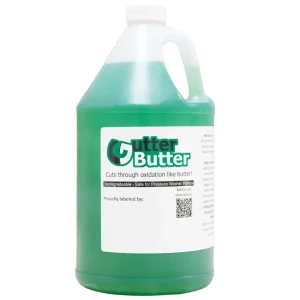
Gutter Butter – Oxidation Remover
From $54.47
Gutter Cleaning Detergents: Finish‑Safe Brightening for Aluminum & Vinyl
Why gutters streak — and what detergents actually remove
Those dark, vertical streaks on gutter faces are a mix of oxidation and grime carried over the lip during rain. General house wash can remove organic soils, but it won’t break the bond of oxidation and residue. Dedicated gutter detergents use targeted chemistry to lift that film with minimal pressure and light agitation.
Choose the right gutter detergent
Gutter Brighteners & Oxidation Removers
Formulated to tackle black streaks and chalky oxidation on painted aluminum and vinyl. Use after a basic wash when discoloration remains on the gutter face.
General House & Gutter Wash
Surfactant‑rich cleaners that remove dirt, pollen, and light organic soils. Often used as the first pass before any brightening step.
Plant‑Conscious, Buffered Formulas
Blends designed to rinse freely and reduce risk to landscaping when used as directed with pre‑wet and post‑rinse practices.
High‑Cling Gel Detergents
Enhanced viscosity for vertical surfaces. Improves dwell time on gutter faces and soffits while helping limit runoff and repeat applications.
Finish‑safe workflow for bright, even results
- Inspect the finish. If a fingertip leaves white residue, you’re dealing with oxidation; plan on a dedicated gutter detergent.
- Cool and prep the area. Work in shade when possible. Pre‑wet surrounding plants and sensitive finishes.
- Wash first. Remove loose soil with a mild house wash and a low‑pressure rinse.
- Apply gutter detergent. Treat small sections. Follow the label for dwell time; do not let product dry.
- Agitate lightly. Use a soft brush or microfiber pad to lift bonded streaks without marring the finish.
- Low‑pressure rinse. Rinse thoroughly from the cleaned area outward to prevent spotting. Repeat as needed.
Always test in a small, inconspicuous area to confirm compatibility with the gutter’s paint system. Keep adjacent glass and anodized finishes wet during application and rinse.
Detergent types at a glance
| Use case | Typical chemistry profile | Agitation | Application | Compatible surfaces |
|---|---|---|---|---|
| Black streaks / tiger stripes | Specialty brightener aimed at oxidation and bonded residue | Light brush or pad | Targeted, section‑by‑section | Painted aluminum, coated metals, vinyl (test first) |
| General soil removal | Surfactant blend (neutral to alkaline) | Usually none to light | Broad spray and rinse | Gutters, soffits, fascia, siding |
| Sensitive sites | Buffered, rinse‑friendly formulas | Light as needed | Controlled application with thorough rinse | Areas near delicate plants and finishes |
| Extended dwell on verticals | Gelled/High‑cling variants | Light brush to activate | Thin, even coat | Gutter faces, downspouts, fascia |
Never mix different detergents together, and never exceed label dwell times. Avoid dry, hot surfaces, protect landscaping with pre‑wet/post‑rinse, and wear appropriate PPE.
What to have on hand
- Dedicated gutter detergent matched to the soil (oxidation vs. general grime)
- Soft brush or microfiber pad on an extension pole
- Low‑pressure rinse capability
- Plant protection: pre‑wet hose and post‑rinse plan
- Clean water bucket and towels for detail work
Learn more
Explore related PowerWash.com guides:
- Understanding pH Levels in Common Cleaners
- Top 10 Power Washing Mistakes Contract Cleaners Must Avoid
- Mastering the Art of Pressure Washing: Key Insights on Surface Cleaners
Equipment selection notes
- Most tiger stripes require chemistry plus light agitation; pressure alone can leave uneven shading.
- Work in manageable sections to prevent dry‑on and streaking; re‑wet edges before overlap passes.
- For delicate or unknown coatings, start with the mildest product and shortest dwell time that achieves movement.
Need help choosing a gutter detergent?
Our team can help you match chemistry to oxidation level, climate, and workflow so you get bright results with minimal rework.