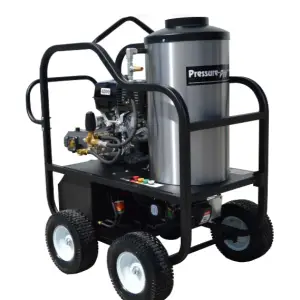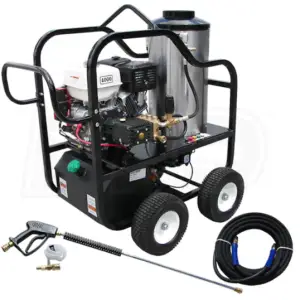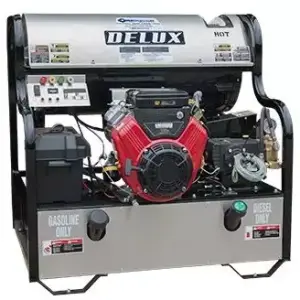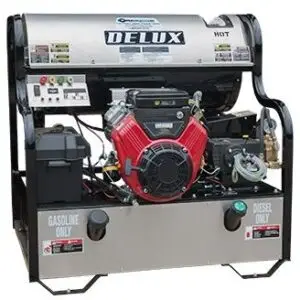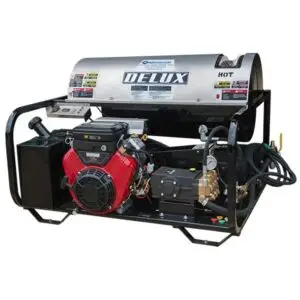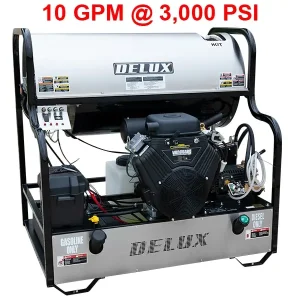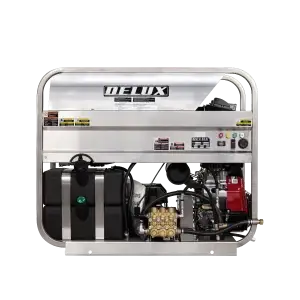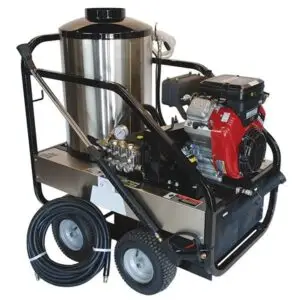
Gas Hot Water Pressure Washers

Gas hot water pressure washers combine a gasoline engine with an integrated burner coil to deliver high-power cleaning plus heat. That heat helps loosen petroleum-based grime so you can rinse faster and use less chemical—ideal for fleets, heavy equipment, shop floors, food‐service back‑of‑house, and industrial maintenance. Browse our curated selection below. For help matching PSI/GPM, burner style, and duty cycle to your jobs, talk with a PowerWash.com equipment specialist.

Brand

Price

Drive

Max Flow

Mobility Type

Product Grade

Washer Power

Showing all 9 resultsSorted by popularity

Why choose a gas hot water pressure washer?

  • Faster degreasing: Heated water accelerates the removal of oils and grease, cutting time on heavy soils compared with cold water alone.
  • Mobile power: Gas engines provide on‑site cleaning where electricity isn’t available—perfect for trailer rigs and field service.
  • Versatile builds: Choose portable frames for jobsite mobility or configure a trailer system with tank, hose reels, and accessories.

Mobile/Trailer Rigs

For remote or all‑day work. Pair with a buffer tank sized to your pump’s GPM and add reels for faster setup.

Shop & Facility

Use where reliable water supply and ventilation are available. Consider easy‑service frames and low‑noise operation.

Field Service & Fleets

Look for durable pumps, corrosion‑resistant coils, and burner efficiency to keep fuel costs predictable.

Serviceability & Maintenance

Prioritize accessible components, available replacement parts, dependable burner controls, and a configuration that can be serviced without disrupting the entire cleaning system.

Selection at a glance
Use case What to prioritize Notes
Heavy grease & oil Hot water coil, appropriate detergent injection, stable flow Heat plus detergent speeds rinse‑off and reduces agitation time.
Mobile jobs Gas engine reliability, trailer mounting, buffer tank Match supply water to pump flow; protect from freeze in winter.
Facilities Burner efficiency and ventilation, service access Follow local codes for fuel, exhaust, and drainage.

Equipment Selection Notes

  • Hot water cuts through grease and oil faster than cold water in comparable conditions.
  • Many industrial hot‑water washers are engineered for a substantial temperature rise above inlet water, supporting effective degreasing.
  • Commercial burners are available in oil‑fired, LP, or natural‑gas configurations depending on the machine and installation needs.

Not sure which unit fits your work? Contact our equipment team for fast, no‑pressure guidance.

Talk to an equipment specialist

Gas Hot Water Pressure Washers FAQ's

Use clean fuel, keep filters and nozzles in spec, descale coils as needed, and winterize before freezing conditions. Follow the manufacturer schedule and safety instructions.
Output temperature depends on model and inlet temperature. Many industrial units are engineered for a significant temperature rise above inlet water to aid degreasing. Check each product’s spec sheet.
Portable and stationary hot‑water machines are offered with oil‑fired, liquid‑propane (LP), or natural‑gas burners. Choose based on availability, install needs, and duty cycle.
Often yes. Match the tank and plumbing to the machine’s flow (GPM) so the pump is never starved. Confirm local transport and fuel rules for mobile systems.
Yes—use pressure‑washer‑safe detergents rated for hot water and follow the label. Heat plus the right soap improves results and can lower total chemical use.
When you routinely clean grease, oil, fats, or baked‑on grime. Heat shortens dwell time and reduces the scrubbing needed versus cold water alone.
A commercial pressure washer powered by a gasoline engine with a heating coil and burner to raise outlet water temperature. Heat helps break down petroleum‑based soils so they rinse away more easily.
Home Backup - 2-2-24
Special Offer
PowerWash Prime Membership