
Surface Cleaning
Brand
Price
- (3)
- (2)
Drive
- (1)
Max Flow
Mobility Type
- (1)
Motor Make
Product Grade
- (1)
Washer Power
- (1)
Showing all 8 resultsSorted by popularity
-
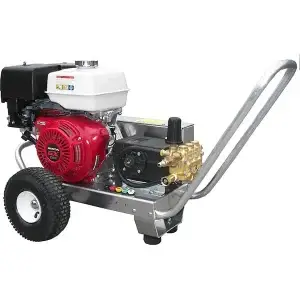
EB4040HG Gas Pressure Washer (4 GPM @ 4,000 PSI)
$2,401.47
As low as $60.04/mo -
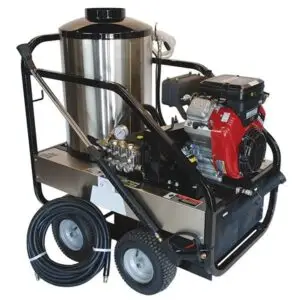
DELUX ® RK47-5030-C Series Gas-Powered Hot Water Pressure Washer
$10,020.47
As low as $250.51/mo -
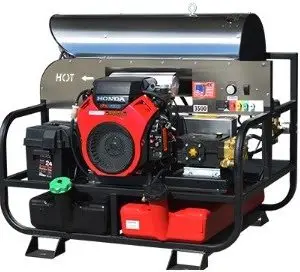
Hot Water Washer SSkid 12V 18
$9,608.47
As low as $240.21/mo -
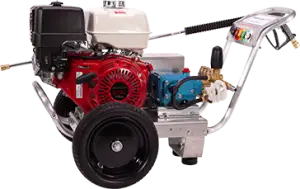
Belt drive 4 gpm 4000 PSI pressure pro cart pressure washer with a Honda engine
$2,942.42
As low as $73.56/mo -
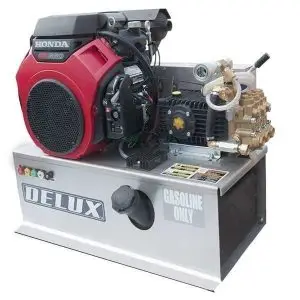
Prowler Clutch 7, SS Frame, 18 HP Vanguard, TSS1511, 5.5 GPM, 3500 PSI
$6,477.97
As low as $161.95/mo -
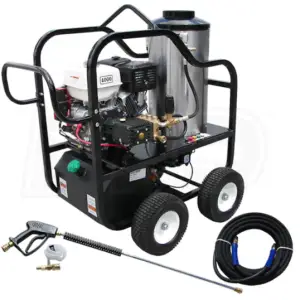
Pressure Pro 4012-42KV Hot Shot Series 4 Gpm 4200 Psi Viper Pump Direct Drive Kohler Engine
$5,999.97
As low as $150.00/mo -
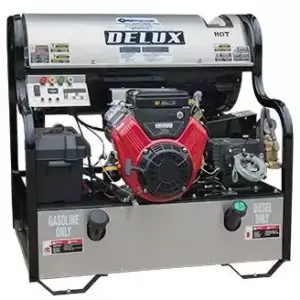
RK43-5535-HC 5.5 3500, Honda 18 HP GP TSS1511 with Clutch
$13,099.47
As low as $327.49/mo -
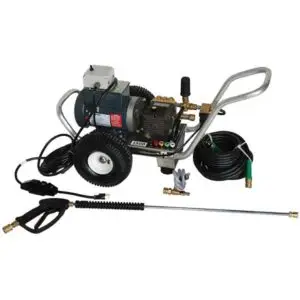
Powerful EE2015A with Auto Start Stop Electric Cold Water Pressure Washer with AR Pump – 2 GPM @ 1,500 PSI
$2,761.47
As low as $69.04/mo
Surface Cleaning: How to Choose the Right Surface Cleaner and Accessories
What belongs in Surface Cleaning
Surface cleaning equipment uses a rotating spray bar under a shielded deck to clean concrete, pavers, and other flatwork faster and more evenly than a wand. In this category you9ll find flat surface cleaners, compatible accessories, and chemistry that supports stain removal on driveways, sidewalks, dumpster pads, patios, and parking areas.
Quick chooser: match deck size to your machine
Up to 3.0 GPM (light-duty)
- Typical deck: 12–16 inches; 2-nozzle bar.
- Best for small patios and walkways; slower pacing.
- Prioritize compact hover designs and easy storage.
3.5–4.0 GPM (prosumer/pro)
- Typical deck: 16–20 inches; 2-nozzle bar.
- Go-to size for residential driveways and sidewalks.
- Confirm PSI rating meets or exceeds your machine.
4.5–5.5 GPM (professional)
- Typical deck: 20–24 inches; 2–4 nozzle bars.
- Higher production on large residential or light commercial.
- Look for serviceable swivels and durable skirts.
6–8+ GPM (high output)
- Typical deck: 24–30+ inches; 4-nozzle/high-flow bars.
- Best for parking lots, warehouses, and heavy commercial.
- Consider vacuum recovery ports where reclaim is required.
Deck size is limited by available flow. As a simple rule of thumb, many 20-inch cleaners perform best around 4 GPM, while 30-inch models typically need 5–6+ GPM. Always verify the model9s minimum GPM and match total nozzle orifice to your target PSI.
Key features that matter
| Feature | Why it matters | What to look for |
|---|---|---|
| Swivel/bearing | Spins the spray bar smoothly under load. | Professional stainless swivels with serviceable seals, rated at or above your PSI and temperature. |
| Max PSI & temperature | Ensures reliability with your machine. | Choose a cleaner that meets or exceeds your washer9s PSI; confirm hot-water rating if you use a heater. |
| Deck size & skirt | Controls coverage and overspray. | Balance deck size to your GPM; maintain a tight brush skirt or shield to contain splash. |
| Spray bar & nozzles | Determines cleaning width and pace. | 2-nozzle bars suit 3–4 GPM; 4-nozzle or high-flow bars spread 5–8+ GPM; size tips correctly. |
| Mobility | Reduces fatigue; keeps standoff consistent. | Casters or hover design, ergonomic handles, easy transport. |
| Recovery options | Controls wastewater on sensitive sites. | Vacuum ports and splash guards where reclaim is required. |
Avoid stripes and swirl marks
- Begin with overlapping passes—don9t outrun the bar.
- Keep the bar spinning before you lower it; lift before stopping.
- Match nozzle sizes and replace worn tips in pairs; clear debris.
- Maintain even standoff with intact skirts or wheels.
- Pre-treat heavy organics and consider light post-treatment for shadows.
Learn the techniques behind flawless flatwork:
- How To Avoid Swirls When Using Your Surface Cleaner
- Mastering The Art Of Pressure Washing: Key Insights On Surface Cleaners
- Pressure Washer Surface Cleaner Facts To Know
Chemicals and stain strategy
Surface cleaners mechanically lift embedded soils; targeted chemistry speeds dwell and helps even out light shading. For rust, fertilizer, or tire marks, use purpose-made products as directed. For gum, soften with heat or chemistry, agitate with the bar, and rinse thoroughly.
Always pre-wet nearby landscaping and test chemistry on a small, inconspicuous area. Avoid etching softer masonry by using the correct tip size and keeping the bar moving.
Setup and operation checklist
- Confirm the cleaner9s minimum GPM and PSI meet your machine output.
- Install matched nozzle tips; verify total orifice suits your flow at target PSI.
- Inspect swivel for smooth rotation and leaks; service as specified.
- Check brush skirt/casters for even standoff and replace worn sections.
- Flush inline filters and debris traps before connecting.
- Plan water recovery if local rules require it; use vacuum ports when needed.
- Make the first pass slowly with 30–50% overlap; adjust pace for uniform results.
Popular use cases
Driveways & Sidewalks
20–24 inch decks paired to 4–5.5 GPM deliver productive coverage on residential flatwork.
Dumpster Pads
Hot-water compatible units, splash control, and optional recovery help reduce tracking and runoff.
Large Pavers & Patios
Hover or wheeled designs with intact skirts prevent sand blowout and edge marking.
Parking Lots & Garages
High-flow 24–30 inch cleaners with 4-nozzle bars and vacuum ports maximize production and housekeeping.
Compatibility quick reference
| Specification | Typical range | Notes |
|---|---|---|
| PSI rating | Up to 4000 psi (contractor-grade); some specialty models higher | Choose a cleaner at or above your washer9s PSI. |
| Temperature rating | Cold-water only to hot-water rated | Hot-water models list a max temp; verify before use with heaters. |
| Minimum flow | ~3.5–4.0 GPM for 20″, ~5–6+ GPM for 30″ | Model-specific; size nozzles correctly for your flow. |
| Nozzle count | 2 or 4 | More nozzles spread high flows; total orifice must still match your GPM/PSI. |
Need help sizing a surface cleaner to your washer?
Our team can help you match deck size, nozzle orifice, and swivel rating to your exact PSI, GPM, and application.