0

Spray Guns

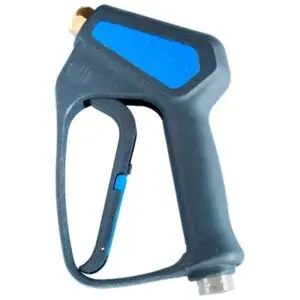
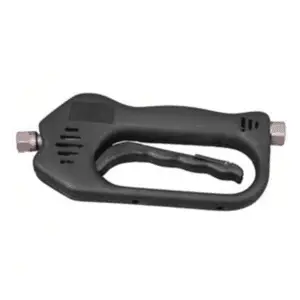
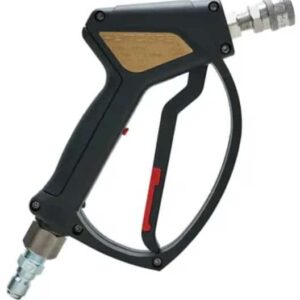
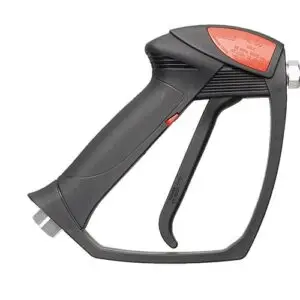
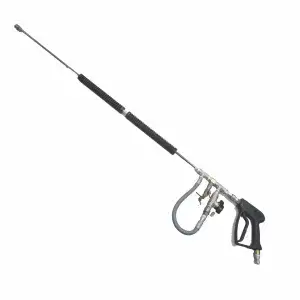
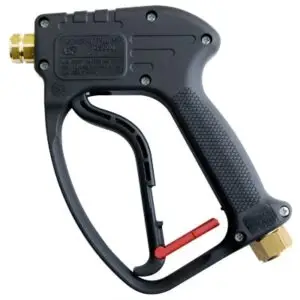
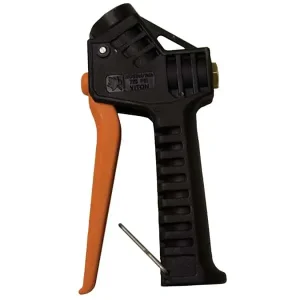
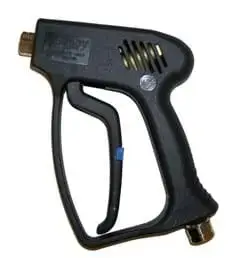
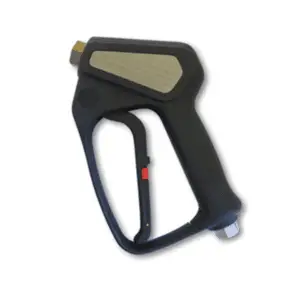
Find pro‑grade pressure washer spray guns and repair kits for cold‑ and hot‑water machines. This guide explains how to match PSI, GPM, temperature ratings, and connections so your setup is safe and comfortable to use. Use the quick selector, spec table, and compatibility checklist to choose a gun or kit that fits your workflow and budget.

Featured Categories

Brand

Price

Inlet Size

Max Flow

Max Temperature

Showing 1–20 of 51 resultsSorted by popularity
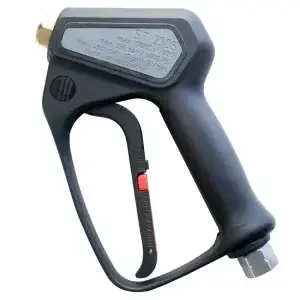
How to Choose a Pressure Washer Spray Gun & Repair Kits

Quick selector: pick your spray gun

Everyday cold-water (2–4 GPM, up to ~4,000 PSI)

  • Great for general washing, vehicles, and light surfaces.
  • Choose a compact, rear-entry gun to reduce hose torque.
  • Add a 1/4″ quick connect at the outlet for fast tip swaps.

Hot-water cleaning (rated to ~300°F)

  • Use a gun with a clearly listed high-temperature rating.
  • Low-trigger-force designs help on long, hot-water jobs.
  • Pair with insulated lances for operator comfort.

High-pressure rigs (up to ~5,000 PSI)

  • Pick a gun whose max PSI and GPM meet or exceed your machine.
  • Confirm thread sizes before adding swivels or quick connects.
  • Consider reinforced housings for durability.

Ergonomic & low‑fatigue

  • Low trigger force reduces hand strain during all‑day use.
  • Rear‑entry routing lessens wrist bend and hose drag.
  • Look for safety lock‑outs and textured grips.

Key specs to match

Spec What to check Common pro examples Notes
Max Pressure (PSI) Gun rating ≥ machine output ~4,000–5,000 PSI Never exceed any component’s rating.
Max Temperature Hot‑water output vs. gun rating Up to ~300°F on many hot‑water guns Higher temps demand compatible seals.
Flow (GPM) Gun rating ≥ machine flow ~2–10.5 GPM Undersized flow increases restriction and heat.
Inlet thread Match hose end or adapter Often 3/8″ NPT‑F; some M22 Verify NPT vs. M22 (14 mm or 15 mm).
Outlet thread Match lance/nozzle hardware Often 1/4″ NPT‑F; 1/4″ quick connect for tips Add QC for faster accessory swaps.

Repair kits and upgrades

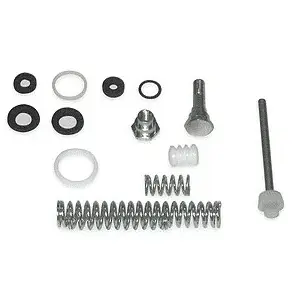
Trigger & seal kits

  • Restore performance when the trigger weeps or sticks.
  • Match kit by gun model and revision.

O‑rings & quick connects

  • Keep 1/4″ (tip side) and 3/8″ (hose side) spares on hand.
  • Replace worn O‑rings to stop drips and pressure loss.

Live swivels

  • Reduce hose twist and wrist torque at the gun inlet.
  • Choose PSI/°F ratings that meet your system.

Comfort add‑ons

  • Stubby or insulated lances improve control and heat protection.
  • Quick‑connect stubs speed up tool changes.

Compatibility checklist

  • Confirm gun PSI, GPM, and temperature ratings meet or exceed your pressure washer’s output.
  • Match threads: many pro guns use 3/8″ NPT‑F inlets and 1/4″ NPT‑F outlets; M22 is also common on some hoses and consumer units.
  • Select correct quick connects: 3/8″ at the hose‑to‑gun side and 1/4″ at the nozzle/accessory side are common patterns.
  • Use sealants appropriate for high‑pressure threads; do not over‑tighten.
  • Inspect triggers, pivots, and O‑rings regularly; replace kits at the first signs of leaks or sticking.

Safety first: the working limit of your setup is the lowest‑rated component. Always verify the ratings listed on each product page, especially when running hot water above 200°F or systems near 5,000 PSI.

Need help matching a gun to your machine?

Tell us your PSI, GPM, temperature, and thread types. We’ll recommend a spray gun and any repair or adapter kits that fit your exact setup.

Talk to an Equipment Specialist

From the Learning Center

Spray Guns FAQ's

A live swivel between the hose and gun reduces hose twist and operator fatigue. Choose a swivel with PSI, GPM, and temperature ratings that meet or exceed your system.
Rear‑entry brings the hose straight behind the handle to reduce wrist bend and hose drag. Front‑entry routes the hose forward and is preferred in some specialty setups.
Replace or rebuild when you notice seepage past the trigger, a sticky or slow‑returning trigger, external leaks, or visible damage. Small leaks often indicate worn seals or O‑rings.
They reduce hand fatigue on long jobs, especially at higher pressures or with hot water. They also help operators maintain better control and productivity.
Select a gun with a temperature rating at or above your heater’s outlet. Many hot‑water guns are rated around 300°F, which provides margin for most washers.
Yes. It’s acceptable for the gun to be rated higher than the machine. The overall system limit is the lowest‑rated component for PSI, GPM, and temperature.
Many pro guns use a 3/8″ NPT female inlet for the hose and a 1/4″ NPT female outlet for the lance or quick connect. Always confirm the specific product’s threads and any M22 variants before ordering adapters.
Home Backup - 2-2-24
Special Offer
PowerWash Prime Membership