Trailer Mounted Pressure Washers: How to Choose the Right Mobile Rig
What makes a trailer unit different?
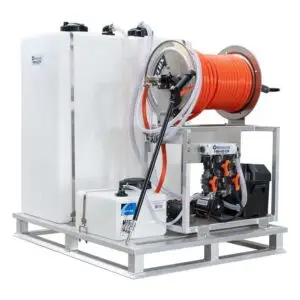
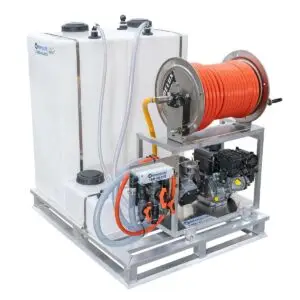
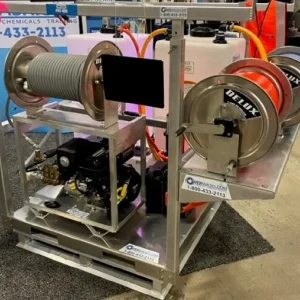
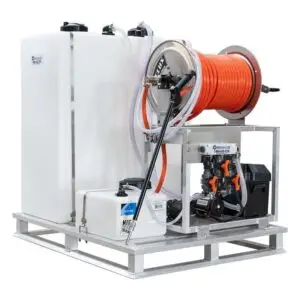
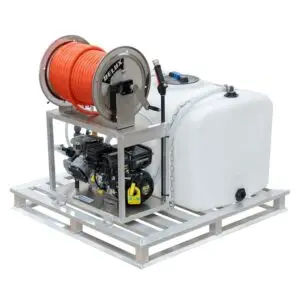
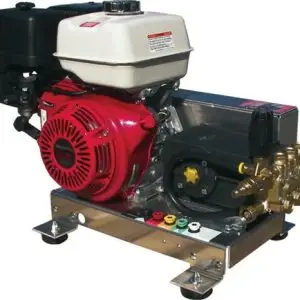
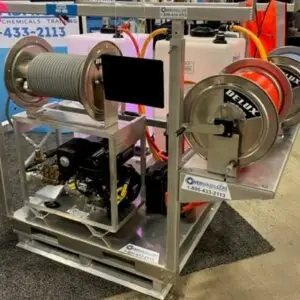
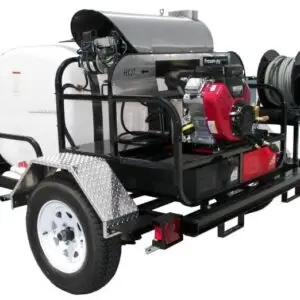
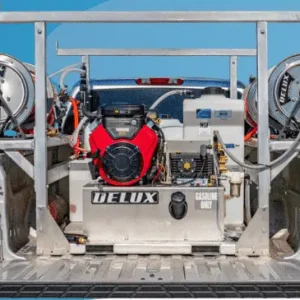
Trailer rigs package a professional pressure washer with an on-board water supply, hose reels, fuel, and storage so you can clean where hydrants or spigots are limited. They’re popular for fleets, flatwork, heavy equipment, and routes where setup speed and runtime matter.
Buying for a team? Standardize connections, hose sizes, and nozzle sets across rigs. It simplifies training and reduces downtime when swapping accessories on the job.
Quick spec ranges to plan your build
| Category |
Common Range |
Selection Notes |
| Pressure (PSI) |
3,000–5,000 |
Higher PSI helps on durable flatwork; use the right tips and technique to protect delicate surfaces. |
| Flow (GPM) |
4–8 |
GPM drives speed and rinsing power; match flow to your water supply and tank strategy. |
| Water Tank Capacity |
200–525 gal |
Larger tanks extend runtime and buffer variable supply. Ensure trailer/axle ratings support filled weight. |
| Water Heating |
Cold or Hot |
Hot water accelerates removal of oils and grease; cold water handles most soil with the right chem. |
| Engine / Burner Fuel |
Gas engine; diesel/kerosene burner |
Plan separate, clearly labeled fuel cans and safe storage. |
| Axle Configuration |
Single or Tandem |
Tandem axles improve stability and payload for large tanks or dual-machine rigs. |
Hot water vs. cold water
Choose hot water when tackling grease, oil, or heavy traffic film (shops, kitchens, loading docks, equipment). Cold water systems efficiently handle soil, dust, and general exterior cleaning with proper detergents and dwell time.
Water supply, tanks, and bypass plumbing
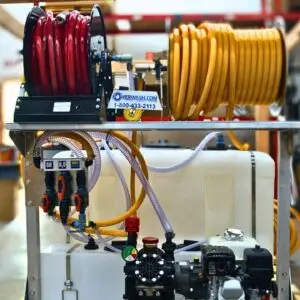
Trailer builds commonly include a fresh-water supply tank to extend runtime and protect the pump when site flow is inconsistent. Size the tank around your machine’s GPM and typical job length, and route the unloader bypass back to the tank to reduce heat and cavitation during trigger-off periods.
Always verify combined weight of trailer, equipment, fuel, and full water tanks against the trailer’s VIN labels (GVWR/GAWR). Brakes, lighting, and breakaway kits may be required in your state. Secure all tanks and reels with rated hardware and use proper tongue weight for safe towing.
Common trailer build archetypes
4–5 GPM Cold Water, 200–300 gal
Efficient for house washes, light commercial, and maintenance routes. Compact footprint with room for a surface cleaner and chem tanks.
8 GPM Cold Water, 300–525 gal
High-production rinsing and surface cleaning. Prioritize large buffer capacity and wide plumbing to keep the pump supplied.
Hot Water 5–8 GPM, 300–525 gal
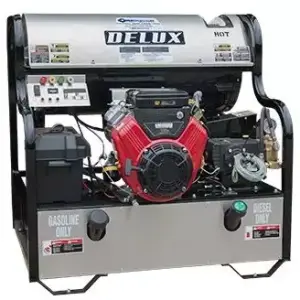
Adds a burner coil for faster removal of oil and grease. Plan fuel storage, burner maintenance access, and proper ventilation.
Dual Machine Crew Rig
Two independent washers on one trailer increase parallel productivity. Use tandem axles, balanced layout, and dedicated reels per user.
Open vs. enclosed trailers
Open Trailer
Fast access to equipment, easier cleaning and service, and lower cost. Add sun/rain shields over burners and controls.
Enclosed Trailer
Improved security and weather protection with room for shelving. Engineer ventilation for burners and consider a roof fan.
Pre-delivery checklist
- Confirm trailer payload covers equipment, hose, fuel, and a full water tank.
- Route unloader bypass to the water tank; verify float valve operation.
- Pressure-test all fittings; secure tanks/reels with rated hardware.
- Label fuels and chem storage; include a spill kit and fire extinguisher.
- Stock spare nozzles, gun, hose repair kit, pump oil, and burner parts.
Learning Center
Configure a Trailer Mounted Pressure Washer
Tell us what you clean, how long you run, and your towing limits. We’ll spec GPM/PSI, tank size, trailer, plumbing, and accessories that fit your routes and budget.
Talk to an Equipment Specialist