
Disinfectant Cleaning Solutions
Price
- (1)
Showing all 2 resultsSorted by popularity
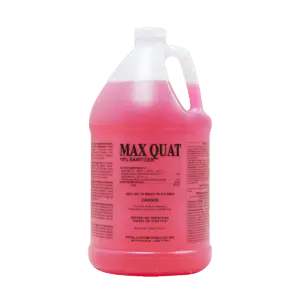
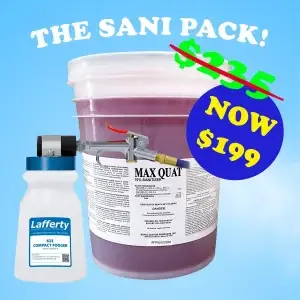
Disinfectant Cleaning Solutions: Selection and Use Guide
Clean, sanitize, or disinfect — whats the difference?
Cleaning removes soils. Sanitizing reduces germs on surfaces to a public health standard. Disinfecting uses an EPA-registered product according to its label to inactivate listed microorganisms on hard, non-porous surfaces. Always assess your surface, soil load, and the level of risk before choosing a product and method.
Choose the right chemistry for the job
Quat Disinfectant Cleaners
- Best for: Routine hard-surface disinfection in restrooms, kitchens, and high-touch areas.
- Use on: Finished floors, tile, plastic, sealed metals (check label).
- Considerations: Often one-step cleaner/disinfectants; avoid mixing with soaps that can deactivate; rinse food-contact surfaces if the label requires.
Sodium Hypochlorite Solutions
- Best for: High-risk non-porous areas, waste pads, and odor-causing residues when compatible with surfaces.
- Use on: Concrete, masonry, certain plastics (spot test first).
- Considerations: Corrosive to some metals and fabrics; sensitive to heat/sunlight; never mix with acids or ammonia.
Hydrogen Peroxide / Peracid Blends
- Best for: Facilities seeking a bleach alternative with broad hard-surface claims.
- Use on: Many sealed hard surfaces (verify material compatibility).
- Considerations: Some formulas have faster contact times; can discolor textiles; store away from heat.
Food-Contact Surface Sanitizers
- Best for: Warewashing, prep tables, and food service areas where sanitizing (not disinfecting) is appropriate.
- Use on: Hard, non-porous food-contact surfaces as labeled.
- Considerations: Observe required rinse or no-rinse directions and exact dilution; do not substitute for a disinfectant when disinfection is required.
Equipment Selection Note: Disinfectants work best on visibly clean hard, non-porous surfaces. Pre-clean heavy soils with a compatible detergent, then apply your disinfectant and keep the surface wet for the full label contact time.
Label, dilution, and contact time — verify before you start
Every products label is the law. Confirm these items and set up your equipment accordingly:
| What to check | Why it matters |
|---|---|
| EPA Registration Number and organism list | Confirms the product is registered for the organisms and uses you intend. |
| Required dilution (if concentrate) | Ensures correct ppm/percent for efficacy and material safety. |
| Contact time (“dwell time”) | Surface must remain visibly wet for the full time to achieve the labeled result. |
| Application method | Some labels permit spray/wipe; others specify foaming, mopping, or immersion only. |
| Rinse directions | Food-contact and sensitive surfaces may require a potable-water rinse. |
| PPE and ventilation | Match gloves, eye/face protection, and ventilation to the hazard statements and SDS. |
Safety Note: Never mix sodium hypochlorite with acids or ammonia. Do not combine different disinfectants unless a label explicitly instructs it. Store chemicals securely, use only clean, dedicated containers, and train staff on SDS and HazCom.
Application methods that save time and solution
- Low-pressure sprayers: Meter ready-to-use or properly diluted solutions onto hard, non-porous surfaces. Avoid fine mists unless the label allows.
- Foamers and pump-up sprayers: Create visible coverage to help confirm wet contact time on vertical or textured surfaces.
- Microfiber or mop application: For interiors where overspray control is critical; re-wet as needed to maintain contact time.
- HVAC and fogging: Only use if the product label specifically includes that use pattern; many labels do not.
Quick setup checklist
- Identify surface type and soil load; pre-clean if needed.
- Confirm the products organism claims and EPA Reg. No. on the label.
- Measure exact dilution with labeled dispensers or tips.
- Apply evenly and keep surfaces wet for full contact time.
- Rinse food-contact surfaces if the label requires.
- Wear the PPE listed on the label/SDS and ensure ventilation.
- Document lot numbers, dilution, and contact time for critical jobs.
Learn more from the PowerWash Learning Center
- Beginning To End Dumpster Pad Cleaning
- Beginning To End Dumper Pad Cleaning Part 1
- Beginning To End Dumper Pad Cleaning Part 2
Need help choosing the right disinfectant solution?
Our team can match chemistry, dilution tools, and application methods to your surfaces and compliance needs.