
Stationary Pressure Washers
Brand
Price
- (1)
- (1)
Showing all 3 resultsSorted by popularity
-
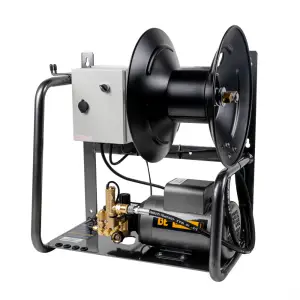
Wall Mounted ELEC 1500 PSI 2 GPM
$2,326.97
As low as $58.17/mo -

STATIONARY NG HOT WATER PRESSU
$7,064.47
As low as $176.61/mo -
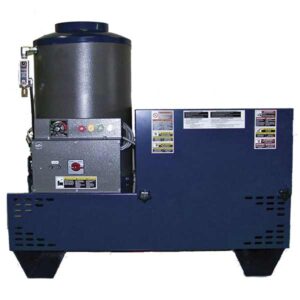
NG-17-C Stationary Washer with Clutch
$12,557.97
As low as $313.95/mo
Stationary Pressure Washers Buyer’s Guide
Stationary pressure washers mount permanently to a wall, skid, or equipment pad and integrate with your facility’s water, power, and chemical delivery. Compared with portable units, they streamline workflows, reduce trip hazards, and make it easier to manage reclaim or drainage in a dedicated bay.
Hot Water Systems
Hot water helps break the bond of oils and grease to cut cleaning time on engines, undercarriages, shop floors, and food-contact adjacencies. Heat is typically produced by a fired coil; confirm allowable fuels for your site.
- Best when soils contain petroleum or fats
- Requires proper venting and combustion air
- Pairs well with degreasers rated for heat
Cold Water Systems
Cold water units excel at rinsing dust, mud, and general grime on concrete, equipment, and vehicles when grease is minimal. They offer simpler installation and lower operating complexity.
- Lower initial cost and footprint
- Fewer components to service
- Ideal for high-flow rinsing with surface cleaners
Electric Motor Drive
Most stationary pumps are electric-driven for quiet, exhaust-free indoor operation. Verify available voltage and phase in the install area before selecting horsepower and pump output.
- Consistent RPM for steady pressure and flow
- No fuel storage for the drive motor
- Check panel capacity and disconnect location
Burner Fuel Options
Hot-water models commonly use natural gas, LP, or diesel/kerosene for the heating coil. Each fuel has different venting, supply, and code considerations—plan these early in your bay design.
- Confirm fuel availability and routing
- Provide service clearances around the coil
- Include spill and shutoff provisions as required
Plan Your Wash Bay Layout
Map pump location, hose runs, gun storage, and surface-cleaner parking to reduce walking time and hose wear. Include backflow prevention, filtration where needed, and a clear chemical mixing area with labeled containers.
Follow local codes for venting, electrical, backflow prevention, separators, and wastewater handling. Coordinate with a licensed contractor where permits are required.
Application Quick-Match
| Application | Typical Soil | Water Temp | Flow vs. Pressure | Notes |
|---|---|---|---|---|
| Fleet wash bay | Road film, light oils | Hot preferred | Higher flow speeds rinsing | Plan for two-gun operation and hose reels |
| Equipment maintenance | Grease, hydraulic oil | Hot strongly preferred | Balanced | Use degreasers compatible with heated water |
| General facility cleaning | Dirt, dust, mud | Cold or warm | Higher flow | Surface cleaners boost productivity on floors |
| Detail work and parts | Stubborn residues | Hot | Higher pressure | Use correct nozzles; avoid delicate finishes |
Sizing Essentials
- Match GPM to workflow: more flow moves debris faster; PSI helps break adhesion.
- Duty cycle: choose pumps and motors designed for sustained daily operation.
- Electrical: verify voltage, phase, and available amperage at the install point.
- Water supply: provide adequate inlet flow at temperature; protect with filtration if the source is marginal.
- Plumbing: include thermal relief, pressure regulation, and easy-to-service unions.
Specify quick-connects, hose reels, and gun holders during the initial purchase—adding them later often costs more and takes your bay offline.
Maintenance and Uptime
Set a simple schedule for inspection, oil changes where applicable, burner tune checks on hot-water units, and winterization in cold climates. Keep common wear items—nozzles, o-rings, filters—on hand to minimize downtime.
Recommended Reading
- The Benefits and Drawbacks of Electric Pressure Washers
- Pressure Wash Maintenance
- Winter Storage of Pressure Washers
Need help specifying a stationary system?
Our team can help you size pumps, choose hot or cold water, and plan venting, electrical, and plumbing details for a reliable wash bay.