
Showing 1–20 of 31 resultsSorted by popularity
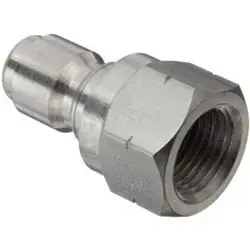
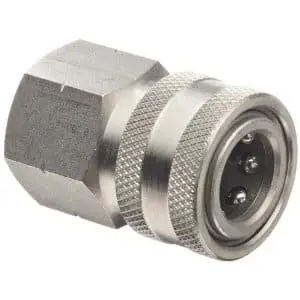
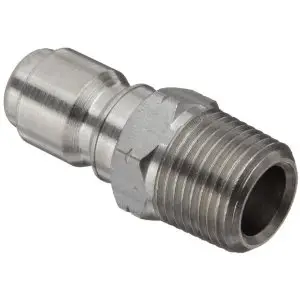
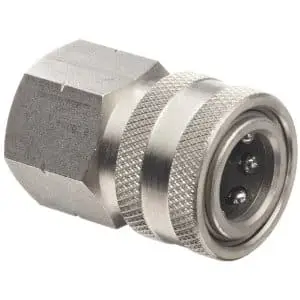
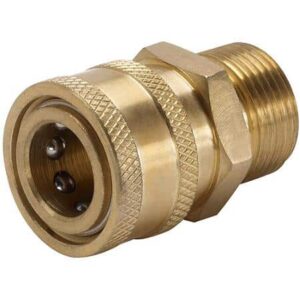
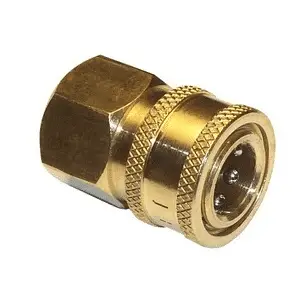
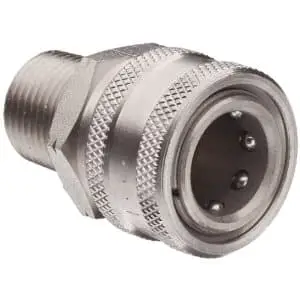
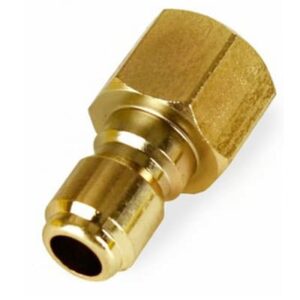
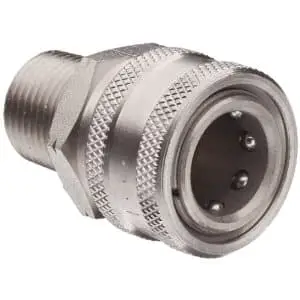
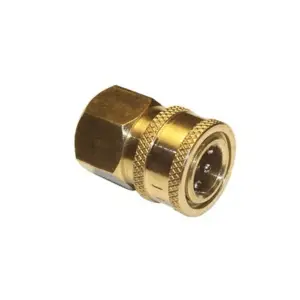
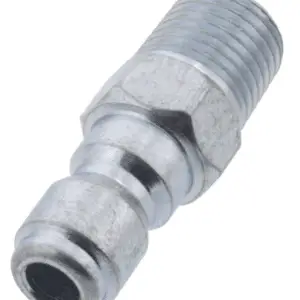
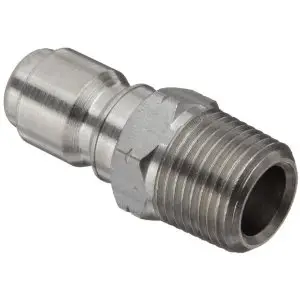
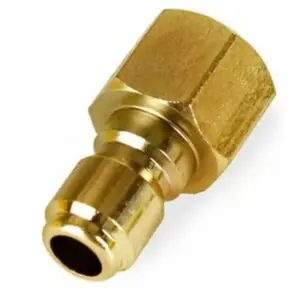
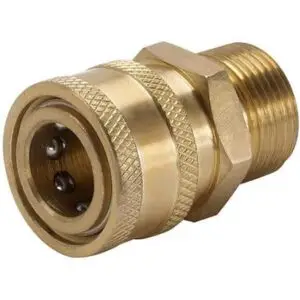
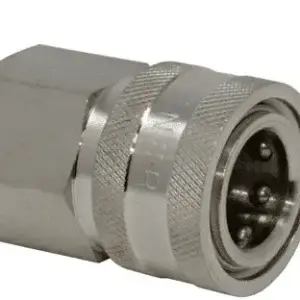
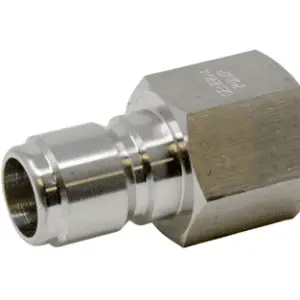
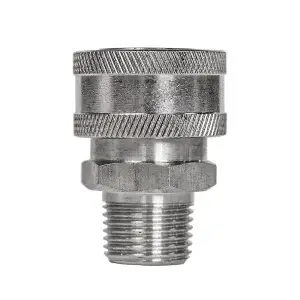
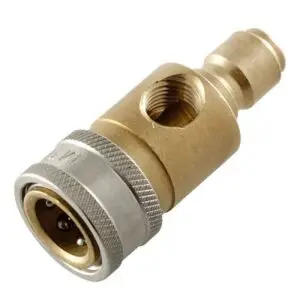
Quick connects pair a spring-loaded coupler with a plug to create a fast, repeatable connection. In pressure washing, they are commonly used at the pump or unloader outlet, on hose ends, at the gun inlet/outlet, and at the lance or nozzle. Selecting the right size, thread, and material prevents leaks, premature wear, and flow restriction.
Think in pairs. Every coupler needs a correctly sized plug, and every threaded end must match the machine or accessory (NPT, BSPP/BSPT, or M22) to seal properly.
Quick connects are most commonly available in 1/4″, 3/8″, and 1/2″ body sizes. Many spray nozzles and lance tips use 1/4″ quick connects, while high‑pressure hose connections are often 3/8″. Threaded ends on these fittings vary by equipment: tapered NPT is widely used in North America, BSP variants appear on some imported or specialty components, and metric M22 is common on consumer and light commercial machines. Avoid mixing thread standards.
| Connection point | Common QC body size | Typical thread at the other end | Equipment selection notes |
|---|---|---|---|
| Pump/unloader to hose | 3/8″ | Usually FNPT or MNPT | Match pressure rating to your machine; use thread sealant appropriate for NPT. |
| Hose to spray gun (inlet) | 3/8″ | Often NPT or M22 (14 mm or 15 mm) | Confirm M22 size; cross‑sizes will leak. |
| Gun to lance (outlet) | 1/4″ or 3/8″ | Commonly NPT | Choose larger bore for higher flow to reduce restriction. |
| Lance to nozzle | 1/4″ | QC plug/coupler pair | Standard on many quick‑change nozzle sets. |
Brass couplers are economical and widely used. Stainless steel offers higher corrosion resistance and durability in harsh or wet environments. O‑ring materials vary; choose seals compatible with your detergents and operating temperatures. Replace worn O‑rings promptly to maintain a leak‑free seal.
Do not force different thread standards together (e.g., NPT with BSP). Connections that “start” may still leak under pressure and can damage ports and fittings.
Common on professional rigs. Pair a 3/8″ coupler at the outlet with a 3/8″ plug on the hose for fast swaps between hoses or accessories.
Use a 3/8″ coupler on the hose end and a 3/8″ plug on the gun inlet, or adapt from M22 to 3/8″ QC to simplify changeovers.
For higher flow systems, 3/8″ can reduce restriction; many light‑duty setups use 1/4″ to keep tools compact.
Quickly change spray tips without tools. Keep spare O‑rings on hand for this high‑cycle connection.
If a connection weeps, verify the thread type and QC size first, then check the O‑ring. Persistent drips at an NPT joint often indicate insufficient sealant or damaged threads; at a QC, they often trace to a worn O‑ring or debris inside the coupler.
Want to go deeper? Visit our Learning Center for maintenance tips, sizing guides, and accessory how‑tos.
Our team can help you confirm NPT vs BSP, M22-14 vs M22-15, and pick couplers that fit your machine, hoses, and guns.