Nozzles
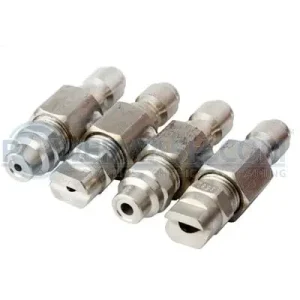
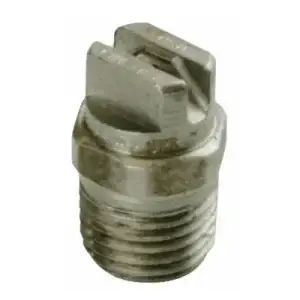
Find the right pressure washer nozzles to match your machine and cleaning goals. This category includes fixed fan tips, turbo/rotary nozzles, low‑pressure soap tips, and specialty options for reach or delicate surfaces.
Use this guide to decode color codes, pick a safe spray angle, and size the orifice to your rated GPM and PSI so you clean faster without overloading your pump.
Featured Categories
Brand
Price
- (77)
- (15)
Product Grade
- (1)
- (1)
ACCESSORIES SALE
15% Off the Parts That Keep You Working
Stock the truck, replace worn parts and keep the next job moving. Use code NEEDIT2026 through Aug 10th.
Showing 1–20 of 95 resultsSorted by popularity
-
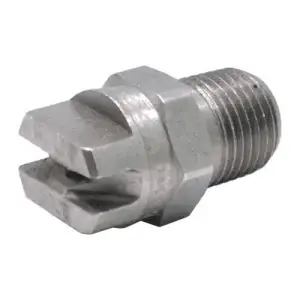
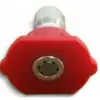
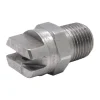
Gum Blaster 5-Degree Spray Nozzle
From $7.47 -
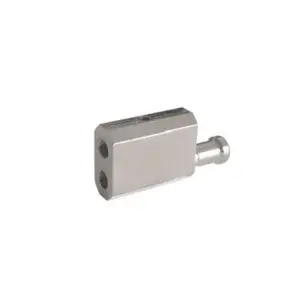
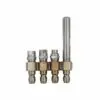
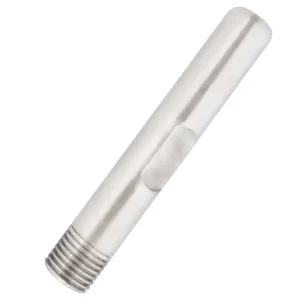
1/4″ Double Nozzle Holder
$12.97 -
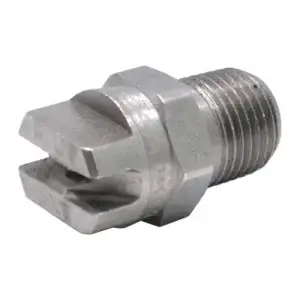
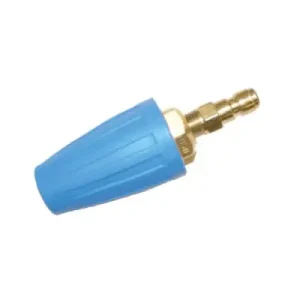
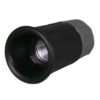
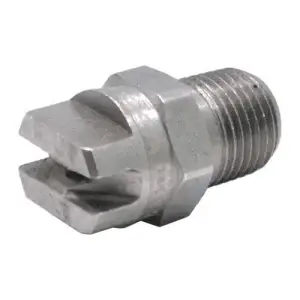
A+ Turbo Nozzle 4000
From $70.47 -
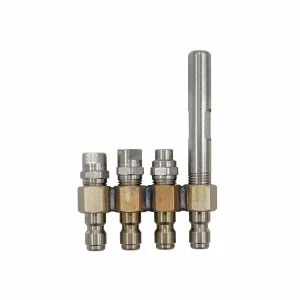
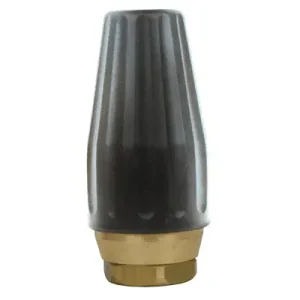
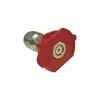
Suttner ST-357 Turbo Nozzle (3600 PSI)
From $102.97
Pressure Washer Nozzles: Selection, Sizing and Safe Use
Quick pick: choose your nozzle type
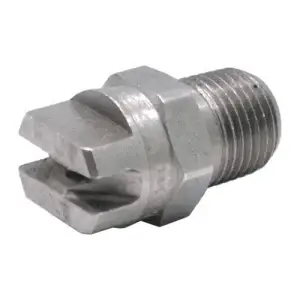
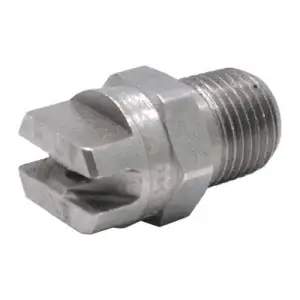
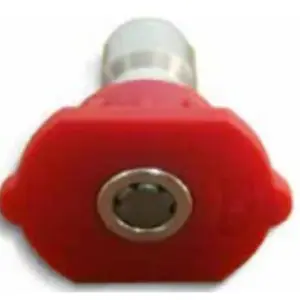
Fan spray tips (0°, 15°, 25°, 40°)
- Color-coded for spray angle; narrower angles concentrate impact on small areas.
- Use wider angles (25°–40°) for most surfaces; test from a distance first.
- 0° is for pinpoint removal on very hard, resilient materials only.
Turbo/rotary nozzles
- Combine 0° impact with a rotating pattern to cover area quickly.
- Great for concrete and masonry when a straight 0° stream would be too slow.
- Match max PSI/GPM and temperature ratings to your machine.
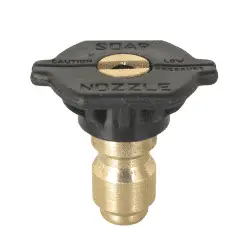
Soap/low‑pressure tips (65°)
- Wide, low‑pressure spray to apply detergents through downstream injectors.
- Switch back to a high‑pressure tip for rinsing after dwell time.
- Not for aggressive cleaning by itself.
Specialty options
- Adjustable/variable tips for quick on‑the‑fly angle changes.
- Long‑range and multi‑function tips for reach and versatility.
- Nozzle holders (e.g., J‑style) to keep your most‑used tips organized.
Color codes and spray angles
| Color | Spray angle | Typical uses | Notes |
|---|---|---|---|
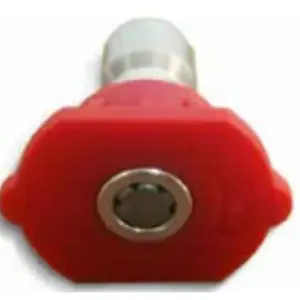
| Red | 0° | Spot removal on hard, unpainted surfaces | Highest impact; test carefully and keep moving. |
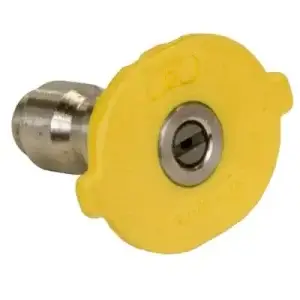
| Yellow | 15° | Heavy‑duty cleaning on concrete, brick, metal | Cuts stubborn grime; avoid soft materials. |
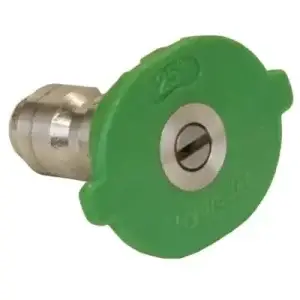
| Green | 25° | General cleaning on many exterior surfaces | Balanced cleaning and safety for routine work. |
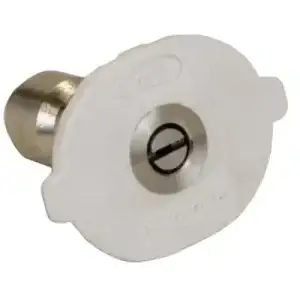
| White | 40° | Rinse and delicate surfaces | Widest common fan for gentle coverage. |
| Black | ~65° (soap) | Applying detergents via downstream injection | Low pressure; switch tips to rinse. |
Start with the widest angle you expect to use, stand back, and inch closer only as needed. Watch for lifting fibers, etching, or paint loss and stop immediately if observed.
Size the orifice to your GPM and PSI
- Confirm your machine’s rated flow (GPM) and pressure (PSI) from the spec plate.
- Use a nozzle sizing chart to match that GPM/PSI to an orifice size (e.g., 3.5, 4.0). The orifice governs operating pressure; the fan angle does not.
- If you’re between sizes, choosing the slightly larger orifice typically reduces pump load and risk of over‑pressure.
- For surface cleaners or multi‑jet setups, divide total flow across all nozzles and size each jet accordingly.
- Verify max PSI and temperature ratings on the nozzle body before use.
Undersized nozzles can spike system pressure; oversized nozzles can reduce cleaning effectiveness. Always verify sizing before you spray.
Materials, ratings and connections
- Materials: stainless and hardened steel are common for durability; ceramic inserts are used in some rotary tips to extend life.
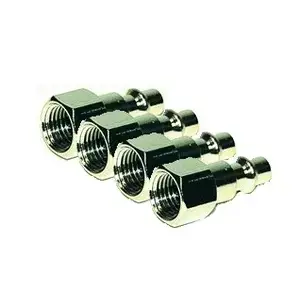
- Connections: most handheld spray tips use a 1/4‑inch quick‑connect plug; confirm your wand, lance, or holder compatibility.
- Ratings: match nozzle max PSI, GPM, and temperature to your machine. Replace worn or pitted tips to maintain performance.
Troubleshooting quick answers
- Soap won’t draw downstream? Use the black low‑pressure soap tip; high‑pressure fans will block injector draw.
- Striping or tiger marks on concrete? Clean with a consistent overlap, verify orifice size, and consider a turbo nozzle or surface cleaner.
- Vibration or sputter from a rotary tip? Inspect for debris, wear, or a damaged internal seat; replace if performance doesn’t stabilize.
- Low pressure after tip changes? Check for an oversized orifice, clogged inlet screen, worn pump valves, or air leaks at quick‑connects.
Keep learning
Need help matching a nozzle to your machine?
Our team can help you choose the right spray angle, rotary vs. fixed tips, and the correct orifice size for your rated GPM and PSI.

Nozzles FAQ's
What connection size do most tips use?
Most handheld pressure washer tips use a 1/4‑inch quick‑connect plug. Confirm your wand, lance, or nozzle holder before ordering.
Does spray angle change my pressure?
Operating pressure is governed by the orifice size. Angle mainly changes how the energy is spread over the surface. Choose angle for coverage; size for pressure.
What’s the difference between a turbo nozzle and a 0° tip?
Both use a 0° stream, but a turbo nozzle rotates it to clean a wider path with similar impact—ideal for tough concrete and masonry when used correctly.
When should I replace a spray tip?
Replace when you notice uneven fan shape, pressure loss at usual settings, visible orifice wear, or streaking that persists after cleaning debris from the tip.
Why won’t my downstream injector pull soap?
Downstream injectors require low pressure. Install the black ~65° soap tip to enable chemical draw, then switch back to a high‑pressure tip for rinsing.
How do I choose the right nozzle orifice size?
Match your machine’s rated GPM and PSI to a nozzle sizing chart to find the correct orifice (e.g., 3.5, 4.0). If you’re between sizes, the larger orifice generally lowers pump load.
What do pressure washer nozzle colors mean?
Colors correspond to spray angle: red 0°, yellow 15°, green 25°, white 40°, and black ~65° (low‑pressure soap). Always test from a safe distance first.