
Wood Restoration Cleaning Solutions
Brand
Price
- (10)
Product Grade
- (1)
- (1)
Showing all 14 resultsSorted by popularity
-

-
DSR-50 Wood Stain Stripper
From $19.47 -
Sale!
Wood Defender
From $40.00 -

DSR-49 Mold and Mildew Killer Concentrate
From $25.47 -
-
-
-
-
-
-
-
-
-
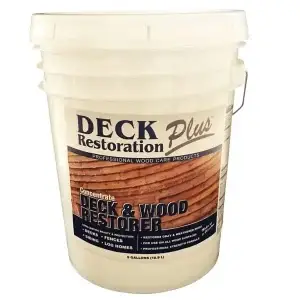
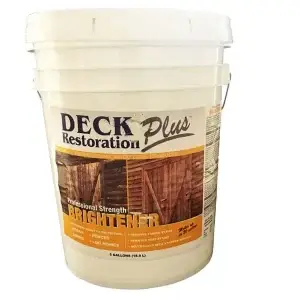
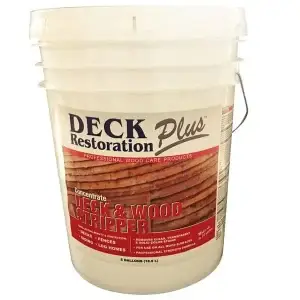
How to Choose Wood Restoration Cleaning Solutions
Successful deck and fence restoration is a chemistry-first process. Match the product to the problem, work in the shade when possible, keep the surface evenly wet, and let the chemistry do the heavy lifting before you rinse with low pressure.
Cleaner, Stripper, Brightener: Whats the Difference?
- Wood cleaners (often oxygen-based) lift gray weathering and organic soils to prepare bare or lightly worn wood for finishing.
- Alkaline strippers remove failing sealers and film-forming finishes when water still beads or color/peel remains after cleaning.
- Brighteners/neutralizers are acid-based solutions applied after alkaline cleaning or stripping to reduce darkening, address iron/tannin discoloration, and ready the surface for stain.
Quick Product Selector
Oxygenated Wood Cleaner
Best for gray, weathered boards and general maintenance on cedar, redwood, and pressure-treated pine. Gentle on most exterior woods while targeting organic grime.
Use when: The surface is uncoated or lightly worn and you need a clean, uniform prep.
Alkaline Stain & Finish Stripper
For decks with peeling or uneven stain or when water still beads. Dissolves many aging coatings so they can be rinsed away with low pressure.
Use when: Existing finish remains after a splash test or cleaning.
Wood Brightener & Neutralizer
Applied immediately after an alkaline cleaner or stripper. Helps return natural tone, neutralizes surface pH, and improves coating readiness.
Use when: Youve just cleaned or stripped and are preparing to stain.
Spot Stain Remover
Targets nail-bleed, rust marks, and tannin streaks that persist after cleaning. Use as a follow-up treatment before final rinse.
Use when: Local discolorations remain on an otherwise clean surface.
Application Basics
| Product Type | Primary Purpose | Use Stage | Rinse/Neutralize Guidance |
|---|---|---|---|
| Oxygenated cleaner | Lift gray oxidation and soil | Initial clean on uncoated or lightly worn wood | Rinse thoroughly with low pressure; proceed to brightener only if directed. |
| Alkaline stripper | Remove failing stain/sealer | After splash test shows beading or visible coating remains | Rinse thoroughly, then apply a wood brightener/neutralizer. |
| Brightener/neutralizer | Reduce darkening; address iron/tannin stains; lower surface pH | Immediately after alkaline cleaning/stripping | Follow label; some formulas are rinse-required, others may not be. |
| Spot remover | Correct localized rust or nail-bleed marks | After general cleaning and before final rinse | Rinse area well before drying. |
Field-Proven Process
- Inspect and test: Perform a small test patch to confirm cleaner or stripper selection.
- Pre-wet and protect: Saturate adjacent landscaping and mask sensitive metals.
- Apply chemistry evenly: Maintain a wet edge; allow labeled dwell time without drying.
- Agitate as needed: Use soft-bristle brushing with the wood grain on stubborn areas.
- Rinse with low pressure: Use a wide fan tip; let chemistry, not pressure, do the work.
- Neutralize/brighten after alkalines: Apply brightener while the surface is still wet.
- Allow full dry before coating: Follow your stain manufacturers dry-time guidance.
Equipment Selection Notes
- Use a wide-fan nozzle and maintain consistent distance to avoid etching or furring.
- Avoid turbo/rotary tips on wood; reserve them for hard masonry.
- Work in shade or cooler parts of the day to prevent flash-drying.
- Always follow chemical labels; do not mix chemistries unless the label specifically allows it.
Brightener/neutralizer is the bridge between cleaning and staining. Applying it immediately after an alkaline cleaner or stripper reduces darkening, helps even out color, and prepares the surface for better stain acceptance.
Do not rely on high pressure or chlorine bleach to “force” results on wood. Excess pressure and harsh, misused chemistries can permanently damage the grain and fasteners. When in doubt, test and step up chemistry before pressure.
Learn More
- Wood Cleaning Tips: How to Clean Wood Using a Pressure Washer
- Wood Staining Can Be the Perfect Off-Season Add-On for Power Washing Businesses
- Understanding Rust vs. Oxidation Removal Solutions
Need help choosing the right wood restoration chemistry?
Tell us about your deck or fence, current condition, and coating goals. Our team will match cleaners, strippers, brighteners, and accessories for a safe, efficient workflow.