Quick Connect Nozzles: Selection and Sizing Guide
What makes a nozzle “quick connect”?
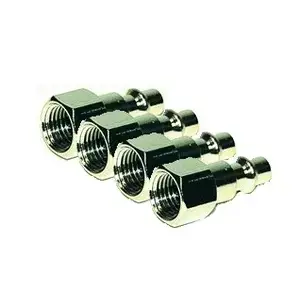
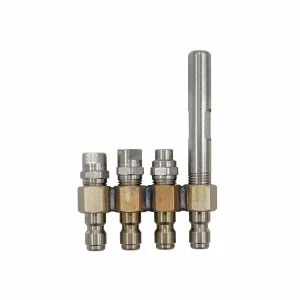
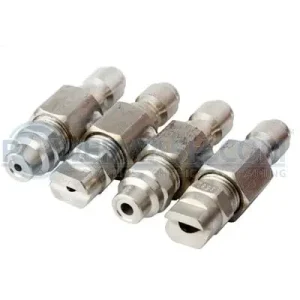
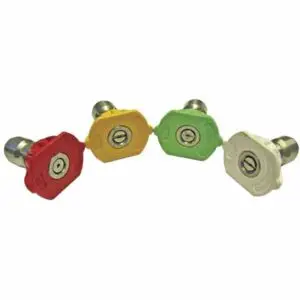
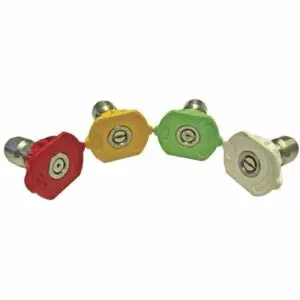
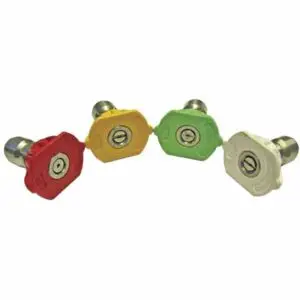
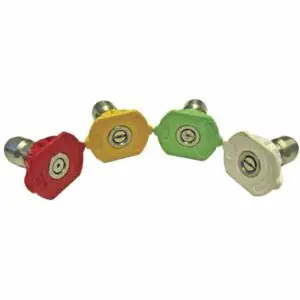
Quick connect (QC) nozzles use a spring‑loaded coupler and plug to change tips in seconds. Most spray tips plug into a 1/4 in QC coupler at the end of your wand or lance. Some hoses, guns, or other accessories may use 3/8 in or 1/2 in QC on the high‑pressure path, so always confirm the coupler size you have before ordering.
Most wand tips use a 1/4 in quick‑connect plug. Verify your gun/wand has a matching 1/4 in QC coupler before purchasing replacement tips.
Choose the correct spray angle (industry color codes)
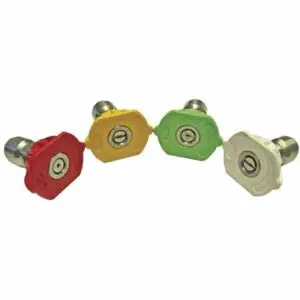
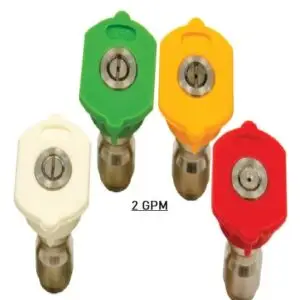
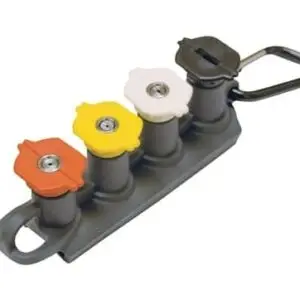
Spray angle controls impact. Narrow angles concentrate force; wider fans clean gently and rinse faster. The common color codes below help you pick the right pattern.
| Color |
Spray angle |
Typical use |
Notes |
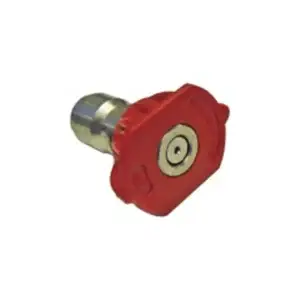
| Red |
0° |
Pinpoint cutting jet for heavy buildup on hard, durable surfaces |
Highest risk of damage; avoid on siding, wood, vehicles, or soft stone |
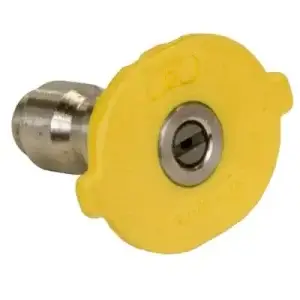
| Yellow |
15° |
Heavy‑duty cleaning and paint/oxidation stripping |
Use with care; test first |
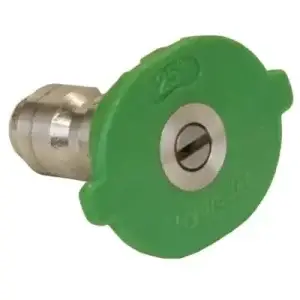
| Green |
25° |
General cleaning of concrete, brick, equipment |
Balanced cut and coverage |
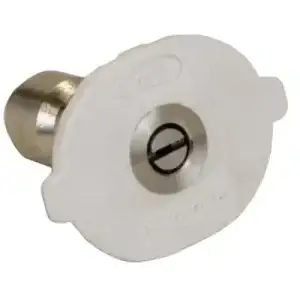
| White |
40° |
Rinsing and delicate surfaces like siding, decks (with correct chemistry) |
Start here on unknown surfaces |
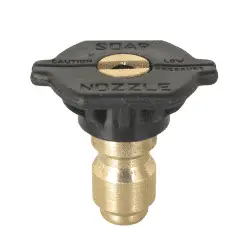
| Black |
65° (low pressure) |
Applying soap with downstream injectors |
Designed for low‑pressure chemical application |
Size the orifice to hit your working pressure
Nozzle orifice size must match your machine’s flow (GPM) and the pressure you want at the gun. The standard industry sizing uses a nozzle “number” that corresponds to flow in GPM at 4000 PSI. As the orifice number gets larger, pressure drops at a given flow; as it gets smaller, pressure rises.
- Rule of thumb: Nozzle Size ≈ GPM × √(4000 ÷ target PSI). Choose the nearest available size to reach your intended working pressure.
- Example: If your washer is 3.5 GPM and you want about 3000 PSI at the tip, start around a size 4.0 orifice and fine‑tune from there.
- If you notice a pressure drop or streaky spray pattern over time, the orifice may be worn and due for replacement.
By Spray Angle (Work Type)
- 0° red: focused cutting jet for tough deposits on hard materials
- 15° yellow: heavy cleaning and stripping
- 25° green: everyday cleaning
- 40° white: gentle rinse and delicate surfaces
By Orifice Size (Match PSI/GPM)
- Size to your machine’s GPM to achieve your target PSI
- Upsize the orifice to reduce impact pressure
- Downsize carefully to increase pressure without overloading the pump
- Replace worn tips to restore pressure and pattern
By Material & Build
- Stainless steel or hardened components for longer life
- Brass bodies are common and budget‑friendly
- Check O‑ring and plug condition for safe, leak‑free connection
- Look for clearly marked angle and orifice on the tip
By Temperature & Chemicals
- Confirm max temperature rating for hot‑water units
- Use the black low‑pressure tip for downstream soaping
- Rinse chemicals thoroughly to extend nozzle life
- Store clean and dry between jobs
Care and replacement
- Rinse grit out of tips before storage; avoid using pins or drills that can enlarge the orifice.
- Inspect the quick‑connect plug for grooves or flat spots and replace if the coupler no longer locks positively.
- Rotate a matched set of tips to even out wear on multi‑nozzle work (e.g., surface cleaners).
Never start with a 0° red tip on an unfamiliar surface. Always begin with a wider angle and PPE. A narrow jet can etch concrete and cut skin.
Quick buyer checklist
- Washer specs: GPM and working PSI
- Coupler size on your wand/lance (usually 1/4 in QC for tips)
- Preferred spray angle(s) for your common jobs
- Orifice size that delivers your target pressure
- Temperature and chemical compatibility needs
Learn more from the PowerWash Learning Center
Need help sizing or choosing a complete tip set?
Our equipment specialists can match spray angles and orifice sizes to your exact washer specs and applications, so you get faster cleaning and longer component life.
Talk to an Equipment Specialist