
Proportioners
Brand
Price
- (3)
- (3)
Showing all 6 resultsSorted by popularity
-
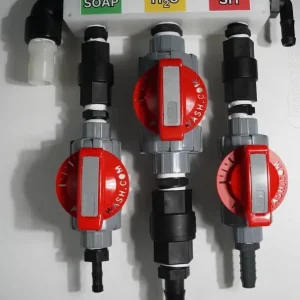
-
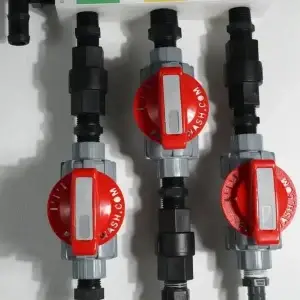
-
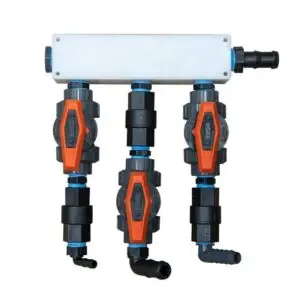
Maverick Sidewinder pro Slim Proportioner
$1,199.97
As low as $30.00/mo -
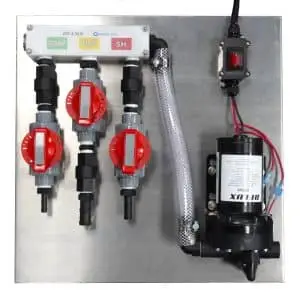
-

Maverick Sidewinder Pro Clear – A Clear mixing station for Electric Soft Washing Systems
$1,259.97
As low as $31.50/mo -
Stallion Sidewinder Pro Slim Soft Wash Proportioner
$1,399.97
As low as $35.00/mo
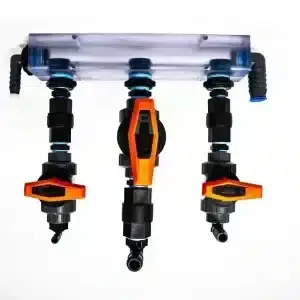
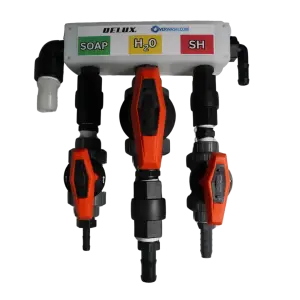
Proportioners for Soft Washing: Buyers Guide
What is a Proportioner?
A soft wash proportioner is a metering manifold that draws from separate tanks of sodium hypochlorite (SH), water, and surfactant, then blends them just before the pump. Adjustable valves let you set and repeat mix strengths at the nozzle without premixing drums or draining tanks between jobs.
Who Benefits from a Proportioner?
- Contractors who want consistent, repeatable mix ratios for roofs, siding, and building washes.
- Teams looking to cut chemical waste and time spent batch‑mixing.
- Crews running varied work (house wash in the morning, roof wash in the afternoon) who need fast changeovers.
How to Choose Your Proportioner
Match Your Pump and Flow
Select a manifold sized for your delivery pumps working flow so you dont starve the pump or create excess back pressure.
- 12V diaphragm: commonly 37 GPM systems
- Air diaphragm: often 512+ GPM
- Booster/piston: verify system specifications
Choose Chemical‑Ready Materials
For SH service, look for PVDF/Kynar, Schedule 80 PVC, or polypropylene wetted parts with compatible seals (e.g., Viton or EPDM). Avoid brass and aluminum in the chemical path.
Pick Your Metering Valves
Needle valves provide fine ratio control at lower flows; ball valves switch quickly and are rugged for higher flow rates. Graduated dials make it easy to record repeatable settings for your crew.
Plan the Layout
Keep suction lines short and equal in diameter, add strainers on SH and surfactant lines, include a dedicated fresh‑water flush, and clearly label each pickup to prevent cross‑draw.
Common Mix Ranges and Applications
| Application | Typical SH at Nozzle | Notes |
|---|---|---|
| House wash (vinyl, fiber‑cement, painted masonry) | ~0.251% | Begin at the low end; increase only as needed based on organic load. |
| Roof wash (asphalt shingle, tile) | ~13% | Work in sections; manage runoff and protect landscaping. |
| Wood fencing/deck prep | ~0.250.75% | Test a small area first; follow any required neutralization steps. |
| Plant/landscape rinse | 0% | Use water only via the proportioners flush line. |
Always follow chemical labels and local regulations. Sodium hypochlorite is corrosiveuse compatible materials, wear appropriate PPE, prevent cross‑contamination, and flush your system with fresh water after use.
Installation and Maintenance Tips
- Mount the manifold where valves are easy to see and label each pickup (Water, SH, Surfactant).
- Add inline strainers on SH and surfactant lines to protect valves and orifices.
- Use unions/quick‑disconnects to simplify service and seasonal rebuilds.
- Balance hose lengths and IDs from each tank to improve metering accuracy.
- Record dial positions that yield your target mixes for repeat jobs and crews.
- Flush with fresh water until odor dissipates after each use and before storage.
Learn More
- Save Time Money And Get Better Results With A Soft Washing Proportioner
- What Is A Proportioner And How Can It Save You Money
- What Is A Proportioner And How Does It Work
Need help sizing a proportioner for your rig?
Our team can recommend a proportioner, valves, and fittings that match your pump, target ratios, and budgetand help you plan a reliable flush setup.