Truck Skids: How to Choose the Right Skid-Mount for Your Work Truck
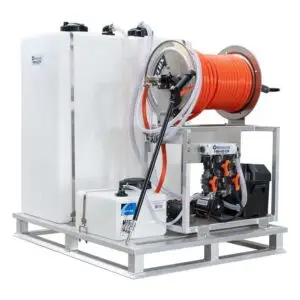
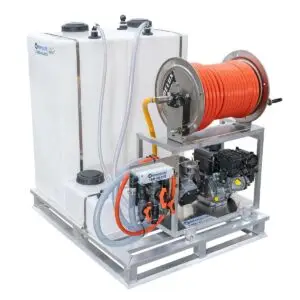
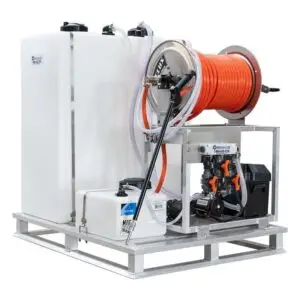
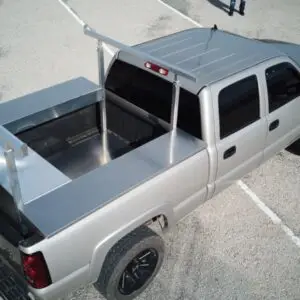
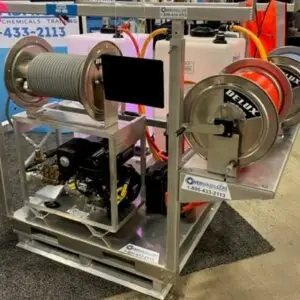
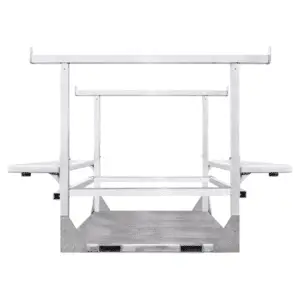
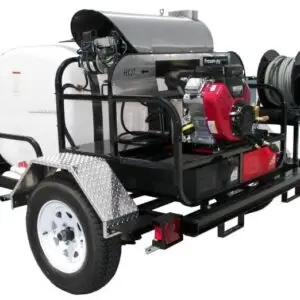
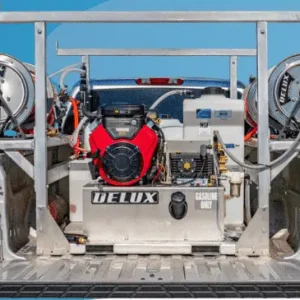
A truck skid consolidates pumps, tanks, reels, and accessories on a single, liftable base so crews can roll out faster, keep gear protected, and simplify service. Use this guide to narrow options and plan a layout that fits your bed, workload, and budget.
Fit First: Bed Size, Payload, and Workflow
- Measure usable bed length, width between wheel wells, and tailgate clearance.
- Confirm the truck’s payload and GVWR. Add the weight of the skid, water, chemicals, and hose.
- Plan hose access and reel orientation for curbside or roadside work.
- Choose baffled water tanks to reduce slosh and improve handling.
- Allow service space for filters, belts, batteries, and valves.
Popular Skid Configurations
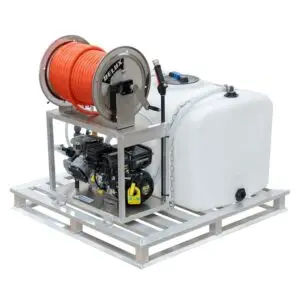
Pressure Wash Skid
Built for surface cleaning and general washing. Pairs a pressure system with a water tank, hose reels, and rinse accessories. Ideal for concrete, fleets, and maintenance routes.
Soft Wash Skid
Low-pressure chemical application with dedicated tanks and proportioning. Keeps SH and surfactants organized with proper containment and rinse capability.
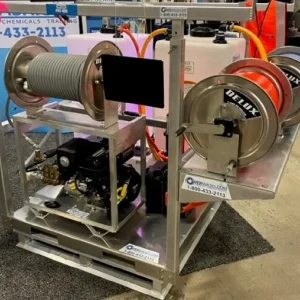
Dual-System Skid
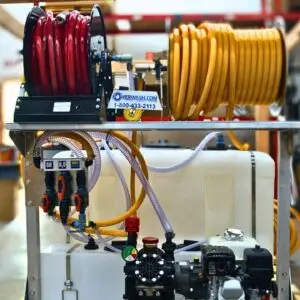
Combines pressure and soft wash on one frame to handle roofs, siding, and hard surfaces without swapping rigs.
100% Electric Skid
Quiet operation and no engine exhaust on site. Great for neighborhoods with noise limits and after-hours work when a generator or battery bank fits your workflow.
Frame Materials and Mounting
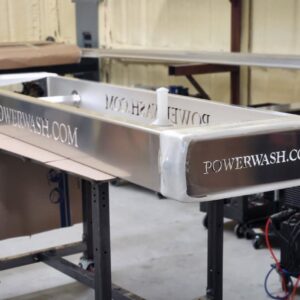
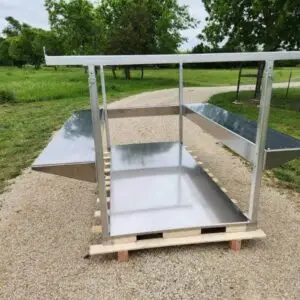
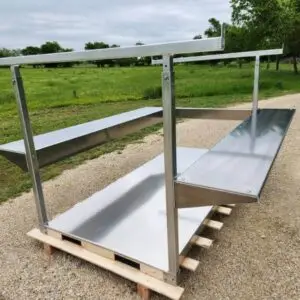
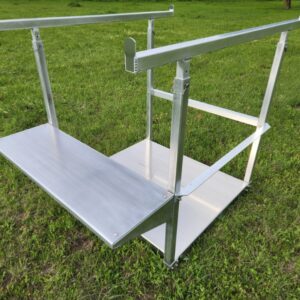
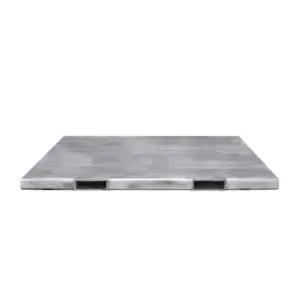
Choose a frame that balances weight, corrosion resistance, and cost. Mount securely with rated hardware and backing plates that spread load across the bed or subframe.
| Material |
Typical Use |
Advantages |
Considerations |
| Aluminum |
Daily routes where weight savings matter |
Lightweight, corrosion resistant |
Higher upfront cost; use proper isolation to prevent galvanic corrosion |
| Steel |
Heavy-duty and budget builds |
Strong and cost-effective |
Requires coatings and maintenance to manage rust |
| Composite Deck + Metal Frame |
Mixed-chemical environments |
Stable surface; good chemical resistance |
Verify fastener compatibility and load spread |
Plumbing, Power, and Tanks
Keep flow paths short and accessible. Use strainers, unions, and labeled valves for quick service. Separate chemical and water storage, and vent tanks safely away from batteries and ignition sources.
Equipment selection notes: plan for future upgrades by leaving space for a second reel or larger tank, add vibration isolation under the frame, and standardize quick-connects across your fleet.
Safety and Compliance
- Use rated tie‑downs and through‑bolts with backing plates; re‑torque after initial break‑in.
- Confirm payload with a full water tank before going to job sites.
- Label chemical lines and install shutoffs within easy reach.
- Store oxidizers separately from fuels and batteries; provide ventilation.
Always follow truck manufacturer guidance and local regulations for cargo securement, fuel handling, and transporting chemicals.
Build Your Truck Skid
From single-operator soft wash rigs to dual‑system workhorses, our specialists can help you size the frame, tanks, reels, and power to match your routes.
Talk to an Equipment Specialist