
Electric Commercial Pressure Washers
Commercial electric pressure washers are a strong choice for facilities that need dependable cleaning without a gasoline engine at the point of use. They are commonly selected for indoor work areas, wash bays, food-service environments, fleet facilities and other locations where lower noise and reliable electrical service matter. Compare portable, stationary, cold-water and hot-water configurations below, and verify voltage, amperage and phase before ordering.
Brand
Price
- (3)
- (2)
- (1)
- (1)
Drive
- (2)
Max Flow
Mobility Type
- (1)
Motor Make
Product Grade
- (1)
Washer Type
Washer Power
- (1)
Showing all 9 resultsSorted by popularity
-
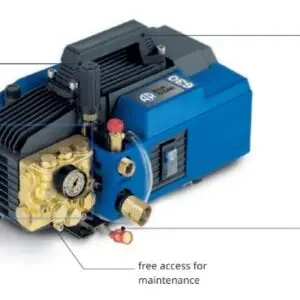
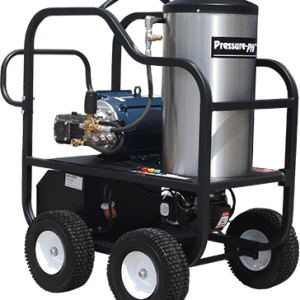
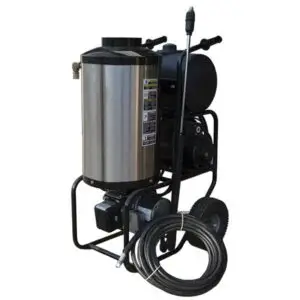
2.1 GPM 1900 PSI AR BLUE CLEAN with HOT WATER INDUCTION
$1,459.47
As low as $36.49/mo -
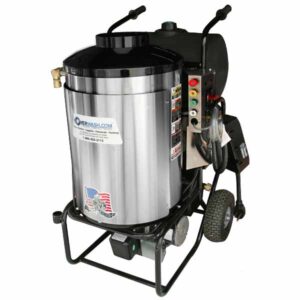
DELUX® 430PWH Electric-Powered Hot Water Pressure Washer – 3.9 GPM @ 3,000 PSI with Clutch
$9,134.97
As low as $228.37/mo -
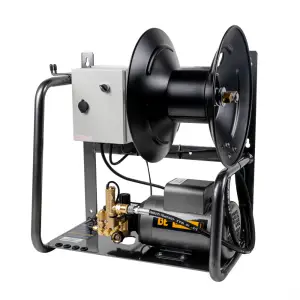
Wall Mounted ELEC 1500 PSI 2 GPM
$2,326.97
As low as $58.17/mo -
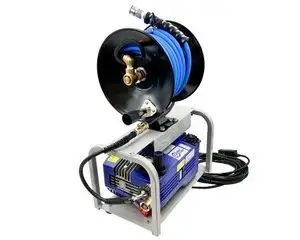
AR Blue Clean Pro, AR610-PRO, Pressure Washer & Mount Kit
$1,720.47
As low as $43.01/mo -

4230VB-20G1 Hot Water Pressure Washer
$8,408.97
As low as $210.22/mo -
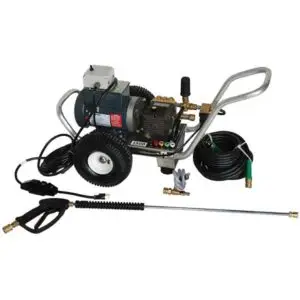
Powerful EE2015A with Auto Start Stop Electric Cold Water Pressure Washer with AR Pump – 2 GPM @ 1,500 PSI
$2,761.47
As low as $69.04/mo -
DELUX 320EC Electric-Powered Hot Water Pressure Washer – 3 GPM @ 2,000 PSI
$5,239.97
As low as $131.00/mo -
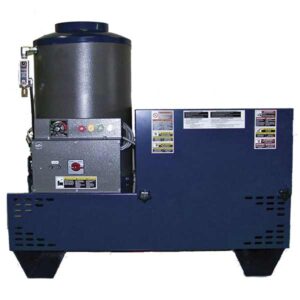
NG-17-C Stationary Washer with Clutch
$12,557.97
As low as $313.95/mo -
3HP 230V/12A Electric Cold Water Pressure Washer – 3 GPM @ 1,500 PSI
$1,981.47
As low as $49.54/mo
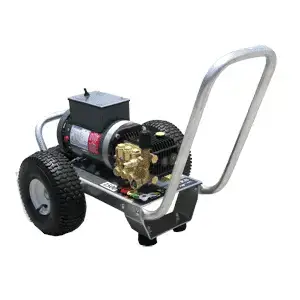
Commercial Electric Pressure Washer Buying Guide
When Electric Is the Right Choice
Electric commercial pressure washers are best suited to locations with dependable electrical service and a repeatable cleaning area. They eliminate engine exhaust at the pump motor, reduce fuel handling and are generally quieter than comparable engine-powered machines. That can make them useful in schools, hospitals, workshops, production facilities, wash bays and other noise-sensitive or enclosed work areas.
Important distinction: Electric does not automatically mean fully exhaust-free. Some electric-driven hot-water pressure washers use diesel, natural gas or LP to heat the water. Always distinguish between the pump’s power source and the burner’s fuel source.
Quick Buyer Snapshot
| Decision Point | Electric Commercial Pressure Washers |
|---|---|
| Best for | Fixed facilities, indoor-capable installations, wash bays and noise-sensitive environments |
| Primary advantage | No gasoline engine at the pump and no engine-fuel handling |
| Main constraint | Electrical-service compatibility |
| Common configurations | Portable cold water, stationary cold water, electric-drive hot water and all-electric hot water |
| Before ordering | Confirm voltage, amperage, phase, plug or hardwire requirements, breaker capacity and installation conditions |
Electric vs. Gas Commercial Pressure Washers
Electric machines are usually the better fit when cleaning happens near dependable utility power, lower noise matters, or engine exhaust is undesirable. Gas machines are typically better for mobile contractors, remote jobsites and situations where electrical service is unavailable or inconsistent.
| Need | Recommended Choice | Why |
|---|---|---|
| Indoor or enclosed-area cleaning | Electric | No gasoline-engine exhaust at the pump; still follow product, ventilation and electrical-safety requirements |
| Remote or changing jobsites | Gas | Does not depend on facility electrical service |
| Noise-sensitive facility | Electric | Electric motors are generally quieter than combustion engines |
| High mobility across properties | Gas or self-contained skid | Easier to deploy away from outlets and fixed service |
| Permanent wash bay | Stationary electric | Supports repeatable operation and fixed plumbing/electrical installation |
Need broader fuel-source guidance? Compare all commercial pressure washers or review commercial gas pressure washers.
Understanding Voltage, Amperage and Phase
Commercial electric pressure washers are not all plug-and-play household appliances. Available products may use 120V service, 230V single-phase power, 208/230/460V three-phase power or other manufacturer-specified configurations.
A higher-output machine may require a dedicated circuit, larger breaker, specific receptacle or hardwired installation. Three-phase equipment is common in industrial and institutional facilities but is not available in every building. Never choose a machine based on voltage alone; confirm voltage, phase, full-load amperage, frequency, breaker requirements and connection type with the product specifications and a qualified electrician.
Do not order before checking utility compatibility. Confirm the machine’s voltage, phase, amperage, frequency and connection type against the facility’s available service.
| Current-Assortment Example | Electrical / Output Information |
|---|---|
| NG-17 stationary washer family | Available in 120V, 230V single- or three-phase, and 460V three-phase configurations |
| NG-17 2,300 PSI / 4 GPM | 6 HP motor, 230V, 30 amps |
| NG-17 3,000 PSI / 4 GPM | 8 HP motor, 230V, 30 amps |
| 4230VB-20G1 | 5 HP electric motor, 4 GPM at 2,000 PSI; diesel-fired burner |
PSI vs. GPM for Commercial Production
PSI is the force that helps break the bond between contamination and the surface. GPM moves loosened material away and strongly affects cleaning speed. For many commercial jobs, additional flow can improve productivity more than simply chasing the highest PSI number.
| Application | What to Prioritize |
|---|---|
| General facility cleaning | Moderate PSI and practical flow |
| Fleet and equipment washing | Adequate flow for rinsing and detergent removal |
| Flatwork | Sufficient GPM to operate the intended surface cleaner effectively |
| Delicate or coated surfaces | Adjustable pressure and correct nozzle selection |
| Heavy grease | Hot water, detergent application and dwell time in addition to pressure |
Choosing the Right Electric Configuration
Portable Cold-Water Electric
Best for maintenance teams that move between nearby cleaning areas with compatible electrical service. These machines fit general rinsing, equipment cleaning and light-to-moderate soil removal.
Stationary Electric
Best for permanent wash bays, production facilities, fleet shops and repeatable cleaning stations. Stationary systems can integrate with fixed plumbing, hose reels and controls.
Electric-Drive Hot Water
The pump is driven by an electric motor while the burner may use diesel, natural gas or LP. This combines lower pump-motor noise with heated cleaning for grease, oil and stubborn soils.
All-Electric Hot Water
Both the pump and water-heating system use electricity. These systems can avoid combustion exhaust at the machine but may require substantial three-phase electrical capacity.
Wall-Mounted and Wash-Bay Systems
Wall-mounted or stationary electric systems save floor space and support repeatable workflows where permanent installation is more valuable than portability.
Indoor Use, Noise and Emissions
An electric motor does not produce gasoline-engine exhaust, but safe indoor use still depends on the complete machine and installation. A hot-water unit with a diesel, natural-gas or LP burner produces combustion gases and requires appropriate venting, clearances and manufacturer-approved installation.
Electrical equipment also requires protection from water exposure, correct grounding, suitable receptacles, ground-fault protection where required and compliance with local electrical codes. Do not assume that every electric pressure washer is approved for every wet or indoor environment.
Common Commercial Applications
| Application | Why Electric May Fit |
|---|---|
| Schools and hospitals | Lower noise and no gasoline engine at the cleaning point |
| Food-service and production areas | Fixed service, repeatable cleaning workflows and indoor-capable configurations |
| Fleet maintenance bays | Stationary installation, hot-water options and organized hose management |
| Manufacturing and workshops | Regular equipment and floor cleaning near utility power |
| Agricultural or processing facilities | Repeatable wash areas with compatible electrical service |
| Commercial kitchen support | Hot-water and detergent capability where the machine and installation are approved |
Maintenance and Operating Costs
Electric motors remove several engine-related maintenance tasks, including gasoline storage, spark plugs and engine-oil service. However, the pressure-washer pump, unloader, hoses, nozzles, filters and heating system still require inspection and maintenance.
- Check pump oil where applicable.
- Inspect hoses, couplers and electrical cords.
- Clean inlet filters.
- Check nozzles for wear.
- Protect the pump from freezing.
- Service burners, coils and fuel filters on heated models.
- Check electrical connections and controls according to the manufacturer’s schedule.
Operating cost depends on local electricity and fuel rates, duty cycle, motor size, heating method and maintenance requirements. Electric is not automatically the lowest-cost option in every application.
Common Buying Mistakes
- Ordering before confirming voltage, phase and amperage.
- Assuming every electric machine uses a standard 120V outlet.
- Treating electric-drive hot water as fully electric heating.
- Selecting by PSI alone and overlooking GPM.
- Buying a portable unit when a stationary wash-bay system would improve workflow.
- Assuming no gasoline engine means no ventilation or installation requirements.
- Failing to plan cord length, receptacle location, water supply, drainage and hose management.
Before You Buy
- Cleaning application and surface types
- Required PSI and GPM
- Cold-water or hot-water need
- Portable, stationary or wall-mounted configuration
- Voltage, phase, amperage and frequency
- Plug-in or hardwired connection
- Breaker and facility electrical capacity
- Burner fuel and venting requirements, if heated
- Water supply and drainage
- Accessories, hose length and surface-cleaner compatibility
Need Help Choosing a Commercial Electric Pressure Washer?
Electrical compatibility and configuration matter as much as pressure and flow. Contact PowerWash.com before ordering if you need help comparing portable, stationary, cold-water or hot-water systems for your facility.
Continue learning with the PowerWash.com Learning Center, our Nozzle Size Calculator and the Pressure Washer Nozzle Chart.
Electric Commercial Pressure Washers FAQ's
Only when the product, electrical connection and installation are approved for the environment. Use proper grounding, suitable receptacles and ground-fault protection where required, and follow the manufacturer’s instructions and local electrical codes.
They are generally quieter than gasoline-engine machines and eliminate several engine-maintenance tasks. The pump, hoses, nozzles, filters, controls and any burner or heating system still require regular maintenance.
Both matter. PSI helps break the bond of soil, while GPM carries loosened contamination away and affects cleaning speed. For many commercial applications, adequate flow is critical to productivity and accessory performance.
Some do, but not all. Smaller commercial models may use 120V or 230V single-phase service, while higher-output stationary or all-electric heated systems commonly use three-phase power. The product specification is the authority.
Requirements vary by model. Commercial machines may use 120V, 208V, 230V, 460V or other specified service. Confirm voltage, amperage, phase, frequency and connection type before purchase.
Electric is often the better starting point because the pump motor does not produce gasoline-engine exhaust and is generally quieter. However, heated models may still use a diesel, natural-gas or LP burner, and every installation must follow the manufacturer’s ventilation and electrical requirements.
Yes. Commercial electric models are available with industrial triplex pumps and outputs suitable for facility maintenance, fleet washing, wash bays and other professional applications. The right choice depends on GPM, PSI, duty cycle and available electrical service—not simply whether the motor is electric.
Tools & Articles
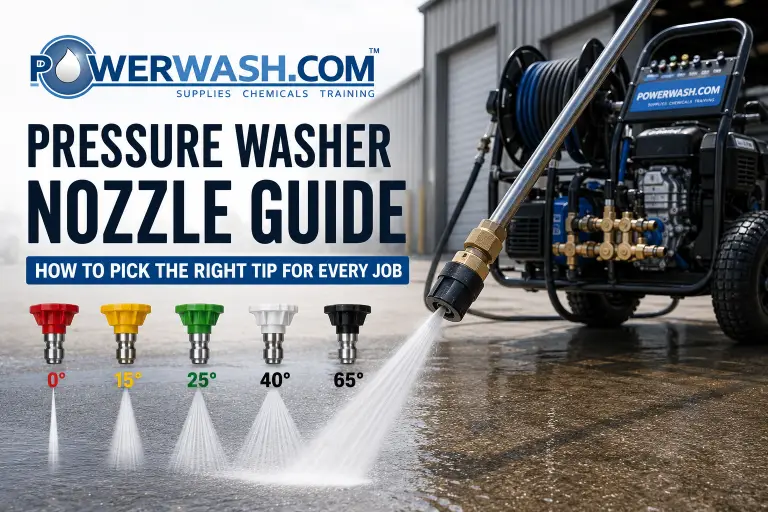
Your machine can push 4 GPM at 4000 PSI all day long. The nozzle decides what actually happens on the ...
Electric pressure washers have become a popular choice for both residential and commercial applications due to their ease of use, ...
Pressure washer specifications can be confusing when you are comparing PSI, GPM, nozzle size, heat and chemical capability. Each number ...