
Electric Hot Water Pressure Washers
Brand
Price
- (1)
- (1)
- (1)
Drive
- (1)
Washer Type
Showing all 4 resultsSorted by popularity
-
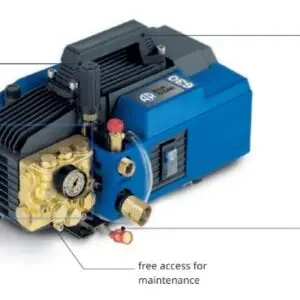
2.1 GPM 1900 PSI AR BLUE CLEAN with HOT WATER INDUCTION
$1,459.47
As low as $36.49/mo -
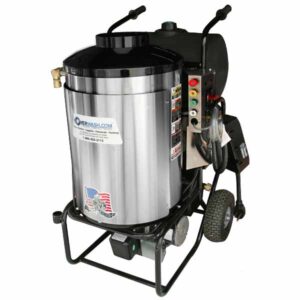
DELUX® 430PWH Electric-Powered Hot Water Pressure Washer – 3.9 GPM @ 3,000 PSI with Clutch
$9,134.97
As low as $228.37/mo -
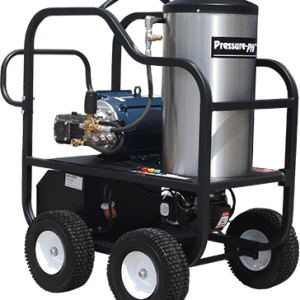
4230VB-20G1 Hot Water Pressure Washer
$8,408.97
As low as $210.22/mo -
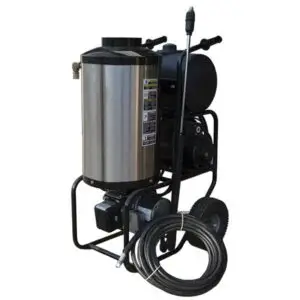
DELUX 320EC Electric-Powered Hot Water Pressure Washer – 3 GPM @ 2,000 PSI
$5,239.97
As low as $131.00/mo
Electric Hot Water Pressure Washers: Selection & Use Guide
Who chooses an electric hot water unit?
- Facilities that need heat to break down grease, oil and grime quickly.
- Sites where engine exhaust and high noise are not acceptable.
- Operators who prefer plug‑in convenience with consistent motor speed.
Hot water loosens oils and fats faster than cold water, often reducing detergent use and cleaning time.
Pick your configuration
Fuel‑Fired Coil Heat
The pump is electric‑drive while the burner heats water using diesel/kerosene or similar fuel. Delivers fast heat‑rise and proven reliability.
- Plan for safe fuel storage and routine burner service.
- Provide adequate airflow for combustion and exhaust dispersion.
All‑Electric Heat
Heats water with electric elements—no burner emissions. Suited to ventilation‑sensitive spaces.
- Requires substantial electrical capacity; verify voltage, phase and amperage.
- Heat‑up rate depends on element size and supply power.
Portable Cart or Skid
Move between bays or jobs. Match hose length, cord reach and reel options to your space.
- Check total working weight with water and fuel.
- Look for roll‑cage protection and tie‑down points.
Stationary or Wall‑Mount
Save floor space and centralize service. Ideal for wash bays and production lines.
- Plumb dedicated water, power and detergent lines.
- Add remote controls or hose drops where needed.
Key selection factors
- Working pressure (PSI) and flow (GPM) appropriate for your soils and tools.
- Power supply requirements: voltage, phase and amperage; use a qualified electrician.
- Heat source: fuel‑fired coil vs all‑electric; required ventilation and utilities.
- Coil and pump service access; burner nozzle, filters and electrodes are wear items.
- Detergent injection method (downstream vs upstream) and chemical compatibility.
- Hose management: reels, quick‑connects and swivel options.
- Footprint, mobility and noise expectations for your workspace.
| Application | What to prioritize |
|---|---|
| Grease and oil removal | Stable heat, medium–high flow, downstream detergent option, splash containment. |
| Food service and warehouses | Electric drive, ventilation‑aware heat source, low noise, compact footprint. |
| Fleet and vehicle bays | Higher GPM for rinse speed, hose reels, corrosion‑resistant components. |
| Detail work and tools | Adjustable pressure and temperature, fine spray tips, easy access to controls. |
Combustion by‑products from fuel‑fired burners must be managed. Follow local codes, ensure adequate ventilation and never operate in a confined space without proper airflow. Confirm electrical loads and protection with a licensed electrician.
Learn more before you buy
- The Benefits of Utilizing a Hot Water Power Wash System
- The Benefits and Drawbacks of Electric Pressure Washers
- Pressure Washer Burner Maintenance Tips
Equipment selection notes
- Match GPM to area size and recovery drains; prioritize flow for rinse speed.
- Choose heat type based on ventilation limits and available utilities.
- Plan maintenance: burner nozzle, fuel filter and coil cleaning at intervals per your model manual.