Soft Wash Systems: Buyer’s Guide
Soft washing relies on the right chemistry, low pressure, and controlled application. Start with the correct system type, then dial in flow, reach, and mix control to fit your services.
What Is a Soft Wash System?
A soft wash system is a purpose-built pump and plumbing setup that applies cleaning solutions at low pressure to remove organic staining from roofs, siding, and other delicate surfaces. Unlike pressure washers that rely on high PSI, soft wash rigs emphasize controlled flow, correct nozzling, and chemical compatibility to achieve results without damaging substrates.
Choose the Right System Type
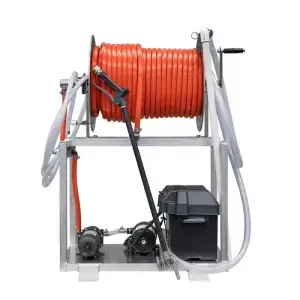
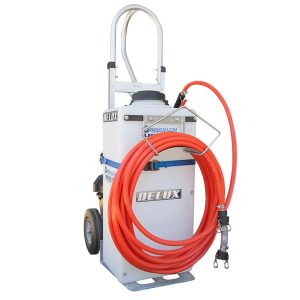
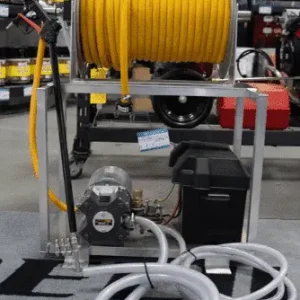
12V Electric Soft Wash Systems
- Compact, budget-friendly, and easy to service in the field.
- Great for residential house washes and many roof jobs.
- Mind battery capacity, wire sizing, and fusing for dependable runtime.
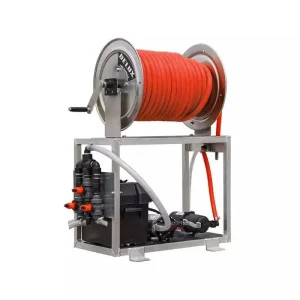
Air Diaphragm (Compressor-Driven)
- Smooth delivery with no electrical load on the vehicle.
- Well-suited for crews that value durability and simple pump maintenance.
- Requires an appropriately sized air compressor and moisture management.
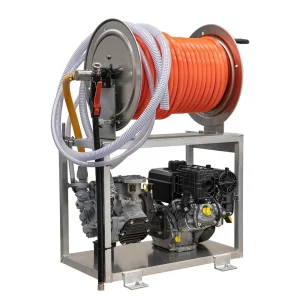
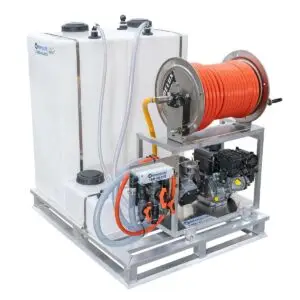
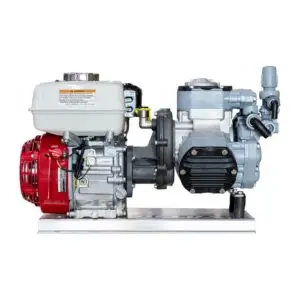
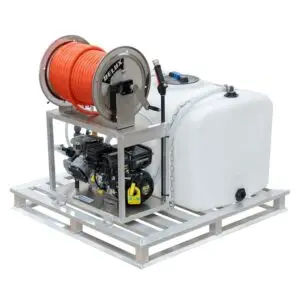
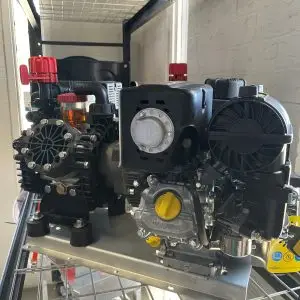
Gas-Powered Diaphragm Systems
- Strong flow potential for larger surfaces and longer hose runs.
- Independent power source reduces electrical considerations.
- Plan for fuel, ventilation, and routine engine upkeep.
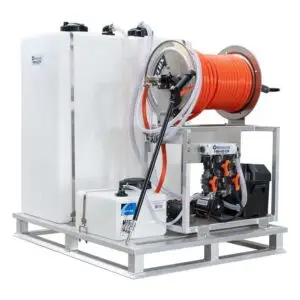
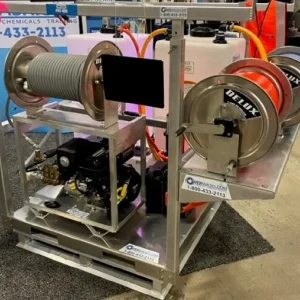
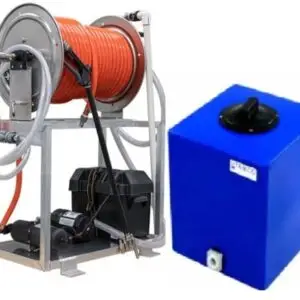
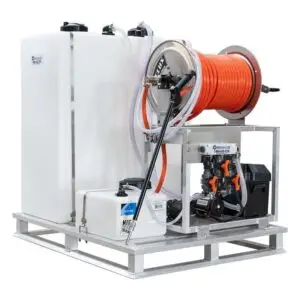
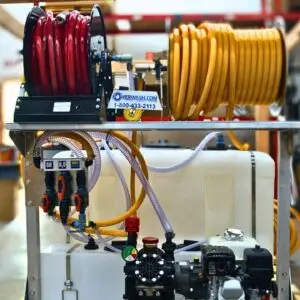
Skid and Trailer Packages
- Integrated tanks, reels, and plumbing for fast setup and tear‑down.
- Ideal for multi-crew operations or when adding soft wash to a full service rig.
- Verify weight, footprint, and tie‑down requirements for your vehicle.
Equipment Selection Notes
| System type |
Ideal jobs |
Strengths |
Things to consider |
| 12V Electric |
Residential siding, many residential roofs, touch‑ups |
Lightweight, cost‑effective, simple spares |
Battery management; avoid running pumps dry; match hose ID and tips |
| Air Diaphragm |
Daily route work, mixed surfaces, longer hose runs |
Durable pump head, smooth flow, no DC draw |
Compressor sizing, air filtration/water separation, noise control |
| Gas Diaphragm |
Larger projects, crews that need strong flow and autonomy |
Robust output, independent power, scalable |
Engine maintenance, fuel handling, ventilation in enclosed spaces |
| Skid/Trailer Packages |
Turnkey rigs, training new techs, multi‑service setups |
Integrated plumbing, faster setup, professional presentation |
Vehicle payload, footprint planning, anchoring and weight distribution |
Never run sodium hypochlorite or other soft wash solutions through a pressure washer pump. Use a dedicated, chemical‑rated soft wash system and flush equipment with fresh water after use.
Proportioners, Mixers, and Hoses
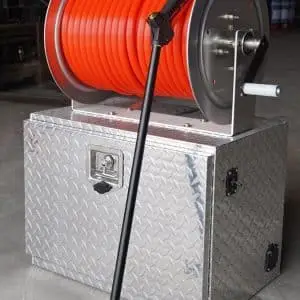
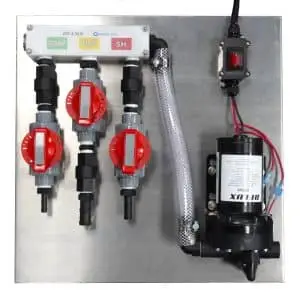
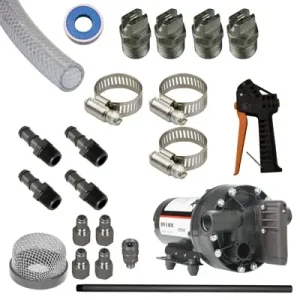
Proportioners let you dial mix strength at the ball valve instead of batching every change in a separate tank. They reduce downtime, help standardize results across crews, and minimize chemical waste when paired with proper check valves and strainers. Use chemical‑rated hoses, fittings, and reels, and keep suction plumbing short, airtight, and well‑supported to promote fast priming.
Setup Tips for Reliability
- Rinse pumps, hoses, guns, and reels with fresh water after chemical use.
- Use chemical‑rated hose, seals, and fittings throughout the soft wash circuit.
- Install strainers and keep suction lines as short and straight as practical.
- Size tips to your pump and hose ID for smooth flow and predictable pattern.
- For 12V systems, match battery capacity to workload and protect circuits with proper fusing.
- For air systems, use an air dryer or water separator and drain the tank regularly.
Watch and Learn
Prefer video? Start here for an overview of equipment and mix control.
Need help sizing a soft wash system?
Our equipment specialists can match flow, reach, and runtime to your target services and budget, and recommend proven components for long‑term reliability.
Talk to an Equipment Specialist