
Hot Water Pressure Washers
Hot water pressure washers combine pressure, water flow and heat to clean grease, oil, fats, lubricants and other stubborn soils more efficiently than cold water alone. PowerWash.com carries gas and electric hot-water machines in portable, skid-mounted and stationary configurations for contractors, fleets, equipment, facilities and industrial cleaning.
Choose the machine by the soil you remove, the PSI and GPM you need, the available fuel and electrical service, and where the equipment will operate. Use the guide below to compare hot water with cold water, gas with electric, and mobile equipment with fixed installations.
Featured Categories
Brand
Price
- (1)
- (3)
- (2)
- (1)
- (2)
Drive
- (1)
- (2)
Max Flow
Mobility Type
- (4)
- (1)
Product Grade
- (5)
Washer Type
Washer Power
- (2)
Showing all 18 resultsSorted by popularity
-
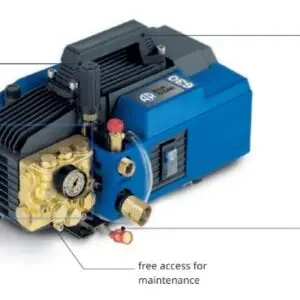
2.1 GPM 1900 PSI AR BLUE CLEAN with HOT WATER INDUCTION
$1,459.47
As low as $36.49/mo -
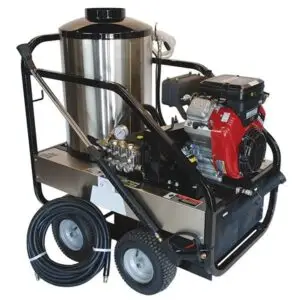
DELUX ® RK47-5030-C Series Gas-Powered Hot Water Pressure Washer
$10,020.47
As low as $250.51/mo -
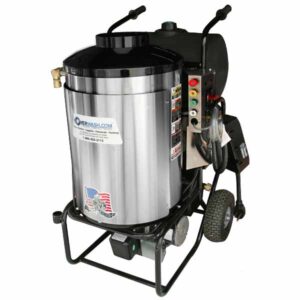
DELUX® 430PWH Electric-Powered Hot Water Pressure Washer – 3.9 GPM @ 3,000 PSI with Clutch
$9,134.97
As low as $228.37/mo -
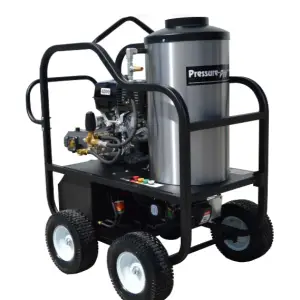
Pressure Pro 4012 hot water Honda 4200psi 4GPM
$6,199.97
As low as $155.00/mo -
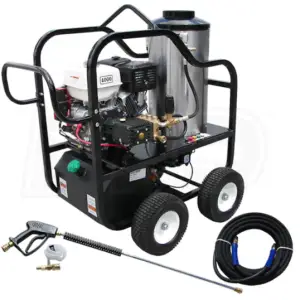
Pressure Pro 4012-42KV Hot Shot Series 4 Gpm 4200 Psi Viper Pump Direct Drive Kohler Engine
$5,999.97
As low as $150.00/mo -
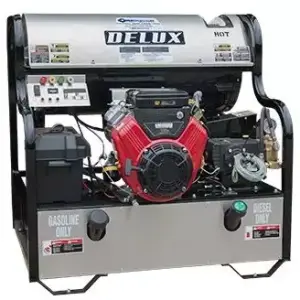
RK43-8035-C
$12,314.97
As low as $307.87/mo -
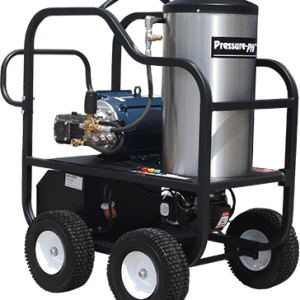
4230VB-20G1 Hot Water Pressure Washer
$8,408.97
As low as $210.22/mo -

STATIONARY NG HOT WATER PRESSU
$7,064.47
As low as $176.61/mo -

DELUX® Wolverine Hot Water Machine 8GPM 3000PSI
$13,124.97
As low as $328.12/mo -
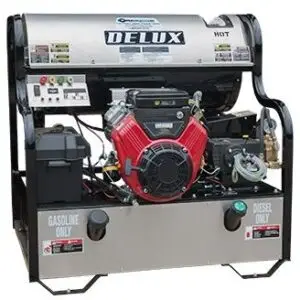
DELUX® RK-43 5535-C 5.5 GPM Commercial Hot Water Pressure Washer
$11,547.50
As low as $288.69/mo -
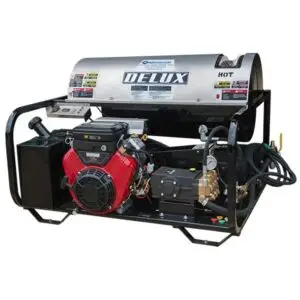
DELUX ® RK40-8030 Gas Pressure Washer
$10,407.47
As low as $260.19/mo -
DELUX ® RK40-C Series Gas-Powered Hot Water Pressure Washer
$9,569.97
As low as $239.25/mo -
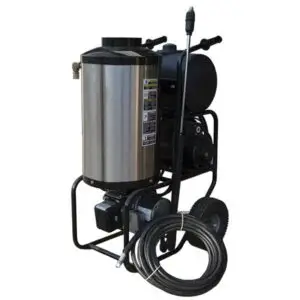
DELUX 320EC Electric-Powered Hot Water Pressure Washer – 3 GPM @ 2,000 PSI
$5,239.97
As low as $131.00/mo -
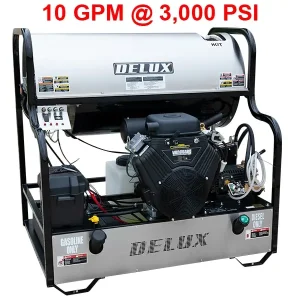
DELUX® RK-43-1030 Gas-Powered Hot Water Power Washer (10 GPM@3,000 PSI)
$15,748.97
As low as $393.72/mo -
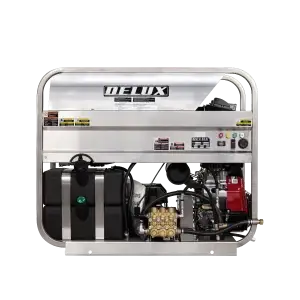
DELUX® Wolverine Hot Water Machine
$11,234.97
As low as $280.87/mo -
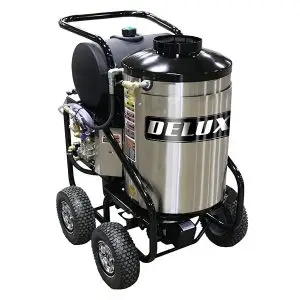
D-430E DELUX ® Portable Electric Hot Water Pressure Washer
$8,924.97
As low as $223.12/mo -
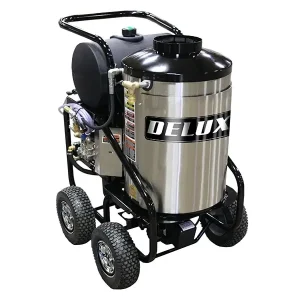
D-423E DELUX ® Portable Electric Hot Water Pressure Washer
$5,035.97
As low as $125.90/mo -
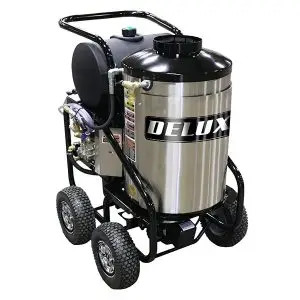
D-216E DELUX ® Portable Electric Hot Water Pressure Washer
$5,454.47
As low as $136.36/mo
Hot Water Pressure Washer Buying Guide
A hot water pressure washer combines a high-pressure pump with a heating system. Pressure loosens buildup, GPM carries it away, and heat helps oily soils release from the surface. The right machine is not simply the one with the highest PSI. It is the one whose pressure, flow, heat source, duty cycle and configuration match the work.
When Hot Water Is Worth the Investment
Hot water is most valuable when grease, oil, fats or lubricants are a regular part of the job. Common examples include fleet washing, heavy equipment, restaurant and food-related grease, manufacturing floors, agricultural machinery and oil-contaminated concrete.
Cold water remains a strong choice for dirt, mud, mildew and general exterior cleaning. If heat does not materially improve the soil you remove, a cold-water pressure washer may provide the required performance with lower equipment and maintenance complexity.
Buyer tip: Buy hot water when heat reduces labor or repeated passes on the soils you clean most often—not simply because hot-water equipment sounds more powerful.
Quick Buyer Snapshot
| Decision Point | Recommended Direction |
|---|---|
| Recurring grease, oil or fats | Hot water |
| Mostly dirt, mud and general exterior cleaning | Cold water |
| Mobile jobsites without electrical service | Gas hot-water pressure washer |
| Indoor or fixed facility with suitable electrical service | Electric hot-water pressure washer |
| Truck or trailer build | Skid-mounted system |
| Permanent wash bay | Stationary system |
Hot Water vs. Cold Water Pressure Washers
| Cleaning Need | Better Fit | Why |
|---|---|---|
| Oil, grease, fats and lubricants | Hot water | Heat helps oily soils release and can reduce repeated passes. |
| Dirt, mud, mildew and general exterior cleaning | Cold water | Pressure and flow are usually the primary cleaning advantages. |
| Lower equipment complexity | Cold water | No burner or heating system to fuel and maintain. |
| Fleets, heavy equipment and oily shop floors | Hot water | Heat supports faster degreasing when oily residue is recurring. |
Important: Hot water does not automatically eliminate chemicals, and it does not by itself establish a validated sanitation or disinfection process.
PSI, GPM and Heat Work Together
PSI helps break the bond between soil and the surface. GPM determines rinse volume and strongly affects production speed. Heat changes the behavior of oily soils and can make them easier to release.
For large equipment, fleets and floors, additional usable GPM may improve productivity more than simply selecting the highest PSI. A balanced machine with sufficient flow and effective heat can outperform a poorly matched higher-pressure unit.
Gas vs. Electric Hot-Water Pressure Washers
Gas-Powered Hot Water
Best for mobile contractors, outdoor jobsites and locations where electrical service is limited. Gas machines provide mobility but add engine maintenance, fuel handling and exhaust considerations.
Electric Hot Water
Best for permanent wash bays, indoor-capable installations and facilities where quiet operation or reduced engine exhaust matters. Confirm voltage, amperage, phase and the heating system before ordering.
Power source and burner fuel are separate decisions. A gasoline engine may pair with a diesel-fired burner, and an electric motor may pair with oil, natural gas, LP or electric heating.
Choose the Configuration That Fits the Work
Portable
Best when one machine must move around a property or between nearby jobs.
Skid-Mounted
Best for truck, trailer and service-body installations with tanks, reels and organized plumbing.
Stationary
Best for wash bays, fleet facilities, manufacturing plants and repeatable fixed-site workflows.
Trailer-Mounted
Best when the pressure washer, water storage and supporting equipment must travel as one complete system.
Common Applications
| Application | What to Prioritize |
|---|---|
| Fleet and truck washing | Balanced PSI and GPM, chemical application and heat for oily road film. |
| Heavy equipment | Durable components, strong rinse volume and heat for hydraulic oil and grease. |
| Restaurants and food-related facilities | Degreasing plus site-specific cleaning and sanitation procedures. |
| Agriculture | Mobility, water supply and heat for greasy machinery where permitted. |
| Manufacturing | Duty cycle, serviceability, ventilation and a configuration matched to the facility. |
| Oily concrete and shop floors | Surface-cleaner compatibility, adequate GPM and heat for petroleum residue. |
Power Source, Burner Fuel and Utilities
Before buying, verify:
- gasoline, diesel, kerosene, natural gas, LP or electric heating requirements
- voltage, amperage and phase
- indoor ventilation and exhaust requirements
- fuel storage and installation requirements
- water supply and expected inlet temperature
Maintenance and Freeze Protection
Hot-water systems require standard pump, hose, nozzle and filter maintenance plus attention to the heating system. Inspect burner combustion, thermostat operation, fuel filters, heating-coil soot, mineral scale, belts where applicable and freeze protection.
Mineral scale inside the heating coil can restrict flow and contribute to pressure loss. Soot outside the coil can reduce heat transfer and may indicate a combustion problem. Follow the exact model manual and use qualified service support for burner adjustment or coil descaling.
Can You Run Hot Water Through a Regular Pressure Washer?
Do not connect a cold-water pressure washer to a hot-water supply unless the manufacturer explicitly permits the inlet temperature. Pumps, seals, hoses and other components may have temperature limits. A true hot-water pressure washer heats water within a dedicated burner or electric heating system.
Common Buying Mistakes
- Choosing by PSI alone
- Ignoring GPM, heat output and duty cycle
- Assuming engine fuel and burner fuel are the same
- Buying an electric machine without confirming voltage, amperage and phase
- Using combustion equipment indoors without proper ventilation
- Buying hot water for jobs where cold water is sufficient
- Ignoring burner, coil, fuel-filter and freeze-protection maintenance
- Assuming every machine reaches the same temperature
Before You Buy
Confirm the exact model’s PSI, GPM, temperature rise or working temperature, pump type, drive system, burner fuel, electrical requirements, ventilation needs, fuel capacity, dimensions, weight and maintenance requirements. Also verify that the jobsite water supply can support the rated flow and that replacement parts and service are available.
Need Help Choosing a Hot Water Pressure Washer?
The PowerWash.com team can help compare output, power source, burner fuel, electrical service and mounting configuration so the equipment fits the work and the jobsite.
Continue learning with the PowerWash.com Learning Center, the Nozzle Size Calculator and the Pressure Washer Nozzle Chart.
Hot Water Pressure Washers FAQ's
Follow the exact model manual. In addition to normal pump, hose, nozzle and filter maintenance, hot-water systems may require burner adjustment, thermostat checks, fuel-filter service, coil-soot and scale inspection, and freeze protection.
Many electric systems are designed for indoor or fixed-site use, but burner exhaust, ventilation and electrical requirements still depend on the heating system. All-electric heating can avoid combustion exhaust, while oil- or gas-fired burners require appropriate installation and ventilation.
The engine or motor and the burner are separate systems. A gasoline engine may pair with a diesel- or kerosene-fired burner. Electric machines may use oil, natural gas, LP or electric heating. Verify both systems on the exact model.
It depends on the model, inlet-water temperature, flow rate and heating design. Some manufacturers publish a temperature rise, while others publish a maximum working temperature. Review the specification for the exact machine rather than assuming one universal temperature.
Hot water is worth considering when oil, grease, fats or lubricants are a regular part of the work. Heat can reduce repeated passes, labor and detergent demand in fleet, heavy-equipment, restaurant and industrial applications. Cold water remains sufficient for most dirt, mud and general exterior cleaning.
Not always. Heat can improve removal of oily soils and may reduce detergent use, but the correct chemistry still depends on the contaminant and surface. Follow the detergent label and equipment manufacturer’s guidance.
Only if the manufacturer specifically permits the inlet temperature. Ordinary cold-water machines may use pumps, seals and hoses that are not designed for hot inlet water. A true hot-water pressure washer heats the water in a dedicated burner or electric heating system.
Tools & Articles
Winter Pressure Washing Maintenance Checklist Prepared for Contractors by PowerWash.com. Winter is the most important time of year to protect ...
Hot water power washing systems are a cornerstone of effective cleaning, offering distinct advantages over traditional cold water methods. By ...
A pressure washer is a major investment; it is the backbone of your operation. Certain specifications make some machines better ...