Cold Water Pressure Washers

Cold water pressure washers are the workhorses for blasting away mud, dust, and general grime at a lower cost, weight, and complexity than hot-water systems. Use this guide to match PSI and GPM to your jobs, choose between gas and electric power, select a frame style, and understand pump drive and water‑supply needs so you buy with confidence.

Featured Categories

Brand

Price

Drive

Max Flow

Mobility Type

Motor Make

Motor Power Rating

Product Grade

Washer Type

Washer Power

Showing 1–20 of 34 resultsSorted by popularity

Cold Water Pressure Washer Buying Guide

Both PSI (impact) and GPM (rinsing speed) determine cleaning performance. Use nozzle sizing and technique to control the working pressure on the surface.

Is a cold water unit right for you?

  • Best for removing dirt, mud, dust, pollen, and loose paint from hard surfaces.
  • Great for concrete rinsing, decks and fences (with proper technique), vehicles, equipment, and general maintenance.
  • If soils include oil or grease, expect longer dwell times with detergent or consider a hot water machine instead.

Choose your power source

Gas-Powered

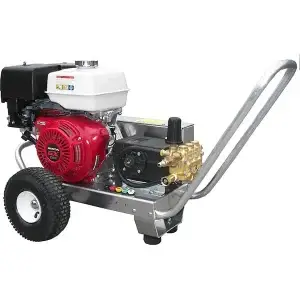
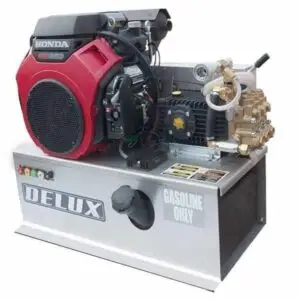
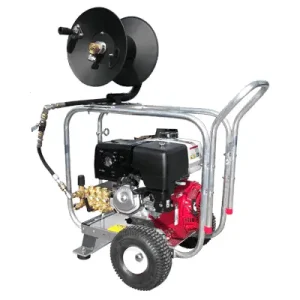
High mobility and broad power options for outdoor jobsites. No power cord; bring fresh water and fuel. Typical advantages include higher maximum GPM/PSI in portable formats. Consider engine maintenance, exhaust, and jobsite noise.

Electric-Powered

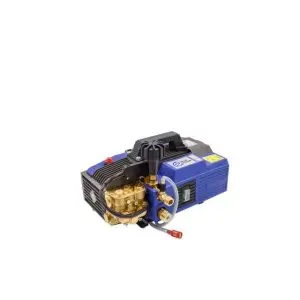
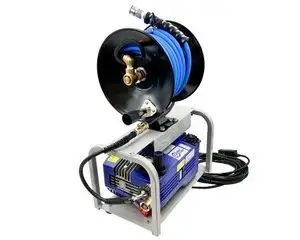
Quieter operation with zero on-site engine emissions and minimal upkeep. Ideal for indoor or noise-sensitive areas where power is available. Check circuit requirements and duty cycle; cord length and power availability limit mobility.

Select a frame or mount style

Cart-Mount

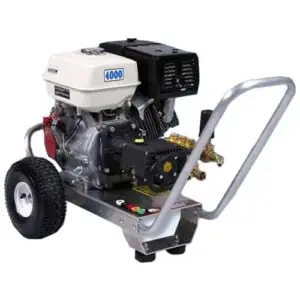
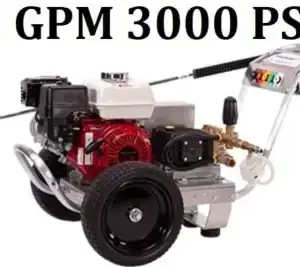
Most common for mobility and quick deployment. Balanced frame with pneumatic or semi-pneumatic wheels to navigate uneven terrain.

Skid-Mount

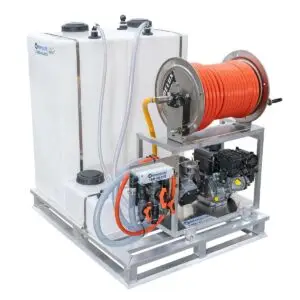
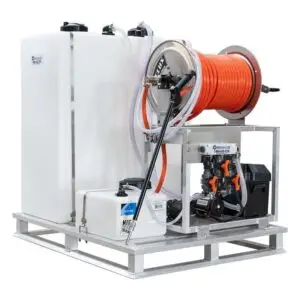
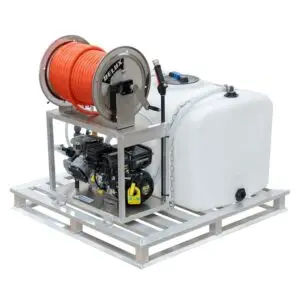
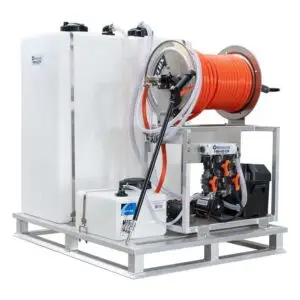
Low center of gravity for service vehicles and trailers. Pair with a buffer tank for reliable water supply on high-flow machines.

Wall-Mount

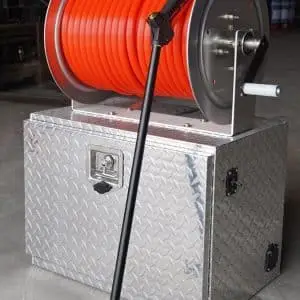
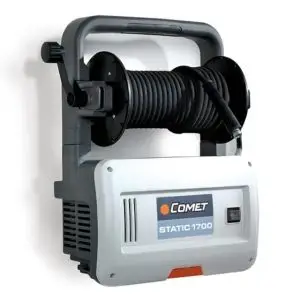
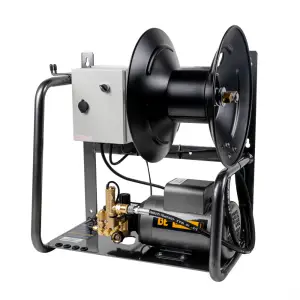
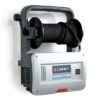
Stationary setups for shops and bays. Keeps hoses and guns organized; great where power and water are fixed.

Hand-Carry/Cube

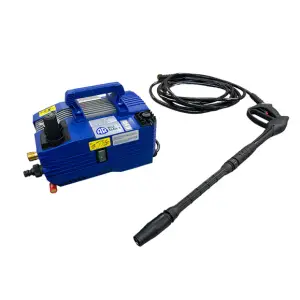
Compact and lightweight for tight spaces or quick tasks. Best for lighter-duty, shorter run-time applications.

Match flow and pressure to the job

Use these commonly used ranges as a planning baseline, then confirm against each product’s specifications and the surface you’re cleaning.

Task Commonly Used GPM Commonly Used PSI Notes
Vehicles & detailing 1.4–2.5 1,000–2,000 Use wide-angle tips; prioritize technique over high pressure.
Siding, decks & fences 2.0–3.5 1,200–2,500 Test an inconspicuous area; avoid forcing water behind siding or into wood grain.
Concrete walkways & pads 3.0–4.0+ 2,500–4,000 Higher flow speeds surface cleaning; select a surface cleaner sized to your GPM.
Equipment mud removal 4.0–5.5+ 3,000–4,000 For greasy films, use detergent dwell or consider hot water for faster results.

Pump drive and duty cycle

Direct-Drive

Compact, lighter, and budget-friendly. Great for intermittent to regular use. Expect higher pump RPM and more vibration transfer.

Belt-Drive

Lower pump RPM and smoother operation for long run-times. Larger footprint and higher upfront cost; favored for daily commercial use.

Equipment selection notes

  • Verify your water source. As a safe planning rule, supply flow should exceed the machine’s rated GPM by approximately one gallon to prevent starvation and cavitation.
  • Nozzle size sets working pressure. A larger orifice lowers pressure and increases flow at the gun; a smaller orifice raises impact.
  • Use detergents for bonded soils. Let chemistry and dwell time reduce the need for aggressive tips on delicate surfaces.
  • Plan for hose length, storage, and accessories (surface cleaner, downstream injector, turbo nozzle) that match your GPM/PSI.

Never allow a pressure washer to idle in bypass for extended periods—heat builds rapidly and can damage seals. Follow the manufacturer’s operating limits.

Learn more in the PowerWash.com Learning Center

Need help choosing the right cold water washer?

Tell us about your water supply, power source, and cleaning goals. Our team will recommend models, accessories, and setup tips tailored to your workflow.

Talk to an Equipment Specialist

Cold Water Pressure Washers FAQ's

Plan for a supply that exceeds the machine’s rated GPM by roughly one gallon to avoid starving the pump. Verify with a timed bucket test or a supply spec from the facility.
Direct‑drive machines are compact and cost‑effective for intermittent to regular use. Belt‑drive lowers pump RPM and vibration for longer run‑times in daily commercial use, with a larger frame and higher upfront cost.
Gas offers portability and higher outputs outdoors. Electric offers quieter operation and zero on‑site engine emissions where power is available. Match the choice to your jobsite access, noise limits, and duty cycle needs.
Both matter. PSI provides impact to break the bond; GPM provides rinsing speed to carry soils away. Choose a combination suited to the surface and tool (e.g., surface cleaner). Then fine‑tune with nozzle size and technique.
If the soils include oil, grease, or heavy petroleum residues, hot water typically cleans faster and with less chemical action. Many teams keep a cold water unit for general work and reserve hot water for grease-heavy tasks.
Cold water units excel at removing dirt, mud, dust, pollen, and loose contaminants from hard surfaces such as concrete, masonry, equipment, decks, and siding. For oils and grease, plan on detergent dwell or use a hot water machine for faster results.
Home Backup - 2-2-24
Special Offer
PowerWash Prime Membership