
Cold Water Commercial Pressure Washers
Commercial cold water pressure washers are built for contractors and facilities that need dependable pressure and flow without a burner or heated-water system. They are a practical choice for surface cleaning, fleet washing, equipment rinsing, property maintenance and general commercial work where grease does not require heat. Compare gas and electric models, belt and direct drive systems, and portable or mounted configurations below.
Brand
Price
- (3)
- (8)
- (1)
- (1)
Drive
- (6)
- (3)
Max Flow
Mobility Type
- (6)
- (2)
Motor Make
Motor Power Rating
Product Grade
- (8)
Washer Type
Washer Power
- (1)
- (6)
Showing all 13 resultsSorted by popularity
-
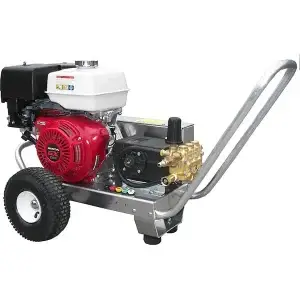
EB4040HG Gas Pressure Washer (4 GPM @ 4,000 PSI)
$2,401.47
As low as $60.04/mo -
Powerful EB5030HG-20 Cold Water Pressure Washer – Clean Faster & Easier!
$2,571.47
As low as $64.29/mo -
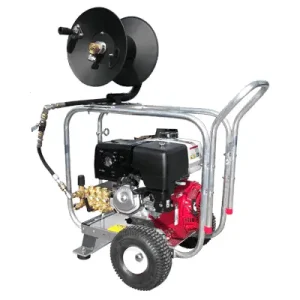
Pro-Jet GX390 Drain Cleaning Pressure Washer Kit – Professional Grade Cleaning Power
$2,834.97
As low as $70.87/mo -
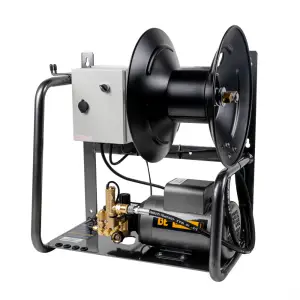
Wall Mounted ELEC 1500 PSI 2 GPM
$2,326.97
As low as $58.17/mo -
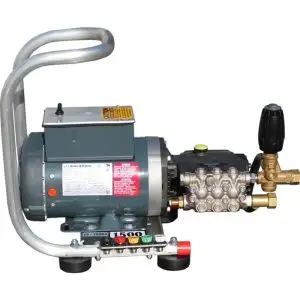
HC/EE3010G Electric Pressure Washer (3 GPM @ 1,000 PSI)
$1,433.47
As low as $35.84/mo -
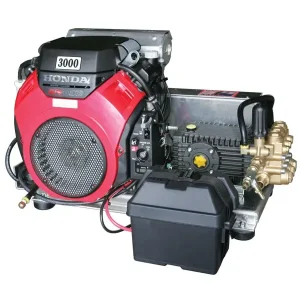
VB8030HGEA406 Cold Water Pressure Washer Belt Drive- 8 GPM @ 3000 PSI
$7,082.97
As low as $177.07/mo -
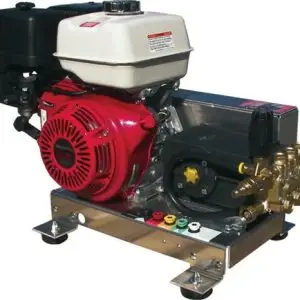
Honda 3000 PSI 5 GPM Skid Pressure Washer – Commercial
$2,948.97
As low as $73.72/mo -
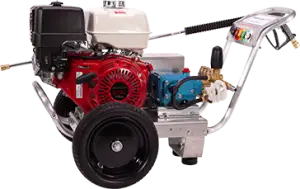
Belt drive 4 gpm 4000 PSI pressure pro cart pressure washer with a Honda engine
$2,942.42
As low as $73.56/mo -
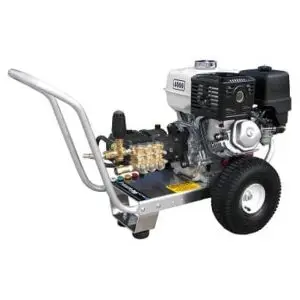
Pressure-Pro EG4040HG Cold Water Pressure Washer – 4 GPM @ 4,000 PSI
$1,802.97
As low as $45.07/mo -
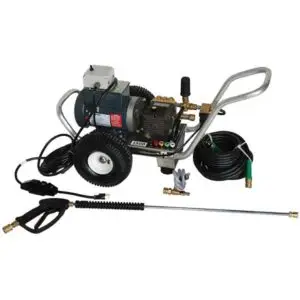
Powerful EE2015A with Auto Start Stop Electric Cold Water Pressure Washer with AR Pump – 2 GPM @ 1,500 PSI
$2,761.47
As low as $69.04/mo -
4 GPM 4200 PSI Belt Drive Cold Water Pressure Washer – Powerful Cleaning for Your Home!
$2,204.97
As low as $55.12/mo -
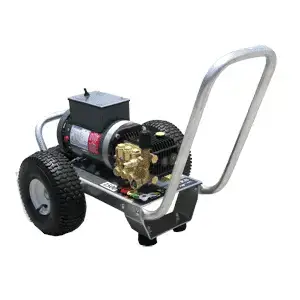
3HP 230V/12A Electric Cold Water Pressure Washer – 3 GPM @ 1,500 PSI
$1,981.47
As low as $49.54/mo -
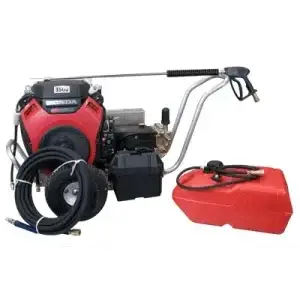
Powerful 5.5 GPM @ 3500 PSI Cold Water Pressure Washer – VB5535HGEA411
$4,920.47
As low as $123.01/mo
Commercial Cold Water Pressure Washer Buying Guide
When Cold Water Is the Right Choice
Cold water commercial pressure washers are a practical fit for dirt, mud, dust, loose debris, surface cleaning, equipment rinsing and general property maintenance. They avoid the added cost and maintenance of a burner system and can deliver strong commercial production when the selected PSI, GPM, pump and drive system match the work.
Choose cold water when heat is not the main cleaning advantage. If grease, oil or heavy organic buildup is the recurring problem, compare commercial hot water pressure washers.
Quick Buyer Snapshot
| Decision Point | Cold Water Commercial Pressure Washers |
|---|---|
| Best for | Flatwork, fleet rinsing, equipment cleaning, property maintenance and general commercial washing |
| Primary advantage | Commercial pressure and flow without burner-system cost or maintenance |
| Main limitation | Less effective than hot water on grease, oil and heat-responsive soils |
| Common power sources | Gas and electric |
| Common configurations | Portable, skid-mounted and wall-mounted |
Cold Water vs. Hot Water Pressure Washers
| Need | Recommended Choice | Why |
|---|---|---|
| Dirt, mud and loose debris | Cold water | Pressure, flow and the correct nozzle are usually sufficient |
| Grease, oil and food residue | Hot water | Heat can improve detergent performance and reduce dwell time |
| Lower equipment complexity | Cold water | No burner, fuel tank or heating coil to maintain |
| General contractor use | Cold water | Versatile for flatwork, equipment and property maintenance |
| Kitchen exhaust or heavy degreasing | Hot water | Heat is often a core part of the cleaning process |
PSI and GPM for Commercial Production
PSI helps break the bond between contamination and the surface. GPM carries loosened material away and strongly affects rinsing speed, surface-cleaner performance and overall production. For many commercial cold-water jobs, additional usable flow is more valuable than chasing the highest PSI number.
| Application | What to Prioritize |
|---|---|
| Surface cleaning | Adequate GPM for the intended surface-cleaner size |
| Fleet and equipment rinsing | Flow for faster detergent and soil removal |
| Concrete and hard surfaces | Balanced PSI and GPM with the correct nozzle |
| Delicate or coated surfaces | Adjustable pressure and wider spray patterns |
| High-production commercial work | Industrial pump, strong flow and suitable duty cycle |
Belt Drive vs. Direct Drive
Belt Drive
Belt-drive systems typically run the pump at a lower speed and isolate it from engine heat and vibration. They are a strong choice for frequent commercial use, skid systems and installations that draw from a properly configured buffer tank.
Direct Drive
Direct-drive systems connect the pump directly to the engine or motor. They are compact, efficient and often less expensive, making them useful for portable work and lighter or intermittent duty cycles.
Do not choose by drive type alone. Pump quality, operating hours, water supply, mobility and serviceability matter just as much.
Gas vs. Electric Cold-Water Machines
Gas cold-water pressure washers are typically the best fit for mobile contractors and remote jobsites. Electric cold-water machines are often better for fixed facilities, indoor-capable installations and noise-sensitive environments with compatible electrical service.
For deeper power-source guidance, compare commercial gas pressure washers and commercial electric pressure washers.
Portable, Skid and Wall-Mounted Configurations
Portable
Cart-mounted machines are easy to move around properties and are a practical choice when the operator needs flexibility between nearby jobs.
Skid-Mounted
Skid systems support truck-bed, trailer and facility installations with organized plumbing, hose reels and water-tank integration.
Wall-Mounted
Wall-mounted electric systems save floor space and support repeatable workflows in wash bays, shops and fixed facilities.
Common Commercial Applications
| Application | Why Cold Water Fits |
|---|---|
| Concrete and flatwork | Strong pressure and flow support surface-cleaner production |
| Fleet and equipment washing | Useful for mud, dust, road film and routine rinsing |
| Property maintenance | Versatile for sidewalks, loading areas, fencing and general exterior cleaning |
| Construction and agriculture | Effective for equipment, tools, mud and loose debris |
| Facility wash bays | Electric and wall-mounted options support repeatable cleaning stations |
| Drain and specialty cleaning | Purpose-built cold-water systems can support jetting and specialty workflows |
Maintenance and Freeze Protection
Cold-water machines avoid burner and coil maintenance, but the pump, engine or motor, unloader, hoses, nozzles, filters and plumbing still require routine care.
- Check pump oil where applicable.
- Inspect hoses, couplers and fittings.
- Clean inlet filters and verify water supply.
- Replace worn nozzles that reduce pressure or overload the pump.
- Follow engine or motor maintenance schedules.
- Drain and winterize the pump, hoses and accessories before freezing weather.
Common Buying Mistakes
- Selecting by PSI alone and overlooking GPM.
- Buying a residential-grade machine for daily commercial production.
- Choosing direct drive when frequent tank-fed operation is required.
- Assuming every machine can draw from a buffer tank.
- Underestimating surface-cleaner flow requirements.
- Choosing cold water for recurring heavy grease where heat would improve the process.
- Ignoring hose length, water supply, mobility and service access.
Before You Buy
- Primary cleaning applications and surface types
- Required PSI and GPM
- Expected hours and duty cycle
- Gas or electric power
- Belt drive or direct drive
- Portable, skid-mounted or wall-mounted configuration
- Pressurized supply or buffer-tank operation
- Surface-cleaner and accessory compatibility
- Freeze protection and storage plan
Need Help Choosing a Commercial Cold Water Pressure Washer?
Pressure, flow, pump design and configuration all affect real-world productivity. Contact PowerWash.com for help comparing gas, electric, belt-drive, direct-drive, portable and mounted cold-water systems.
Continue learning with the PowerWash.com Learning Center, our Nozzle Size Calculator and the Pressure Washer Nozzle Chart.
Cold Water Commercial Pressure Washers FAQ's
Drain the pump, hoses, gun, wand and accessories before freezing temperatures, and use the manufacturer-recommended winterization or pump-protection procedure. Store the equipment in a protected location whenever possible.
Some can, but not every machine is designed to draw from a buffer tank. Confirm the pump design, inlet plumbing, tank placement and manufacturer requirements before operating from a tank.
Gas is usually the better fit for mobile contractors and remote jobsites. Electric is often better for fixed facilities, indoor-capable installations and noise-sensitive environments with compatible electrical service.
Both matter, but GPM often has the larger effect on rinsing speed and surface-cleaner productivity. PSI helps break the bond between soil and the surface, while GPM carries loosened material away.
Yes. Commercial cold water models are available with industrial pumps, strong GPM output and duty cycles designed for professional use. The right machine depends on the application, operating hours, water supply, PSI, GPM and configuration.
Cold water pressure washers are well suited to dirt, mud, dust, loose debris, flatwork, equipment rinsing, fleet washing and general property maintenance. When grease, oil or heat-responsive soils are the main problem, a hot water machine may be more productive.
Belt drive is commonly preferred for heavier weekly use because it allows the pump to run at a lower speed and can reduce heat and vibration. Direct drive is more compact and economical and may be appropriate for intermittent use. Follow the manufacturer’s duty-cycle and maintenance guidance for the specific machine.
Tools & Articles
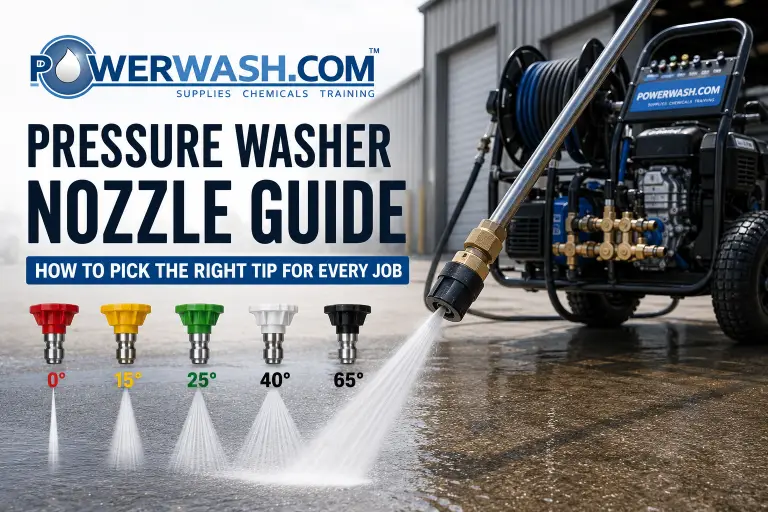
Your machine can push 4 GPM at 4000 PSI all day long. The nozzle decides what actually happens on the ...
A pressure washer is a major investment; it is the backbone of your operation. Certain specifications make some machines better ...
Pressure washer specifications can be confusing when you are comparing PSI, GPM, nozzle size, heat and chemical capability. Each number ...