
Upstream Injectors
Brand
Price
- (2)
Showing all 2 resultsSorted by popularity
Upstream Injectors: Selection & Setup Guide
What is an upstream injector?
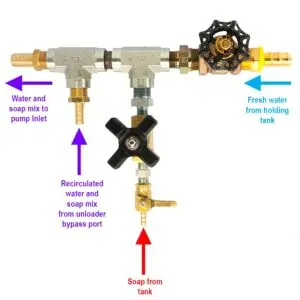
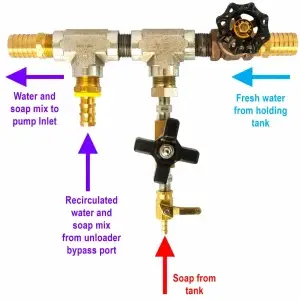
An upstream injector introduces detergent into the water stream before it enters the high-pressure pump. Because the solution travels through the pump (and, on hot-water units, the heating coil), upstream systems can deliver a strong, uniform mix without a separate downstream injector at the gun.
Only run chemicals that are compatible with your pump, seals, hoses, and heater coil. Avoid corrosive products such as strong acids or high-strength sodium hypochlorite through the pump. Always follow the chemical manufacturer’s guidance.
How to choose the right upstream injector
- Match injector size to your machine’s rated GPM and PSI.
- Confirm temperature and chemical compatibility (seal materials such as Viton or EPDM as needed).
- Decide on fixed-orifice or adjustable metering based on how often you change soaps.
- Plan for easy flushing with a fresh-water position or a dedicated rinse tank.
Size by Flow (GPM)
Choose an injector rated at or slightly above your washer’s GPM. Undersizing can restrict flow and raise system pressure; oversizing can reduce chemical draw consistency.
Pressure Rating (PSI)
Verify the injector’s maximum working pressure meets or exceeds your machine’s PSI to maintain safety margins and service life.
Fixed vs Adjustable
Fixed-orifice models offer repeatable mixes once dialed in. Adjustable units add a metering valve for on-the-fly strength changes—useful when switching surfaces or detergents.
Hot-Water Compatibility
For hot-water machines, confirm temperature ratings for the injector body and seals. Verify your detergent is rated for the operating temperature.
Compatibility snapshot
| Feature | Upstream | Downstream | Notes |
|---|---|---|---|
| Chemical path | Through pump/heater | After pump | Upstream requires pump-safe detergents and seals. |
| Mix strength at nozzle | Strong, metered at inlet | Venturi-diluted | Upstream often enables a consistent, tunable mix. |
| Hot-water use | Well-suited | Common | Confirm temperature ratings for both methods. |
| Equipment wear risk | Higher if chemicals are harsh | Lower | Flush thoroughly after use to reduce wear. |
| Changeover | Close valve or switch tanks | Bypass/remove injector for full pressure | Upstream can switch to rinse quickly at the tank or valve. |
For frequent soap changes, plumb a three-way valve to select between detergent and a fresh-water rinse tank. This speeds purging and protects the pump.
Setup basics
- Mount the injector on the suction side before the pump. Keep supply lines short and airtight with a quality strainer on the detergent pickup.
- Install a metering valve (if applicable) and clearly label rinse vs soap positions.
- Prime at low pressure, then bring the machine to operating pressure and fine-tune the mix.
- After cleaning, switch to fresh water and flush the system to clear residual detergent.
Maintenance and safety
- Flush with clean water at the end of each job or day.
- Inspect seals and hoses regularly; replace if swollen, cracked, or brittle.
- Use chemical-rated strainers and keep containers covered to prevent debris ingestion.
- Store injectors dry when not in service for extended periods.
Learn more
Looking for after-pump solutions? Explore our Downstream Injectors.
Need help sizing an upstream injector?
Our team can help you match injector size, seals, and setup to your exact GPM, PSI, temperature, and detergent needs.