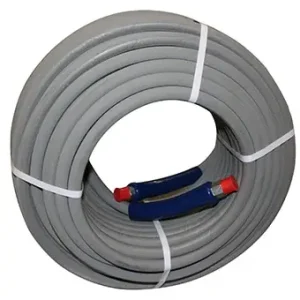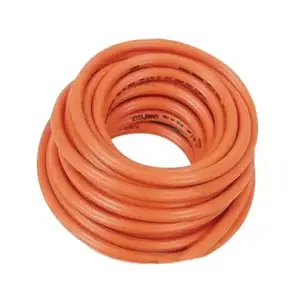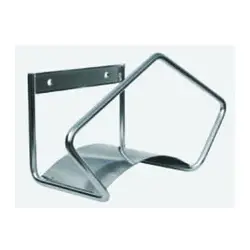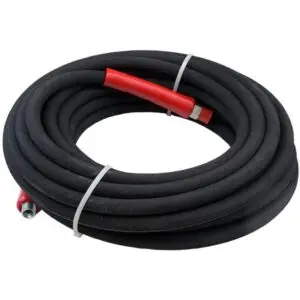
Pressure Washer Hose

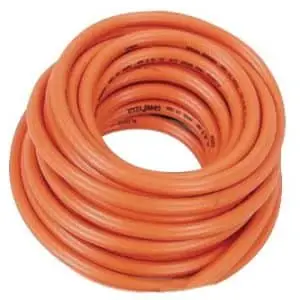
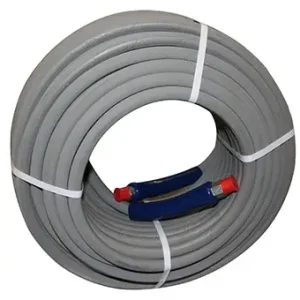
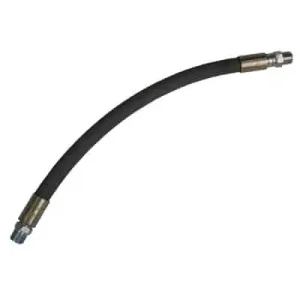
Find the right pressure washer hose for your machine and job. Match your washer’s PSI, GPM, temperature needs, and fittings to get reliable performance and long service life. This guide explains hose diameters, constructions, common connection types, and care tips so you can select confidently and keep working without leaks or downtime.

Brand

Price

Diameter

Hose Length

Hose Type

Max Temperature

Whip Hose Length

How to Choose a Pressure Washer Hose

Start with your machine specs

  • Match the hose working pressure to meet or exceed your washer’s max PSI.
  • Choose an inside diameter (ID) that fits your flow (GPM) to minimize pressure loss.
  • Confirm temperature needs: cold water, warm, or hot water up to 250–310°F depending on hose series.
  • Verify connection types at the pump and gun (M22-14mm, M22-15mm on some electrics, 3/8″ quick connect, or NPT threads).

Always match M22-14mm vs M22-15mm parts. They can thread together but won’t seal correctly, causing leaks and premature O-ring wear.

Choose by inside diameter (flow and handling)

1/4″ ID

Light-duty and compact hoses for small electric or lower-flow machines. Easiest to handle but highest pressure loss over distance. Best for short runs.

5/16″ ID

Transitional size that reduces pressure loss vs 1/4″ while staying reasonably light. Common on some mid-range units and short hose lengths.

3/8″ ID

The pro standard for many 3–5 GPM machines. Balances flow with flexible handling and supports longer runs with less pressure drop.

1/2″ ID

Used on higher-flow machines or very long runs to minimize pressure loss. Heavier and larger bend radius; pair with a quality reel.

Choose by construction (durability and temperature)

Thermoplastic

Lightweight and economical for cold to warm water. Good for mobile detailers or occasional use. Not intended for sustained high heat.

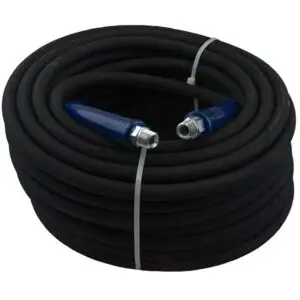
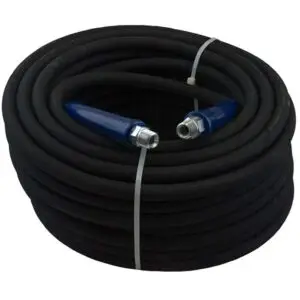
Rubber, 1‑wire braid

Durable workhorse for many daily cleaners. Typically supports common working pressures around 3000 PSI and hot water up to about 250°F (check series).

Rubber, 2‑wire braid

Heavier-duty cover and reinforcement for higher working pressures (e.g., 4000+ PSI) and frequent hot-water use. Ideal for commercial rigs.

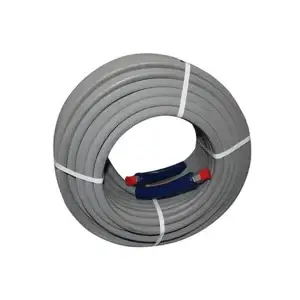
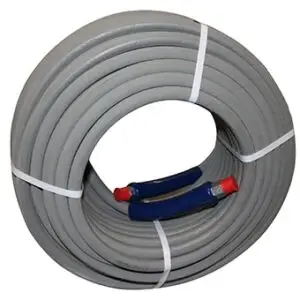
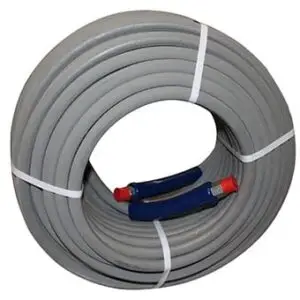
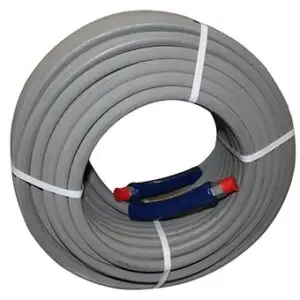
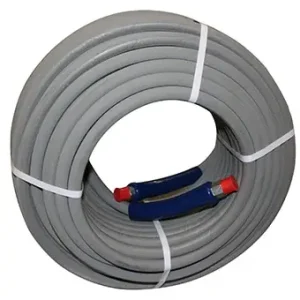
Non‑marking cover

Special smooth cover helps prevent black scuffs on concrete or building surfaces. Popular in storefronts, restaurants, and residential work.

Fittings quick reference

Connection point Common fitting Notes
Pump outlet / hose inlet M22-14mm or 3/8″ quick connect Many gas units use M22-14mm; some pro setups use 3/8″ QC for fast swaps.
Electric consumer units M22-15mm (varies by brand) Confirm 14mm vs 15mm before ordering adapters.
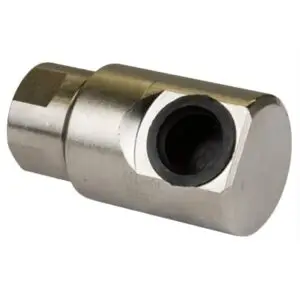
Hose to spray gun 3/8″ quick connect or 3/8″ NPT Quick connects speed setup; thread sealant is for NPT threads only, not QC.
Wand/nozzle end 1/4″ quick connect Most nozzles and many accessories use 1/4″ QC tips.

Equipment selection notes

  • Hot-water hoses in the right series are commonly rated for continuous service around 250–310°F; always verify the specific model’s limit.
  • Longer and smaller-ID hoses increase pressure loss. When in doubt for 3–5 GPM machines, 3/8″ ID helps maintain nozzle performance over distance.
  • Observe minimum bend radius and avoid tight coils under pressure to prevent kinks, blistering, or early wire exposure.
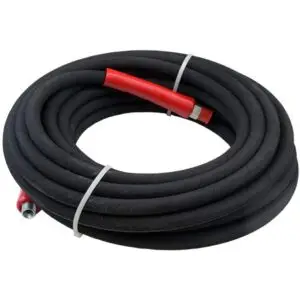
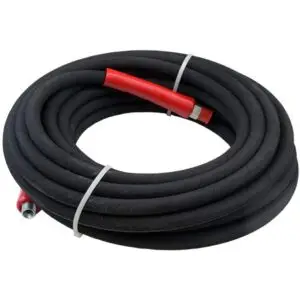
  • Use non-marking covers where finished surfaces matter; standard black covers are tougher but can scuff.
  • Match or exceed your machine’s PSI rating and use a quality reel to protect the hose jacket during storage and transport.

Care and replacement

  • Inspect before each use for cuts, bulges, soft spots, wire exposure, or leaks. Replace at the first sign of damage.
  • Flush and drain before storage; for winter, circulate antifreeze per your workflow to protect the hose and pump.
  • Do not drag across sharp edges; use hose guides and avoid running over hoses with equipment or vehicles.
  • Keep spare O-rings for M22 and quick connects to stop weeps and maintain seal integrity.

Need help choosing the right hose?

Tell us your washer’s PSI, GPM, water temperature, and fittings. Our team will match a hose spec that fits your rig and the work you do.

Talk to an Equipment Specialist

Pressure Washer Hose FAQ's

Yes when working near decorative concrete, storefronts, or painted surfaces. Their covers reduce scuff marks compared to standard black covers.
Replace immediately if you see cuts, bulges, exposed wire, soft spots, leaks, or damaged fittings. Inspect before each use and don’t tape or clamp damaged areas.
You can run long lengths, but pressure loss rises with smaller IDs and more hose. Choose 3/8″ or larger for longer runs and confirm performance at your nozzle.
M22-14mm is common on gas units; some electrics use M22-15mm. Many pro hoses use 3/8″ quick connects to the gun. Nozzles typically use 1/4″ quick connects.
No. Many rubber series are rated to about 250°F, and some hot‑water lines go higher. Check the specific hose’s continuous temperature rating before use.
Both use steel wire braid reinforcement. 2‑wire hoses add another braid layer for higher working pressure and tougher service. Choose based on your machine’s PSI and duty cycle.
Most pros use 3/8″ ID for 3–5 GPM to limit pressure loss while keeping good handling. For higher flow or very long runs, consider 1/2″. Always verify your own setup’s performance.
Home Backup - 2-2-24
Special Offer
PowerWash Prime Membership