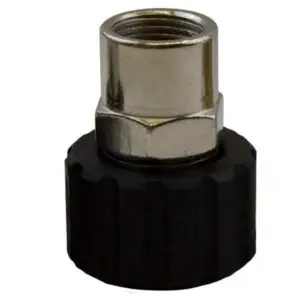
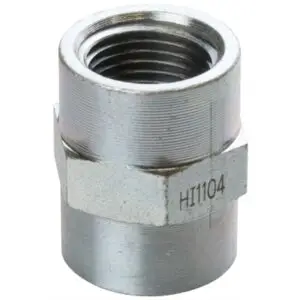
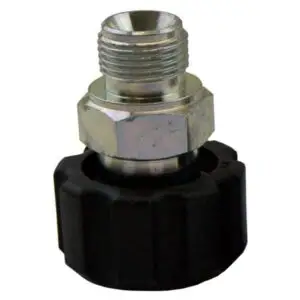
Find the right quick connect fittings to make hose, gun, lance, and nozzle changes fast and reliable.
This guide explains sizes, thread types, materials, and common setups so you can match couplers to your machine and accessories with confidence.
Are larger quick connects better for high‑flow machines?
Larger bores (e.g., 3/8″) can reduce restriction on higher‑flow systems. Match the QC size to your hose ID, pump flow, and component ratings for best performance.
Do I need thread sealant on quick connects?
Use sealant on tapered threads like NPT. For BSPP (parallel) connections, sealing is achieved with a washer or O‑ring as specified. Do not apply sealant to the QC plug/coupler interface.
Why does my quick connect drip even with new parts?
Common causes include a worn or missing O‑ring, debris in the coupler, mismatched QC body sizes, or a thread standard mismatch (e.g., NPT vs BSP). Inspect, clean, and verify specs.
Should I choose brass or stainless steel quick couplers?
Brass is cost‑effective and widely used. Stainless steel offers higher corrosion resistance and durability, which is helpful in harsh or constantly wet environments.
Can I mix NPT and BSP threads?
No—these thread forms differ in angle and sealing method. They may start to engage but typically leak under pressure. Use adapters designed to convert between standards.
How do I tell M22-14 from M22-15?
Measure the internal diameter of the female seat or the male stem. M22-14 uses a 14 mm seat/stem; M22-15 uses 15 mm. Mixing them threads together but will not seal reliably.
What quick connect sizes are most common on pressure washers?
1/4″, 3/8″, and 1/2″ body sizes are the most common. Many nozzle and lance connections use 1/4″, while hose and gun connections are often 3/8″. Always verify on your specific machine.