
Turbo Nozzles
Brand
Price
- (8)
- (4)
Showing all 15 resultsSorted by popularity
-
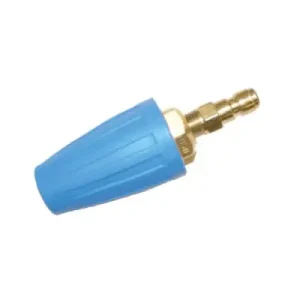
A+ Turbo Nozzle 4000
From $70.47 -
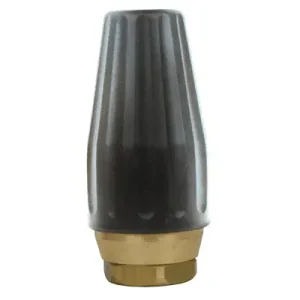
Suttner ST-357 Turbo Nozzle (3600 PSI)
From $102.97 -
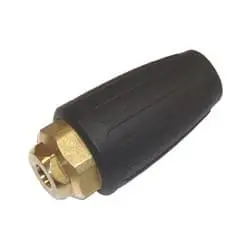
MTM Hydro Turbo Nozzle 4500
From $92.47 -
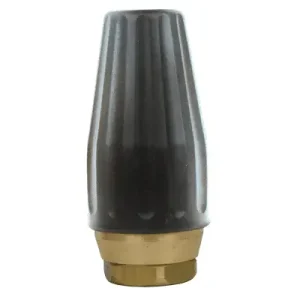
Suttner ST-457 Turbo Nozzle 6000
From $178.47 -
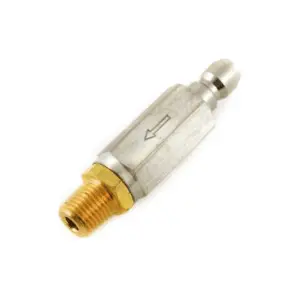
-
Sale!
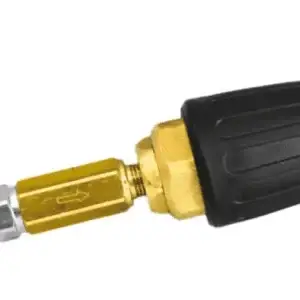
-
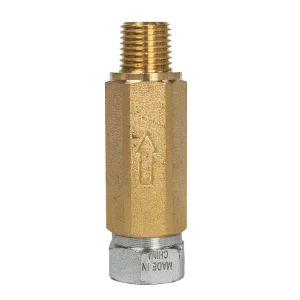
-
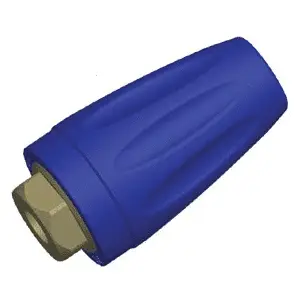
MTM Hydro Turbo Nozzle 4000 PSI
From $56.97 -
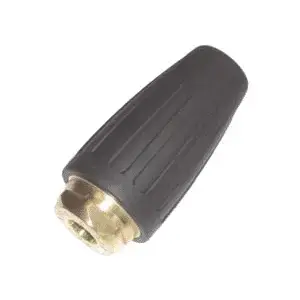
MTM Hydro Turbo Nozzle 4000- Commercial Grade
From $62.97 -
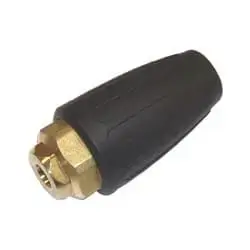
MTM Hydro Turbo Nozzle 5,000
From $74.97 -
-
-
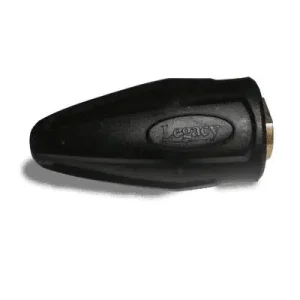
Legacy Revolution Turbo Nozzle 4350
From $110.47 -
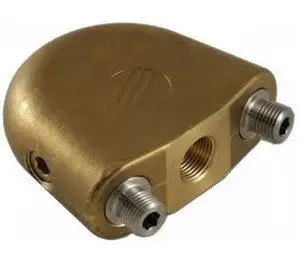
-

Veloci MTM 4,000 PSI Turbo Nozzle w/ Plug
From $45.00
Turbo Nozzles: Selection, Setup, and Best Practices
What a Turbo Nozzle Does
A turbo nozzle converts a concentrated 0° stream into a rapidly rotating cone. The spinning action concentrates impact while sweeping the contact area, helping you break up heavy buildup on hard surfaces faster than a fixed fan tip.
Where They Excel — and Where to Avoid
Use turbo nozzles on hard, durable materials and heavy deposits where you need concentrated impact and faster coverage.
- Concrete, brick, pavers, stone, and masonry
- Heavy algae, lichen, scale, and compacted dirt
- Prepping tough spots before surface cleaning
Avoid using a turbo nozzle on delicate or easily marred materials.
- Softwood and weathered wood
- Automotive finishes, soft plastics, screens, and fragile trim
- Soft siding where high impact could cause damage
Always test in an inconspicuous area, keep the nozzle moving, and maintain safe standoff distance. Never point a turbo nozzle at people or animals.
How to Choose the Right Turbo Nozzle
Selecting the correct model prevents underperformance and premature wear.
- Confirm your machine’s rated GPM and PSI.
- Match the orifice size to those ratings using each product’s sizing chart or ask our team for help.
- Pick a duty rating that comfortably meets or exceeds your machine’s pressure rating.
- Choose temperature compatibility (cold- or hot-water) and internal wear materials appropriate for your work.
- Verify inlet/connection style (most are 1/4″ quick-connect or 1/4″ FNPT).
Cold-Water, Everyday Cleaning
Durable rotary nozzles sized for common contractor machines. Ideal for concrete, brick, and tough spots where a fan tip struggles.
Pro-Duty / Higher Pressure
Heavier-duty bodies and wear parts to handle frequent use on higher-pressure units. A good choice for routine commercial work.
Hot-Water Compatible
Models designed for elevated temperatures. Select these when pairing with hot-water washers for grease and oil.
Rebuildable & Repair Kits
Extend service life with replaceable rotor/seat kits. Useful for high-hour fleets that want predictable maintenance costs.
Setup and Technique
- Install the correctly sized turbo nozzle and verify connections are tight.
- Start with greater standoff distance; move closer only as needed.
- Keep the nozzle in motion with overlapping passes to avoid etching.
- Work from the cleanest edge toward the heaviest buildup to control debris.
For large flatwork, use the turbo nozzle only on stubborn spots, then switch to a surface cleaner for final uniform results.
Maintenance and Troubleshooting
- Flush with clean water after use; avoid running grit through the nozzle.
- If rotation is weak or stops, check inlet screens/filters and confirm adequate pressure and flow.
- Inspect the ceramic/tungsten wear parts for chips; replace using a repair kit if worn.
- Store dry and protected to prevent mineral buildup and impact damage.
Example Selection Walkthrough
This example shows the thought process only. Always verify with the sizing info on each product page or contact our team.
| Step | Example |
|---|---|
| Machine ratings | 4.0 GPM @ 3,500 PSI (contractor cold-water unit) |
| Orifice starting point | Select a turbo nozzle orifice in the same range you use for flat tips; confirm against the product’s chart. |
| Duty & temperature | Choose a pro-duty model; cold-water is sufficient here. |
| Serviceability | Add a compatible repair kit for planned maintenance. |
Learn More
- Turbo Nozzles: The Essential Tool for Professional Contract Cleaners
- Pressure Washer Buyer’s Guide
- Why the X-Jet Is a Must-Have in Your Power Washing Arsenal
Need Help Choosing a Turbo Nozzle?
Send us your machine’s PSI/GPM and what you’re cleaning. We’ll size the orifice, suggest the right duty rating, and recommend repair kits that fit your workflow.