Every contractor who sits through the kitchen exhaust class in Fort Worth cleared five days off the schedule to be there. In this trade, five days is not a small thing to give up. That alone tells you what they think the work on the other side is worth.
Most contractors never look at kitchen exhaust cleaning certification seriously, and the reason is almost never the work itself. It is that hood cleaning sits behind a gate, and a gate is easy to walk past while the phone is still ringing. Then the residential calls thin out the way they do every fall, and the gate is suddenly worth a second look.
Restaurants do not buy this because the hood looks bad
Everything else you sell is a judgment call by the customer. A driveway gets washed when somebody decides it looks rough. A hood gets cleaned because the system is full of deposits from grease laden vapors and somebody with a clipboard is going to come looking.
NFPA 96 is the standard behind it, and we have already written about why this is winter work. The part that matters to you is who is allowed to do it. The standard calls for contaminated portions of the system to be cleaned “by a properly trained, qualified, and certified person(s).”
Read that again as a business sentence rather than a code sentence. The customer is not choosing whether to buy. The customer is choosing who is allowed to sell it to them.
That changes three things about the account:
- It repeats on a schedule rather than when somebody notices.
- It does not care about weather. A fryer runs in February.
- It gets renewed quietly. A restaurant that trusts you on a fire code item is not shopping that line every spring.
The schedule is written down
This is the part that makes hood work different from everything else on your board. The standard sets how often these systems get inspected, and it sets it by how hard the kitchen cooks.
| Type of cooking operation | Inspection frequency |
|---|---|
| Systems serving solid fuel cooking operations | Monthly |
| Systems serving high volume cooking operations, such as 24 hour cooking, charbroiling or wok cooking | Quarterly |
| Systems serving moderate volume cooking operations | Semiannually |
| Systems serving low volume cooking operations, such as churches, day camps, seasonal businesses or senior centers | Annually |
Source: NFPA 96 inspection frequency table. Cleaning follows the inspection when the system is found contaminated. [CONFIRM the table number against a current copy of the standard before publishing. See verification notes.]
Look at that as a route rather than a code table. A wood fired pizza place is twelve visits a year. A charbroil heavy spot that runs late is four. A church hall is one.
That is the whole argument for this service line. You are not generating demand. You are standing next to a schedule somebody else already wrote.
Why fewer contractors bid it, and what that does to your market
Walk a strip of twenty restaurants and ask who cleans their hoods. You will hear the same two or three names, and they will not be the names you compete with on driveways.
The reasons are not mysterious:
- It is night work, after close, in somebody else’s kitchen.
- The equipment is different. Hot water, real degreasers, containment.
- It is a fire code item, so the restaurant wants paper, not a business card.
- And it is gated. You cannot bluff your way past a fire inspector.
Every one of those is a barrier, and every barrier is the reason the work is still available. Our own article on starting one from scratch puts the competitive piece plainly: certification “will separate you from your competitors.”
It is also why the sales call is shorter than the one you are used to. You are not explaining why a clean hood is nicer than a dirty one. You are asking who does it now, when they were last done, and whether that company left paperwork behind. Half the time the answer to the third question is no, and that is the whole opening.
That is not a marketing line. It is what a fire inspector uses to decide whether your paperwork gets a second look.
What the job actually is, hood to rooftop
Contractors who have never done one picture a hood. The hood is the easy part.
The system runs from the filters at the cook line, up through the plenum, into the duct, to the fan on the roof. Grease collects in all of it, and the sections you cannot see from the kitchen are the sections that matter.
A full job means:
- Pulling and cleaning the baffle filters.
- Hood and plenum, washed down and dried.
- Duct interior, which is why duct access openings exist and why you may be cutting and fitting them.
- The upblast fan, hinged up off its base so you can get under it.
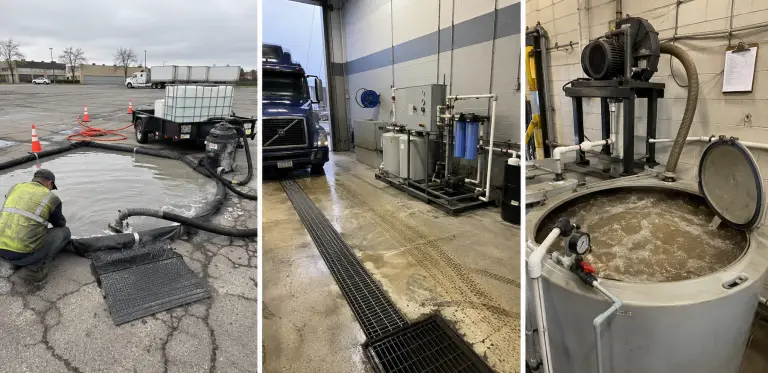
- Containment on the roof so what comes out of that fan does not end up on the membrane or in a storm drain.
That last one is the part that separates a contractor who gets rehired from one who does not. The restaurant is not watching you clean. You are in there at midnight and the kitchen manager is at home.
What she judges you on is what she walks into at six. Whether the line is dry. Whether the filters are back in right. Whether anything smells like the degreaser you used. And whether her landlord calls about grease on the roof membrane two weeks later. Get those four right and nobody ever asks you about price again.
The gear is specific but it is not exotic. You need hot water, you need kitchen hood and exhaust degreasers built for the deposits rather than a general purpose soap, and you need the hinges, access doors, duct cleaners and grease containment that make the rest of it possible.
What five days in Fort Worth covers
Phil Ackland Certified Kitchen Exhaust Training runs five days at 2313 Cold Springs Rd in Fort Worth, and Power Wash Academy is the exclusive provider of it.
The instruction is built on NFPA 96, the International Fire Code and OSHA regulations. Days are hands on and interactive rather than a week of slides, and the class ends in certification testing.
What you leave with is the part worth being specific about:
- Phil Ackland Certification Testing.
- One copy of the Phil Ackland Kitchen Exhaust Cleaning and Certification Manual.
- One copy of the NFPA 96 Standard.
- The specially designed forms and documents the work runs on.
- Hotel stay.
Those last two deserve a sentence each. The forms matter because a hood cleaning job is half documentation, and showing up with the right paperwork on your first account is the difference between looking certified and looking new. The hotel matters because it is the hidden number contractors forget to add when they price out a class somewhere else.
The real cost, stated plainly
The class is $4,500 per attendee with the hotel included.
The other cost is the week. Five days in Fort Worth is five days you are not on a truck, and for a solo contractor that is the harder number of the two.
It is also the reason to look at the class calendar a month out rather than a week out. A month is enough runway to move jobs, tell customers and book travel. A week is not, and that is how most contractors end up saying next time for three years running.
If you are going to be opening a service line anyway, there is a version where the training rides along with the equipment. The loaded kitchen exhaust cleaning van package pairs a hot water machine and a plumbed van setup with the certification class and the same hotel stay, at a discount on the training. Worth a look if you are weighing the class and the rig as one decision instead of two.
What this does to a winter calendar
Nobody can tell you what a hood job pays in your market, and anybody who does is guessing.
What is predictable is the shape of the schedule. Residential work is a pipeline you refill every single month. A restaurant on a cleaning cycle is a date already on a calendar, and so is the next one. Ten of those accounts is a different kind of February than ten driveways you have to go find.
The gate is five days and a number you can look at before you decide. The work on the other side of it is work your market is already paying somebody for, on a schedule that is already written down.
We have been family owned since 1973, and the training side of this company exists because our customers asked for it.