0

Bushings

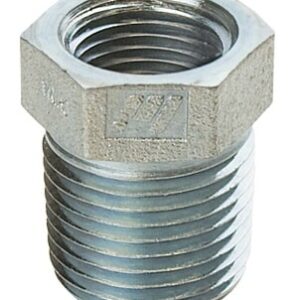
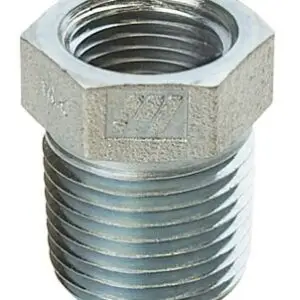
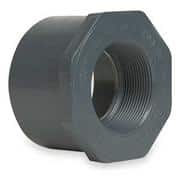
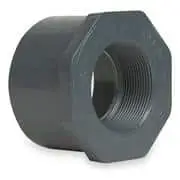
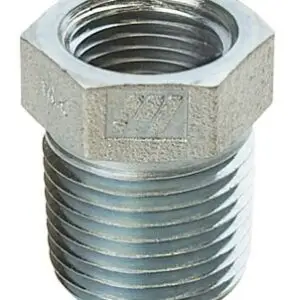
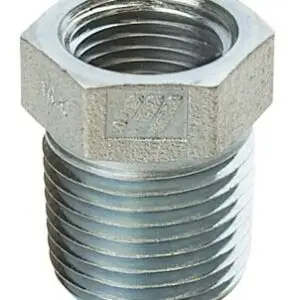
Bushings reduce a larger threaded port to a smaller thread size so you can connect hoses, guns, gauges, or other fittings without replacing the entire assembly. In pressure washing, they’re commonly used on pump heads, manifolds, hose reels, and gun or lance ports. Use the guide below to match thread standards correctly, pick materials that fit your pressure/temperature and chemical needs, and avoid leaks or damaged ports from mismatched or under‑rated parts.

Price

How to Choose Pressure Washer Bushings

What a bushing does

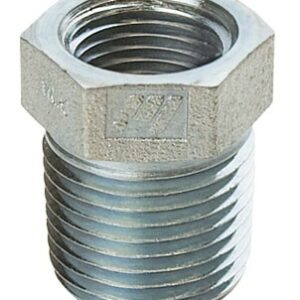
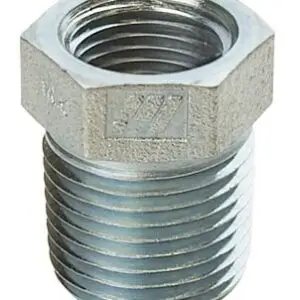
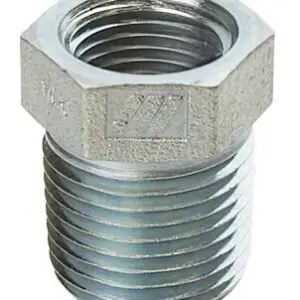
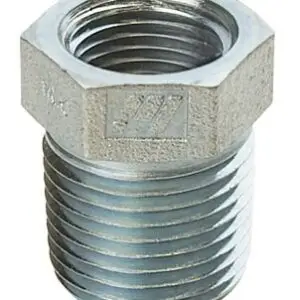
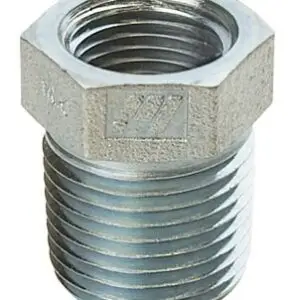
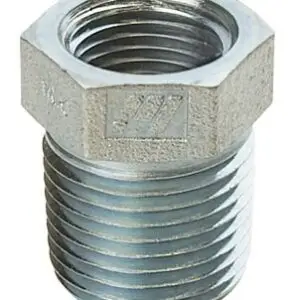
A bushing is a male x female reducer that steps a larger threaded port down to a smaller thread size. Unlike an adapter that may change both thread type and size, a bushing typically keeps the same thread standard while reducing the nominal size. Use bushings to mount gauges, transition from pump/manifold ports to hose or accessory sizes, or to cleanly downsize an over‑large replacement part.

Never mix thread standards. NPT and BSP look similar but are not compatible. Cross‑standard connections can leak, strip, or crack ports.

Choose your thread standard

NPT (United States)

  • Most common on North American pressure washers, pumps, guns, reels, and accessories.
  • Tapered pipe threads; always use an appropriate thread sealant.
  • Typical bushing sizes you’ll see: 1/4″, 3/8″, 1/2″ male to the next size down female.

BSP (Imported equipment)

  • Common on certain imported pumps and accessories.
  • Available in BSPT (tapered) and BSPP (parallel). Match like to like.
  • If your machine uses BSP, stay within BSP or convert using a dedicated adapter—do not force an NPT bushing.

Common NPT bushing pairings in pressure washing

Male thread (NPT) Female thread (NPT) Typical use Notes
3/8″ male 1/4″ female Gun or lance port downsizing; accessory tees Keeps flow path compact; check clearance for hex.
1/2″ male 3/8″ female Pump discharge/manifold to common hose size Use straight adapters if you also need a swivel or QC.
1/4″ male 1/8″ female Small gauges, chemical injector accessories Confirm gauge stem length clears the hex cavity.
3/4″ male 1/2″ female Inlet plumbing or filter/manifold transitions Mind inlet restrictions; don’t over‑reduce suction lines.
1″ male 3/4″ female Bulkhead/manifold downsizing Large bushings can be heavy—support rigid piping.
3/8″ male 1/4″ female Gauge tee on hose reel or manifold Use sealant rated for the system’s pressure/temperature.

Pick the right material

Brass

  • General‑purpose choice for water and detergents.
  • Widely used on cold and many hot‑water units.
  • Resists corrosion in typical wash environments.

Stainless Steel

  • Preferred for higher temperatures, pressure cycling, and aggressive cleaners.
  • Better galling resistance when assembled with proper lubricant/sealant.
  • Often specified on commercial/industrial rigs.

Zinc‑Plated Steel

  • Economical for general service where corrosion is controlled.
  • Protect from standing chemicals and prolonged moisture.
  • Inspect coating; retire if red rust or pitting appears.

Polymer (e.g., Nylon/PTFE)

  • Use only where explicitly rated for the system.
  • More common on low‑pressure accessories than on pump discharge lines.
  • Confirm temperature and chemical compatibility before use.

Use an appropriate thread sealant on tapered pipe threads. Start one thread back from the end, wrap or apply in the thread direction, and do not combine tape and paste unless the sealant manufacturer allows it. Always leak‑test at operating pressure.

Installation checklist

  • Match thread standards exactly (NPT↔NPT, BSP↔BSP).
  • Verify pressure and temperature ratings for the specific part and size.
  • Avoid stacking multiple bushings; use a single reducer or an adapter if a big size change is needed.
  • Wrench on the hex only—don’t torque through hoses, guns, or pumps.
  • Recheck after heat‑up and a few duty cycles; retighten if needed per sealant guidance.

Need help sizing or matching threads?

Our team can help you confirm NPT vs. BSP, pick the right material for your chemicals and temperature, and avoid restriction in high‑flow pressure washer systems.

Talk to an Equipment Specialist

Bushings FAQ's

Use a bushing when you only need to reduce size within the same thread standard. Use an adapter when changing thread standards (e.g., BSP to NPT) or adding features like swivels or quick connects.
Avoid stacking. Each extra joint adds leak points and weakens support. Use a single reducer of the correct size or a purpose‑built adapter to make the transition cleanly.
Measure the outside diameter of the male thread and compare to an NPT chart—nominal NPT sizes do not equal the measured OD. A thread pitch gauge helps confirm 18 TPI on 1/4″ and 3/8″ sizes.
Yes. NPT is a tapered pipe thread that seals with interference and a sealant. Use a compatible PTFE tape or pipe thread compound, applied in the thread direction, and leak‑test at operating pressure.
Use brass for most water and detergent service. Choose stainless steel for higher temperatures, frequent pressure cycling, or aggressive cleaners. Verify the specific part’s ratings for your application.
No. NPT (tapered, 60° form) and BSP (55° form; BSPT tapered, BSPP parallel) are different thread systems. Mixing them can leak or damage ports. Always match standards or use a dedicated adapter.
It reduces a larger threaded port to a smaller thread size using a male x female reducer, allowing you to connect hoses, gauges, or accessories without replacing the full fitting.
Home Backup - 2-2-24
Special Offer
PowerWash Prime Membership