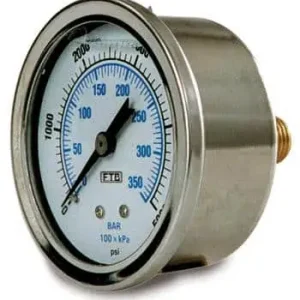
Meters & Gauges
See what your pressure washer is really doing. Meters and gauges help you verify pressure, flow, temperature, and runtime so you can set equipment correctly, troubleshoot faster, and protect pumps, hoses, and burners.
This category guide explains the common types, mounting options, and practical selection notes to help you choose reliable instruments for field work or bench testing. If you need spec help, our team is ready.

Featured Categories
Brand
Price
- (32)
- (3)
Showing 21–35 of 35 resultsSorted by popularity
-
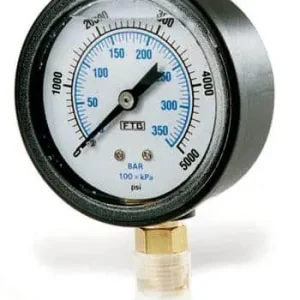
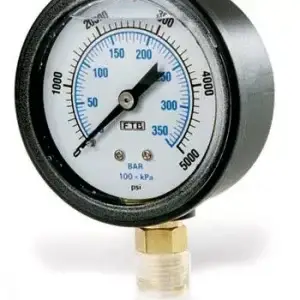
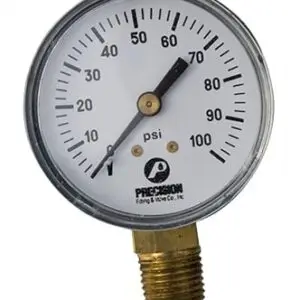
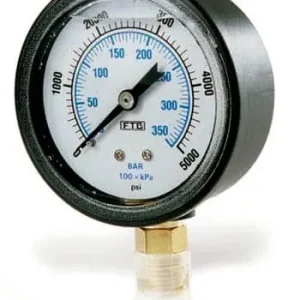
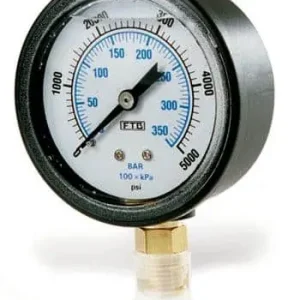
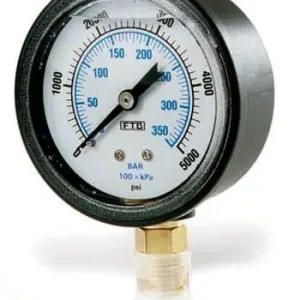
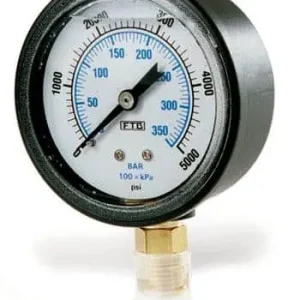
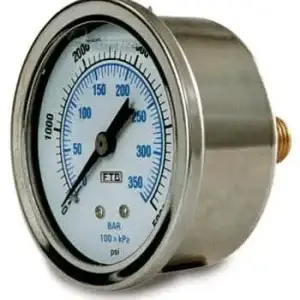
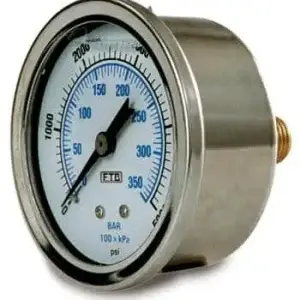
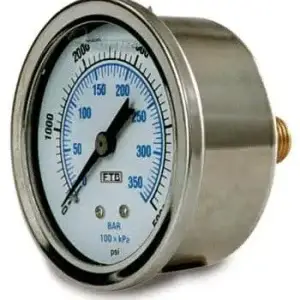
Pressure Test Gauge 100 PSI
$14.97 -
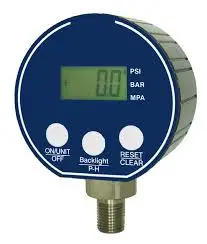
Digital Pressure Gauge
$340.00
Meters & Gauges FAQ's
How often should meters or gauges be replaced or calibrated?
There’s no universal interval. Replace if damaged, unreadable, or out of tolerance for your needs. For critical measurements, verify against a reference on a schedule that matches your quality or safety requirements.
How can I check for inlet restrictions or cavitation risk?
Use a compound or vacuum gauge on the pump inlet while the machine is flowing water. Increasing vacuum (higher inHg) under load points to supply or filtration restrictions to correct.
What thread size and mount do most gauges use?
Pressure washer gauges commonly use NPT threads in either bottom or back mounts, but sizes vary. Confirm the port on your pump, unloader, or manifold before ordering.
Where should I place a test gauge when setting the unloader?
Many technicians install a test gauge between the hose and gun so the reading includes line and fitting losses. Always depressurize before installing, and make adjustments with proper PPE.
Should I use a liquid-filled or a dry pressure gauge?
Liquid-filled gauges are popular where vibration and pulsation make needles hard to read. Dry gauges are fine in stable, low‑vibration environments or when a fill is not desired. Choose based on readability and conditions.
What pressure gauge range should I choose for my washer?
Pick a range that sits comfortably above your normal operating pressure so the pointer isn’t near the top of the scale during use. This improves readability and helps the gauge tolerate brief spikes. Always match the gauge to your pump and unloader specifications.