Window Cleaning Equipment Buyer’s Guide
Choosing the right combination of pure water, water-fed poles, brushes, and traditional hand tools helps you deliver fast, consistent results across storefront, residential, and commercial glass. Use this guide to narrow options and build a kit that matches your route, height requirements, and crew experience.
Choose Your Setup
Pure Water Systems
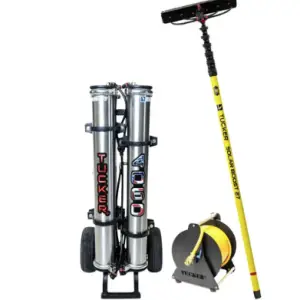
Produce mineral-free water for spot-free rinsing. Ideal for exterior glass, frames, and sills—especially at height—without detergents.
- System types: DI-only for low TDS water and shorter runs; RO/DI for broader water conditions and sustained output.
- Key factors: incoming TDS, mobility (cart vs. van-mount), and filter change access.
- Best for: multi-story work where ladder moves slow you down.
Traditional Tools
Still the fastest choice for interior glass, tight storefronts, and detail work.
- Squeegees and channels in common widths for primary and detail passes.
- Washers/sleeves for agitation; scrapers for stuck-on debris when appropriate.
- Belts, holsters, and buckets-on-a-belt for on-the-hip efficiency.
Water-Fed Poles
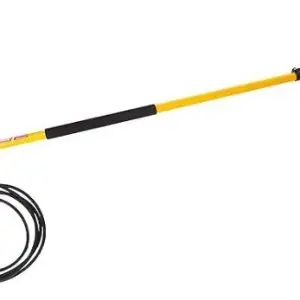
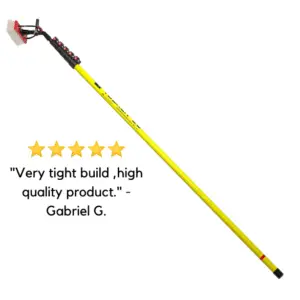
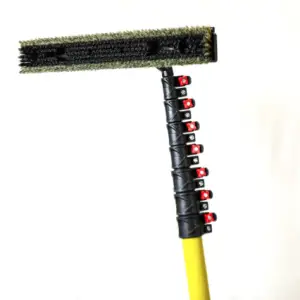
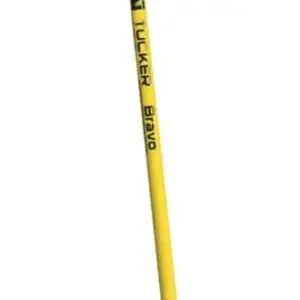
Pair with pure water to clean from the ground. Choose materials for the reach–rigidity balance you need.
- Materials: aluminum (budget), fiberglass (non-conductive), carbon fiber (lightest/most rigid).
- Consider: maximum working height, clamp style, and hose routing.
- Add-ons: angle adapters and goosenecks for frames and soffits.
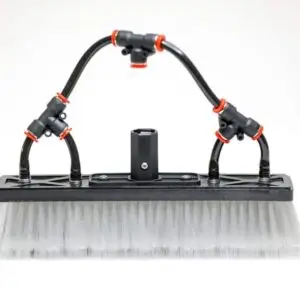
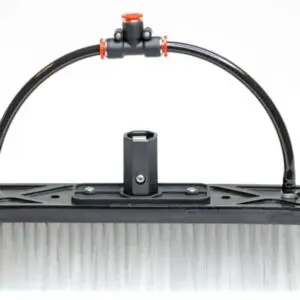
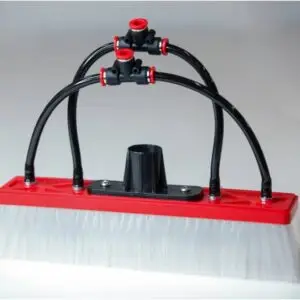
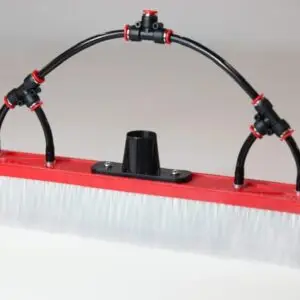
Brushes & Jets
Match bristles and jet style to soil type and glass sensitivity.
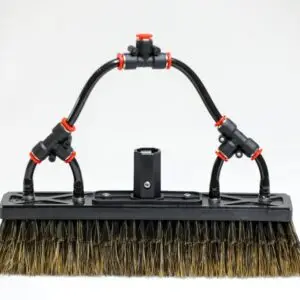
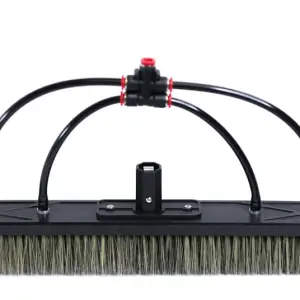
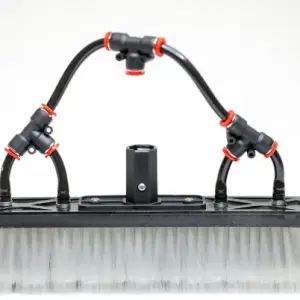
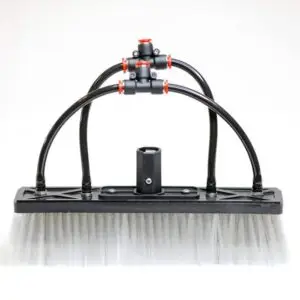
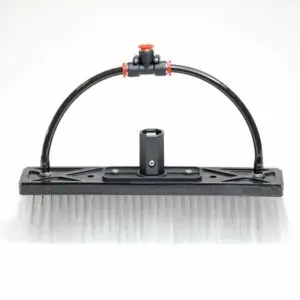
- Bristles: nylon for general use; flagged/softer options for delicate glass.
- Jets: pencil jets for focused agitation; fan jets for broader coverage and faster rinsing.
- Consider brush width vs. frame depth to avoid flooding interiors.
Pure Water Basics
Pure water cleaning relies on deionization (DI) alone or reverse osmosis followed by DI (RO/DI) to remove minerals that would otherwise spot. Monitor water quality with a handheld or inline meter and replace media as needed for consistent results. Always follow system instructions for startup, flushing, and storage.
Work top-to-bottom. Let the brush do the scrubbing, then rinse the top edge first so clean water sheets down the pane.
Traditional Toolkit Checklist
- Squeegee handles, channels, and spare rubber
- Washers/sleeves and a dedicated glass-safe cleaning solution if used
- Detailing towels or microfiber for edges and frames
- Scraper with appropriate blade; confirm glass type before scraping
- Extension pole sized for interior transoms and high panes
- Belts, holsters, and buckets-on-a-belt for fast changes between tools
Confirm glass type and any special coatings with the property owner before scraping or using aggressive pads. Test in an inconspicuous area first.
Quick Comparison Points
| Category |
What to Compare |
| Pure Water Systems |
DI vs. RO/DI, mobility (cart/van), flow capacity, meter access, filter/media change process |
| Water-Fed Poles |
Material and stiffness at working height, clamp design, section count, weight |
| Brushes |
Bristle type and density, brush width, jet style (pencil/fan), swivel options |
| Traditional Tools |
Channel style, rubber hardness preference, sleeve material, scraper compatibility |
Care and Safety Essentials
- Maintain systems per instructions and track water quality; replace media when output quality declines.
- Rinse brushes after use to prevent grit buildup that can scratch frames.
- Plan safe access. Use ground-based methods where possible and follow local requirements for work at height.
Learn More
Get the right window cleaning setup
Not sure which pure water system, pole, or tool mix fits your jobs? Our team will help you compare options and build a kit that matches your goals.
Talk to an Equipment Specialist